
TL; DR:
- Webapplicaties die zijn gebouwd met behulp van moderne raamwerken maken sterk gebruik van client-side scripts via open source-afhankelijkheden.
- Een meerlaagse aanpak voor het detecteren van scriptgedrag is de enige manier om voldoende inzicht te krijgen in kwaadaardige signalen onder unieke omstandigheden.
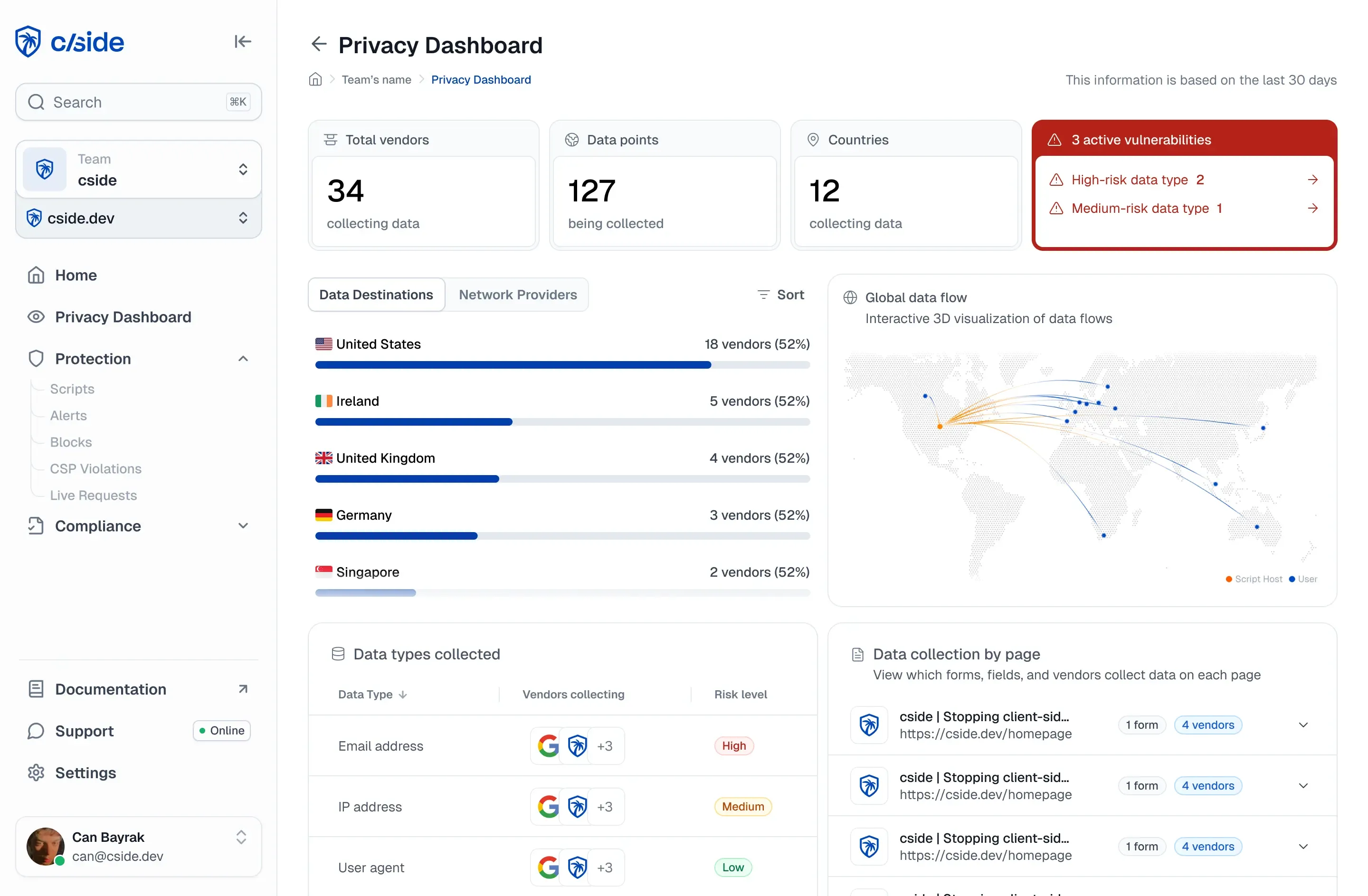
- De toonaangevende leverancier die een meerlaagse aanpak voor webapplicaties gebruikt, is cside. cside maakt gebruik van AI om op een nauwkeurige manier om te gaan met de complexiteit van scriptgedrag aan de clientzijde.
Wat betekent beveiliging aan de clientzijde voor moderne webapplicaties?
Beveiliging aan de clientzijde is de praktijk van het beschermen van de JavaScript-afhankelijkheden, gebruikersgegevens en acties die in de browser van de bezoeker worden uitgevoerd.
Dit omvat:
- First-party scripts: JavaScript-bestanden die vanuit uw eigen domein worden geladen, vaak afkomstig uit open source-registers zoals npm
- Scripts van derden: van analysetools, advertenties, chatbots, tagmanagers, A/B-testtools en meer
- Inline-scripts, ingesloten inhoud zoals widgets en SDK's
- Gegevens verwerkt of opgehaald door de browser
Alles wat er gebeurt na de initiële HTML-reactie van de webserver is een actie aan de clientzijde. Aanvallers gebruiken de browser steeds vaker om kwaadaardige acties uit te voeren in een poging waardevolle gevoelige informatie te verkrijgen. Wanneer gegevens worden opgehaald van een domein van een derde partij, werken scripts vaak anders op basis van IP, verzoekheaders, tijdstip, locatie enz.
Bijvoorbeeld: een marketingtool verzamelt andere gegevens van Europese gebruikers dan van Amerikaanse gebruikers om te voldoen aan de gegevensprivacy.
Dit verwachte dynamische gedrag is een kans voor slechte actoren. Dit geeft hen de mogelijkheid om onder de radar te vliegen en een klein percentage van de gebruikers gedurende een langere periode aan te vallen.
Wat beveiligingsteams controleren op webapplicaties
De meeste bedrijven hebben oplossingen geïmplementeerd op hun webinfrastructuur om het aanvalsoppervlak te monitoren tegen bedreigingen afkomstig van open-sourceregisters zoals npm. Beveiligingsteams implementeren vaak ook firewalls om hun infrastructuur en de webapplicatie zelf te beschermen tegen indringers. Deze benaderingen zijn effectief tegen een reeks aanvallen, maar slechte actoren zoeken naar de zwakste schakel. De meeste applicaties beschikken niet over beveiliging om uitvoeringen aan de clientzijde te beheren.
Scripts in de browser hebben een ongelooflijk verreikende kracht. Alle gegevens die een gebruiker invoert, kunnen worden beluisterd, geëxfiltreerd en daarom verkocht. Of dat nu creditcardgegevens, e-mailadressen, telefoonnummers of wachtwoorden zijn. Malware kan worden geïnjecteerd, social engineering kan ervoor zorgen dat u bestanden met slechte bedoelingen downloadt en uitvoert. Deze aanvalsvector heeft een aantal namen, variërend van Magecart, Formjacking, dataskimming of Web Supply Chain-aanvallen tot scripting aan de clientzijde.
Bij het nadenken over de aanpak van beveiligingstools zijn er een aantal dingen waarmee u rekening moet houden:
- Waarneembaarheidstools die puur observeren en waarschuwen voor specifiek gedrag, vergelijkbaar met een brandalarm.
- Preventieve maatregelen die de mogelijkheden beperken bij het nastreven van het voorkomen van een risicovolle actie. Een goed voorbeeld hiervan zijn oplossingen voor open source-afhankelijkheidsbeveiliging die de installatie van pakketten voorkomen die niet zijn geverifieerd. Om de brandalarmvergelijking voort te zetten, kunt u dit vergelijken met het gebruik van brandwerende materialen.
- Actieve beveiligingsoplossingen die voortdurend op zoek zijn naar kwaadaardig gedrag en dit blokkeren zodra het zich voordoet. Dit is te vergelijken met een sprinklerinstallatie.
In een concept van beveiliging op de klantlocatie hebben de observatietools die worden verkocht vaak de vorm van een statische scanner. Maar het probleem is dat slechte acteurs de scanners herkennen en ze in een schoon script stoppen. Scanners krijgen niet het echte client-side script te zien dat de gebruiker zou hebben ontvangen.
SAST-oplossingen bestrijken slechts een deel van het aanvalsoppervlak als toegangspunt. Scripts aan de clientzijde worden vaak geïnjecteerd via tagmanagers. Als scripts afkomstig zijn van NPM, wordt het ophalen van de browser niet gecontroleerd door een standaard beveiligingsoplossing voor de supply chain, omdat het gedrag in de browser buiten zijn gezichtsveld valt.
Daarom is een unieke oplossing zoals de client-side beveiliging van cside nodig.
Hoe ziet het juiste hulpmiddel eruit?
Een gelaagde aanpak is het beste. Zeker als de oplossing in kwestie aanpasbaar is en transparantie en controle creëert waar voorheen geen controle bestond.
Daarom hebben we cside gebouwd als een platform dat gebruik maakt van alle verschillende lagen die tot nu toe beschikbaar zijn.
cside biedt twee complementaire implementatiemethoden, gecombineerd met meerdere detectiemotoren, waaronder open source Large Language Models voor analyse.
- Script Methode (eenvoudigst): we controleren scriptgedrag in de browser en halen de scripts aan onze kant op, en verifiëren vervolgens of het hetzelfde script is. We plaatsen onszelf niet in het pad van een script tenzij je daar expliciet om vraagt. Eenvoudig te implementeren, geen prestatie-impact, en je kunt nog steeds scriptacties stoppen of blokkeren op URL, hash of domein.
- Scan Methode (snelst): als je geen script aan je site kunt toevoegen, scant cside het met behulp van threat intelligence van duizenden andere websites met miljarden gezamenlijke bezoekers. Snel op te zetten en nuttig wanneer scriptinstallatie niet mogelijk is.
We bieden ook een Content Security Policy-endpoint zodat klanten browser-native handhaving naast cside's op JavaScript gebaseerde detectie kunnen leggen.
Een andere belangrijke factor is het gebruik van een tool die gebruik maakt van AI-modellen om handmatige compliancetaken tot een minimum te beperken. Dit moeten zelfgehoste open source-modellen zijn om het lekken van IP naar AI-leveranciers te voorkomen, wat een belangrijk aspect van gegevenscontrole is voor bedrijven.
Waarom enkellaagstools falen voor moderne webapplicaties
Oplossingen die slechts één van deze methoden gebruiken, kunnen gemakkelijk worden omzeild.
De meeste oplossingen op dit gebied zijn eenvoudige websitescanners. Leveranciers bedenken sjieke namen zoals 'proprietary browser' of 'agent-less', maar in feite is het gewoon een geautomatiseerde browser zoals Playwright of Puppeteer die een website scant. Tegenwoordig, in 2026, kun je een tool als Cursor gebruiken om binnen enkele dagen een dergelijke oplossing te bouwen.
Het probleem blijft bestaan: een slechte actor ziet de scanner en zal er geen kwaadaardige inhoud aan aanbieden. Het dashboard toont interessant ogende gegevens en creëert daardoor een vals gevoel van veiligheid, maar het scriptgedrag waar u zich zorgen over moet maken, wordt niet weergegeven.
Conclusie: Waarom een meerlaags client-side beveiligingsmodel vereist is voor webapplicaties
Oplossingen zoals de client-side beveiligingssuite van cside samen met Privacy-horloge en PCI-schild by cside dekt de aanvalsvector aan de clientzijde het beste af met de meest alomvattende aanpak.
Dit maakt het gemakkelijk om compliance te bereiken, maar beschermt vooral uw klanten en uw bedrijf.
Klaar om cside uit te proberen? Begin gratis of boek een demo om een praatje te maken met ons team.