Kort samengevat: VCDPA-websitecompliancy
- Wat is de VCDPA? De Virginia Consumer Data Protection Act is een privacywet die inwoners van Virginia bepaalde rechten geeft over hun persoonsgegevens. Het werd de tweede privacywet op staatsniveau in de VS na Californië en trad in werking op 1 januari 2023.
- Voor wie geldt de VCDPA? De VCDPA is van toepassing op organisaties die zakendoen in Virginia of zich richten op inwoners van Virginia, en die (a) persoonsgegevens verwerken van minimaal 100.000 consumenten per jaar, of (b) persoonsgegevens verwerken van minimaal 25.000 consumenten terwijl meer dan 50% van de bruto-omzet afkomstig is uit de verkoop van persoonsgegevens.
- Wat zijn de meest voorkomende oorzaken van VCDPA-compliancyfouten? De meeste fouten ontstaan door het verwerken van gevoelige gegevens zonder expliciete toestemming, het niet tijdig reageren op verzoeken van consumenten binnen de gestelde termijnen, of ontoereikende privacyverklaringen. Ook een gebrek aan zicht op het gedrag van third-party scripts op websites kan overtredingen veroorzaken.
- Hoe maak ik mijn website VCDPA-compliant? Zorg voor een accuraat privacybeleid, verkrijg toestemming voordat je persoonsgegevens verwerkt, honoreer gegevensverzoeken en monitor third-party processors op je website met een tool zoals cside.
Weinig tijd? Bekijk cside Privacy Watch. Dit dekt alles hieronder in één deployment.
Bedrijven hebben data nodig om te groeien. Dit heeft helaas als gevolg dat gevoelige gegevens van consumenten worden verwerkt zonder hun toestemming. Dit gebeurt vaker door technische misconfiguraties dan door onethische intenties van een bedrijf.
Overheden wereldwijd nemen dit serieus en introduceren wetgeving om gegevensverzameling transparant en inzichtelijk te maken. Net als verschillende andere staten in de VS heeft Virginia een privacywet ingevoerd die bedrijfsvriendelijk is én consumenten beschermt.
Met als eenvoudig doel mensen de controle over hun eigen gegevens te geven, is de Virginia Consumer Data Protection Act van belang voor elke organisatie die zaken doet in deze staat. Dit artikel legt uit wat de Virginia Consumer Data Protection Act inhoudt, wat de vereisten zijn, en waarom je client-side beveiliging niet kunt negeren om echt compliant te zijn.
Wat is de Virginia Consumer Data Protection Act?
De Virginia Consumer Data Protection Act (VCDPA) is een Amerikaanse privacywet op staatsniveau die inwoners van Virginia een aantal rechten geeft over hun persoonsgegevens. Gouverneur Ralph Northam ondertekende de wet op 2 maart 2021 en ze trad in werking op 1 januari 2023.
De wet is gebaseerd op het principe dat als je geen specifieke, openbaar gemaakte reden hebt om gegevens te bewaren, je ze helemaal niet zou moeten hebben.
Inwoners van Virginia beschikken nu over specifieke, afdwingbare rechten over hun digitale voetafdruk:
- Het recht op controle: Consumenten kunnen hun persoonsgegevens naar eigen inzicht inzien, corrigeren of verwijderen
- Het recht om te vertrekken: Bedrijven moeten een eenvoudig mechanisme bieden waarmee gebruikers zich kunnen afmelden. Dat afmeldrecht omvat gerichte advertenties, gegevensverkoop en automatische profilering
Onder de VCDPA moeten organisaties expliciete en bevestigende toestemming verkrijgen voordat ze gezondheids-, religie-, biometrische of nauwkeurige geolocatiegegevens verzamelen.
Individuele burgers hebben geen recht op een eigen rechtsvordering onder de VCDPA. De procureur-generaal van Virginia heeft de bevoegdheid om boetes op te leggen. Boetes kunnen oplopen tot $7.500 per overtreding.
Geldt de VCDPA voor mijn bedrijf? (Zelfbeoordeling)
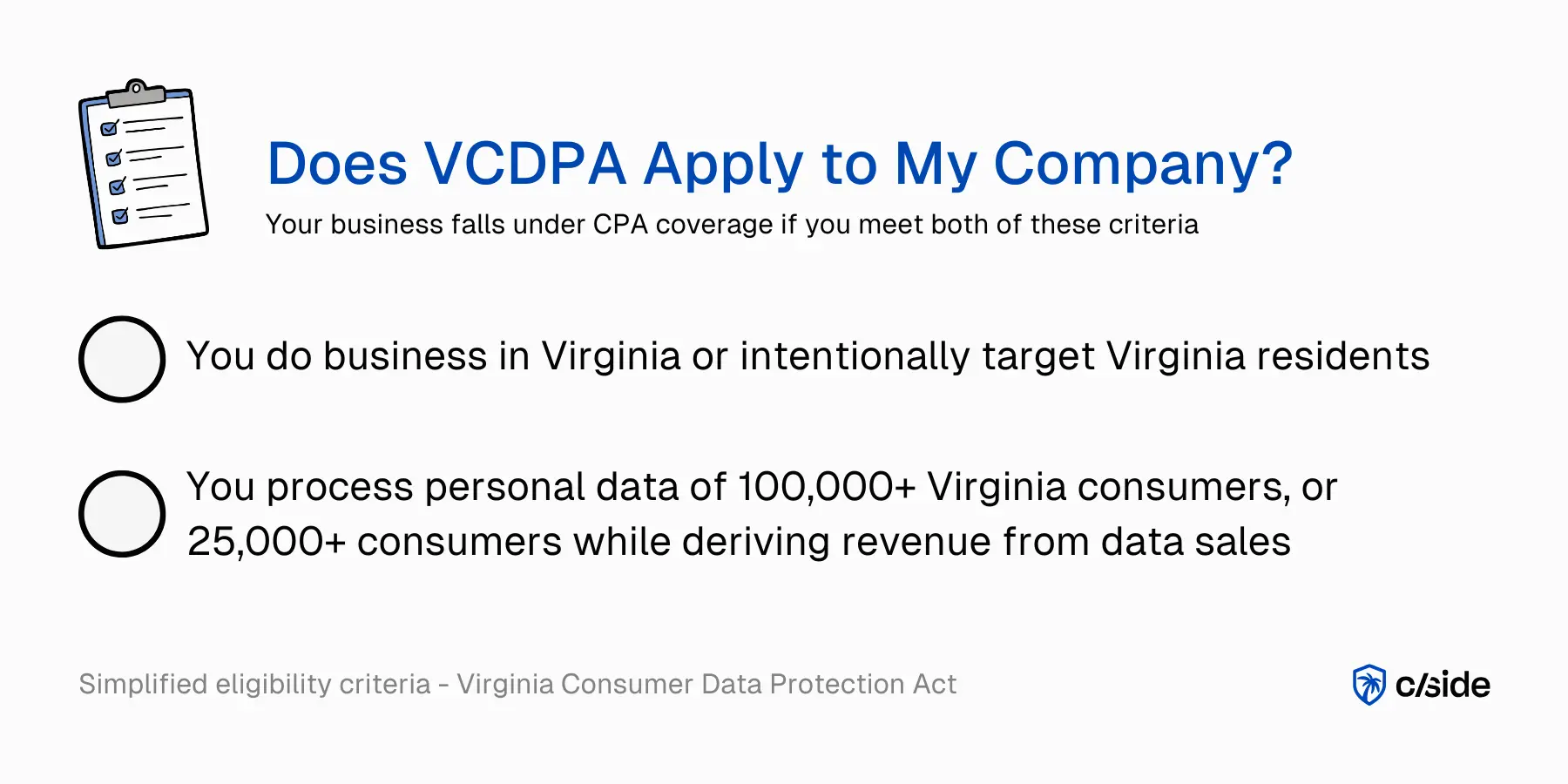
De VCDPA is van toepassing op jouw organisatie als je aan de volgende criteria voldoet:
- Je doet zaken in Virginia of produceert producten of diensten die gericht zijn op inwoners van Virginia.
- Je voldoet aan een van twee drempelwaarden voor gegevensverwerking: (a) je verwerkt persoonsgegevens van minimaal 100.000 consumenten gedurende een kalenderjaar, of (b) je verwerkt persoonsgegevens van minimaal 25.000 consumenten en meer dan 50% van je bruto-omzet is afkomstig uit de verkoop van persoonsgegevens.
Anders dan de CCPA van Californië kent de VCDPA geen drempelwaarde die alleen op omzet is gebaseerd. De jaarlijkse bruto-omzet van een bedrijf bepaalt op zichzelf niet of de wet van toepassing is. De drempelwaarden zijn volledig gericht op het volume van gegevensverwerking en de omzet die specifiek afkomstig is uit gegevensverkoop.
- consument verwijst naar een persoon die inwoner is van Virginia en handelt in een persoonlijke of huishoudelijke context.
- persoonsgegevens verwijst naar alle informatie die gekoppeld is of redelijkerwijs gekoppeld kan worden aan een geïdentificeerde of identificeerbare natuurlijke persoon. Dit sluit gede-identificeerde gegevens en openbaar beschikbare informatie uit.
VCDPA-vrijstellingen
Bepaalde entiteiten zijn volledig vrijgesteld van de vereisten van de VCDPA.
- Staatsinstanties, politieke onderverdelingen en organen van de overheid van Virginia
- Financiële instellingen die vallen onder de Gramm-Leach-Bliley Act
- Gedekte entiteiten en zakelijke partners die vallen onder HIPAA
- Non-profitorganisaties (inclusief politieke organisaties op grond van recente wijzigingen)
- Instellingen voor hoger onderwijs
Wat zijn de belangrijkste vereisten van de VCDPA?
Zorg voor duidelijke privacyverklaringen
Controllers (organisaties) moeten een privacyverklaring tonen die redelijkerwijs toegankelijk is. De verklaring moet de categorieën verwerkte persoonsgegevens vermelden, de doeleinden van de verwerking, hoe consumenten hun rechten kunnen uitoefenen, de categorieën gegevens die met derden worden gedeeld en de categorieën van die derden.
Als een controller persoonsgegevens verkoopt of verwerkt voor gerichte advertenties, moet dit duidelijk worden vermeld, samen met instructies over hoe consumenten zich kunnen afmelden.
Verkrijg toestemming voordat je gevoelige gegevens verwerkt
De VCDPA verbiedt het verwerken van gevoelige gegevens zonder expliciete toestemming van de consument. "Impliciete toestemming" voldoet niet aan de norm.
Voor gegevens die worden verzameld van bekende kinderen onder de 13 jaar moeten controllers voldoen aan de federale vereisten van de Children's Online Privacy Protection Act (COPPA). Wijzigingen in de VCDPA die op 1 januari 2025 van kracht werden, voegden verdere beperkingen toe aan het verwerken van gegevens van kinderen voor gerichte advertenties, profilering en andere doeleinden zonder toestemming van ouders.
Reageer binnen 45 dagen op verzoeken van consumenten
Nadat een consument een verzoek heeft ingediend om zijn of haar rechten uit te oefenen, moeten controllers binnen 45 dagen reageren. Eén verlenging van 45 dagen is toegestaan wanneer dit redelijkerwijs noodzakelijk is vanwege technische complexiteit of een groot aantal verzoeken, maar de consument moet binnen de oorspronkelijke termijn worden geïnformeerd.
Reacties moeten tot twee keer per jaar per consument kosteloos zijn. Als een controller een verzoek afwijst, moet hij uitleggen waarom en instructies geven voor het indienen van een bezwaar. Bezwaren moeten binnen 60 dagen worden afgehandeld. Als een bezwaar wordt afgewezen, moet de controller een manier bieden waarop de consument contact kan opnemen met de procureur-generaal.
Bied de mogelijkheid om je af te melden voor verkoop, gerichte advertenties en profilering
Consumenten hebben het recht om zich af te melden voor verwerking ten behoeve van gerichte advertenties, de verkoop van persoonsgegevens en profilering die juridische of vergelijkbaar ingrijpende gevolgen heeft.
Controllers moeten een werkend mechanisme bieden om deze verzoeken te honoreren. De organisatie blijft in overtreding als trackingscripts of pixels na een afmelding van een consument nog steeds gegevens blijven verzenden.
Sluit contracten met gegevensverwerkers
Controllers moeten schriftelijke contracten hebben met alle verwerkers die namens hen gegevens verwerken. Dit omvat websitegegevensverwerkers zoals chatbots, analytics- of marketingtools. Overeenkomsten moeten de aard en het doel van de verwerking specificeren, het type betrokken gegevens, de duur van de verwerking en de rechten en verplichtingen van beide partijen.
De meeste grote leveranciers (zoals Meta, Google Ads, Cloudflare) hebben gestandaardiseerde DPA's die je op hun website kunt vinden.
Verborgen privacyrisico's op websites voor de VCDPA
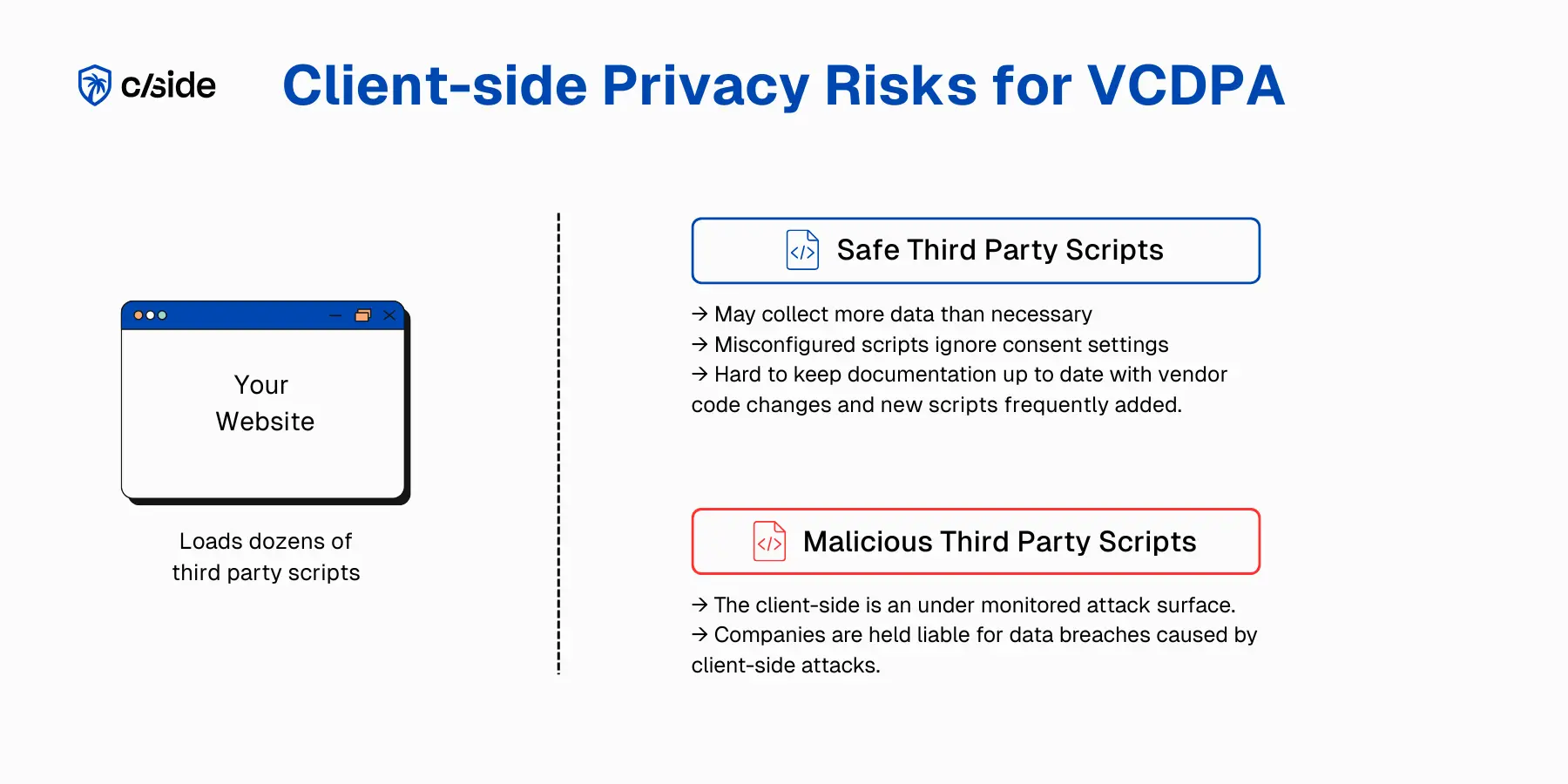
Het meest over het hoofd geziene risicogebied voor VCDPA-compliancy is je website. Moderne websites laden een mix van intern geschreven code en code van externe leveranciers (third-party scripts). Die third-party scripts laden op hun beurt weer meer scripts (subverwerkers). Elk van deze scripts voegt beveiligings- en privacyrisico toe aan je website. Via misconfiguraties of kwaadaardige code-injecties brengen ze persoonsgegevens in gevaar.
Third-party scripts zijn een VCDPA-compliancyrisico
Marketingpixels, analyticstools en sociale widgets zijn standaard op de meeste commerciële websites. Elk script kan IP-adressen, apparaat-ID's, surfgedrag en formulierinvoer verzamelen.
Onder de VCDPA is de organisatie die deze scripts inzet de controller.
Je bent niet compliant als deze scripts meer gegevens verzamelen dan vermeld in je privacyverklaring. Als ze na een afmelding van een consument blijven verzamelen, ben je ook niet compliant. De meeste organisaties hebben geen manier om te weten of hun scripts zich gedragen zoals verwacht.
JavaScript-injecties zijn een VCDPA-databreukrisico
Naast compliancy brengt client-side code ook beveiligingsrisico's met zich mee. Zo kunnen:
- Kwaadaardige of gecompromitteerde scripts persoonsgegevens rechtstreeks uit de browser stelen
- Een vergiftigde bibliotheekupdate of geïnjecteerde tag consumenteninformatie blootstellen zonder dat server-side beveiligingscontroles dit opmerken
De VCDPA vereist dat controllers redelijke beveiligingspraktijken hanteren. Een organisatie die niet-gemonitorde third-party code inzet en te maken krijgt met een client-side inbreuk, zal moeilijk kunnen aantonen dat ze de juiste voorzorgsmaatregelen heeft genomen.
Cookiebanners alleen kunnen VCDPA-compliancy niet garanderen
Consent management platforms zijn belangrijk voor websiteprivacycompliancy, maar vormen slechts één onderdeel van het geheel. Een cookiebanner kan toestemmingsvoorkeuren verzamelen, maar heeft beperkte handhavingsmogelijkheden.
CMP's kunnen falen als ze niet correct zijn geïntegreerd met Google Tag Manager of andere analyticstools. CMP's zijn ook niet gebouwd om te beschermen tegen client-side aanvallen, waarbij "vertrouwde" third-party scripts worden gekaapt en toestemmingsinstellingen volledig omzeilen.
Veelvoorkomende VCDPA-compliancyfouten
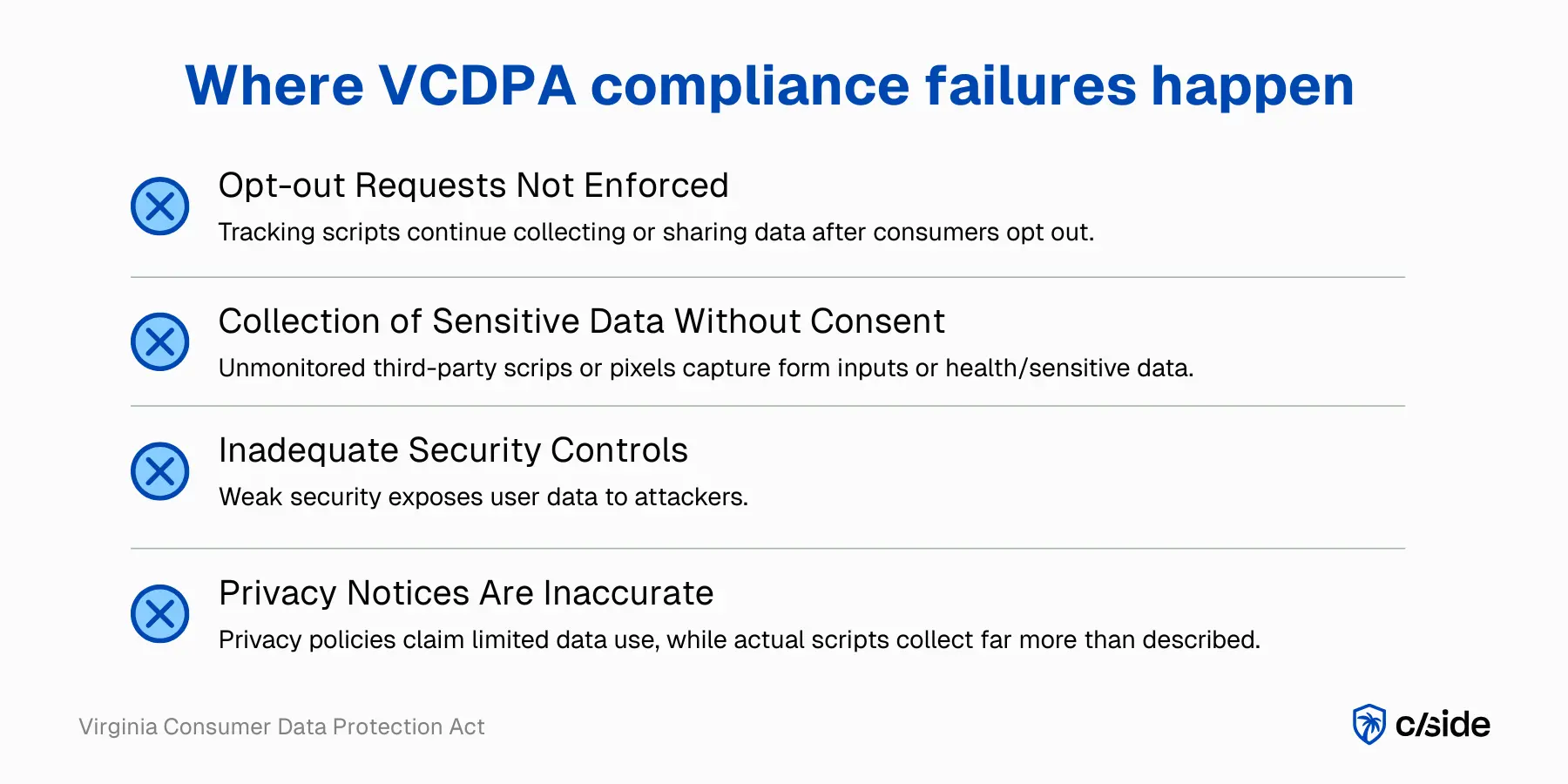
Gevoelige gegevens verwerken zonder toestemming
De meest directe overtreding treedt op wanneer organisaties gevoelige gegevens verwerken zonder expliciete opt-in-toestemming. Dit omvat geolocatiegegevens, gezondheidsgerelateerde informatie, biometrische identificatoren en gegevens van bekende kinderen. Veel websites verzamelen deze informatie via scripts zonder zich bewust te zijn van de gevolgen voor toestemming.
Een zorgwebsite die een Meta-pixel gebruikt, kan bijvoorbeeld onbedoeld informatie doorsturen over welke pagina's over aandoeningen een gebruiker bezoekt. Die gedragsgegevens kwalificeren als gevoelige gezondheidsinformatie waarvoor expliciete toestemming vereist is voordat ze mogen worden 'gedeeld'.
Privacyverklaringen die niet overeenkomen met de werkelijke praktijk
Controllers moeten ervoor zorgen dat hun privacyverklaringen nauwkeurig beschrijven welke gegevens worden verzameld, waarom en met wie ze worden gedeeld. Deze praktijken kunnen afwijken van wat de privacyverklaring vermeldt wanneer third-party scripts veranderen of wanneer marketingteams nieuwe tags toevoegen.
De overtreding is onmiskenbaar van jou als een script op je site gegevens deelt met een niet-vermelde partij.
Afmeldmechanismen die niet werken
Privacyverklaringen kunnen consumenten het recht beloven om zich af te melden voor het delen van gegevens, maar falen wanneer er een daadwerkelijk verzoek van een consument binnenkomt.
De handhavingsactie van de procureur-generaal van Californië tegen Sephora illustreerde dit risico. Het bedrijf stelde dat gebruikers zich konden afmelden voor gegevensverkoop, maar bleef gegevens doorsturen naar advertentiepartners. Toezichthouders beschouwden dit als een ontzegging van consumentenrechten. Dezelfde handhavingslogica geldt onder de VCDPA.
Ontbrekende of ontoereikende gegevensbeschermingsbeoordelingen
Organisaties die persoonsgegevens verwerken voor gerichte advertenties, gegevens verkopen of gevoelige informatie verwerken, moeten gegevensbeschermingsbeoordelingen documenteren. Veel organisaties slaan deze vereiste over of produceren beoordelingen die de risico's niet zinvol analyseren.
De procureur-generaal kan deze documenten opvragen tijdens een onderzoek. Een organisatie die geen adequate beoordelingen kan overleggen, heeft een moeilijke uitgangspositie om compliancy aan te tonen.
Niet voldoen aan reactietermijnen
Verzoeken van consumenten moeten binnen 45 dagen worden beantwoord en bezwaren moeten binnen 60 dagen worden afgehandeld. Organisaties zonder efficiënte intake- en reactiesystemen kunnen deze termijnen missen. Een patroon van te late of genegeerde verzoeken wijst op structurele non-compliancy.
Officiële VCDPA-bronnen en overheidslinks
- Virginia Attorney General, VCDPA-samenvatting: De officiële samenvatting van het kantoor van de procureur-generaal met uitleg over consumentenrechten, verplichtingen voor bedrijven en handhavingsprocedures
- Code of Virginia, Chapter 53: De volledige wettekst, inclusief alle definities, consumentenrechten, verplichtingen van controllers en handhavingsregels
- Virginia Consumer Protection Hotline: 1-800-552-9963 (binnen Virginia) of (804) 786-2042 (regio Richmond en buiten Virginia). Openingstijden: 8:30 tot 17:00 uur, maandag tot en met vrijdag
VCDPA-tijdlijn
- 2 maart 2021: Gouverneur Ralph Northam ondertekende de Virginia Consumer Data Protection Act
- 1 januari 2023: De VCDPA trad in werking. Handhaving door de procureur-generaal van Virginia begon. Vereisten voor gegevensbeschermingsbeoordelingen werden van toepassing op nieuwe verwerkingsactiviteiten
- 1 januari 2025: Wijzigingen met betrekking tot gegevens van kinderen traden in werking en verplichtten ouderlijke toestemming voordat persoonsgegevens van bekende kinderen verwerkt mogen worden voor gerichte advertenties, profilering en andere gespecificeerde doeleinden
1 januari 2026: Aanvullende wijzigingen met betrekking tot tijdslimieten voor sociale media voor minderjarigen onder de 16 jaar treden in werking
Hoe cside organisaties helpt VCDPA-compliancy te bereiken
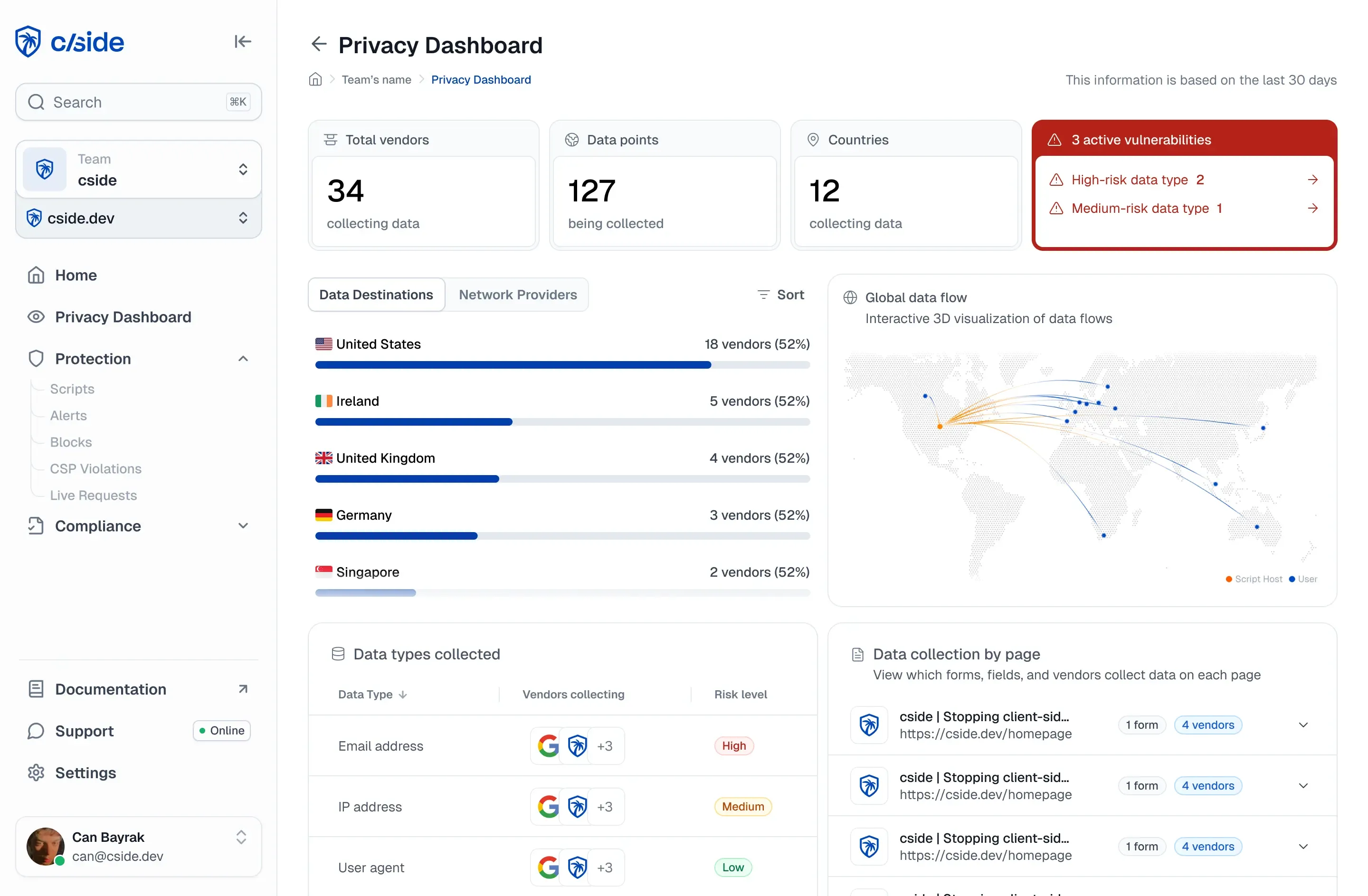
cside Privacy Watch spoort verborgen privacyovertredingen op websites op door signalen op browserniveau te monitoren, die traditionele compliancytools negeren. cside biedt een helder overzicht van welke scripts op je website actief zijn, welke gegevens ze benaderen en waar die gegevens naartoe gaan. Zo kun je verifiëren dat de werkelijke gegevensverzamelingspraktijken overeenkomen met je privacyverklaringen.
- Third-party code op je website verandert regelmatig. cside signaleert wijzigingen in third-party tools zodra ze plaatsvinden en stelt je in staat onnodige gegevensverzameling te identificeren voordat dit compliancyrisico's oplevert.
- cside monitort op verdacht scriptgedrag dat erop wijst dat een client-side aanval gericht is op de bezoekersgegevens van je website
- Client-side vereisten voor transparantie, doelbinding en beveiligingsmaatregelen worden geautomatiseerd met dashboards en geautomatiseerd bewijs
Je kunt beginnen met het gratis abonnement van cside of een demo boeken voor meer informatie over hoe je kunt voldoen aan de client-side vereisten van staatsprivacywetten zoals de VCDPA.