Device Intelligence Solution: Detect Fraudulent Sessions, Bots & Account Fraud with Browser Fingerprinting
cside is a device intelligence solution that ties every session to the device that created it, from a baseline of 250+ browser, device, and network signals.
Reduce fraud that eats into profit margins
Fingerprinting
The internet's most precise
device identity platform
Don't take our word for it. See it yourself.
Hello, visitor
VISIT SUMMARY
INCOGNITO
IP ADDRESS
GEOLOCATION
“cside's fingerprinting gives us the fraud visibility we never had before”
, Security Team Lead, Enterprise e-commerce Platform
Why fingerprinting matters
- 01
Fraud losses are forecasted to grow
MRC reports that 83% of merchants experienced first-party misuse, ATO fraud, or refund abuse last year. Payment fraud costs e-commerce merchants $48B/year. These fraud vectors are forecasted to continue growing, pushing companies to increase spending on anti-fraud measures.
- 02
Anti-fraud suites don't look inside the browser
Traditional fraud stacks focus on transactions, network level signals, and predictive scoring with minimal real-time visibility into what happens in the browser runtime.
- 03
AI agents are reshaping web fraud
Automation through synthetic browsers ('agents') are used by both consumers and attackers. This adds noise to detection and bypasses traditional bot detection like CAPTCHAs and IP reputation; see how stealth and anti-detect browsers enable AI-bot fraud at scale. Advanced behavioral signals are needed to prevent AI-bot attacks on your website.
- Collect 250+ signals (IP, geolocation, VPN/proxy, bot activity).
- Feed risk scores with raw signals or pre-made alerts.
- Catch web skimming that steals user credentials.
- Inform decisions to challenge, block, or flag fraudulent users.
- Cover native iOS and Android apps with our mobile SDKs, in beta.
How cside fingerprinting works
Collect signals
Lightweight script captures 250+ network, device, and behavioral signals on every page load. Native iOS and Android SDKs, in beta, add app-only signals on top of the same set. No cookies, and privacy compliant.
Identify every visitor
Signals are combined into a persistent visitor ID that holds across sessions, incognito, cleared storage, and VPNs.
Detect suspicious sessions
Feed risk scoring based on bot detection, known malicious VPNs/IPs, and behavioral insights.
Make fraud decisions
Send raw signals to your rules engine or use our preconfigured combinations to block, challenge, or flag suspicious visitors.
The same engine, now inside your app
Native iOS and Android SDKs collect the same 250+ signals as the web client, plus signals only an app can see, so a device you recognise on your site is the same device in your app. In early access.
- Jailbreak and root detection
- Emulator detection
- App tampering
- Hardware attestation
- Motion sensors
Raw signals for fraud prevention
Access signals through a developer friendly API or webhooks. Protect payment & login pages, forms, and platform integrity.
Designed for frequently targeted industries
Why cside fingerprinting outperforms alternatives
cside delivers advantages traditional fraud tools can't match.
| vs. Server-Side Fraud Tools | vs. Basic Device Fingerprinting | vs. CAPTCHA / Bot Detection |
|---|---|---|
| Captures client-side signals invisible to server logs | Resilient fingerprint survives cookie clears and browser updates | Identifies returning fraudsters, not just bots |
| Links sessions across devices and accounts | Combines 70+ signals for higher accuracy | Zero friction for legitimate users |
| Provides forensic evidence for chargeback disputes | Detects fingerprint spoofing and evasion techniques | Detects sophisticated human fraud, not just automated attacks |
Resources to help you fight back against fraud
Going deeper on fingerprinting
Passive fingerprinting with zero user friction
cside collects device and browser signals passively during normal page loads. There are no challenges, pop-ups, or interruptions. Legitimate users never know it's running, while fraudsters are identified by the signals they can't hide.
From session data to chargeback evidence
Every fingerprinted session generates a rich evidence trail. When a dispute comes in, you can pull session data to show that a trusted device and account made the disputed purchase. This is the strongest evidence signal under Compelling Evidence programs from both VISA and Mastercard, see how fingerprinting satisfies Mastercard First-Party Trust Category 1 evidence requirements. Beyond disputes, fingerprinting also reduces chargebacks by preventing unauthorized purchases from hijacked accounts. Stolen credit card testing drives up enumeration ratios and triggers false purchases that lead to additional chargebacks. All of these fraud vectors can be mitigated with fingerprinting.
Getting started with cside Fingerprinting
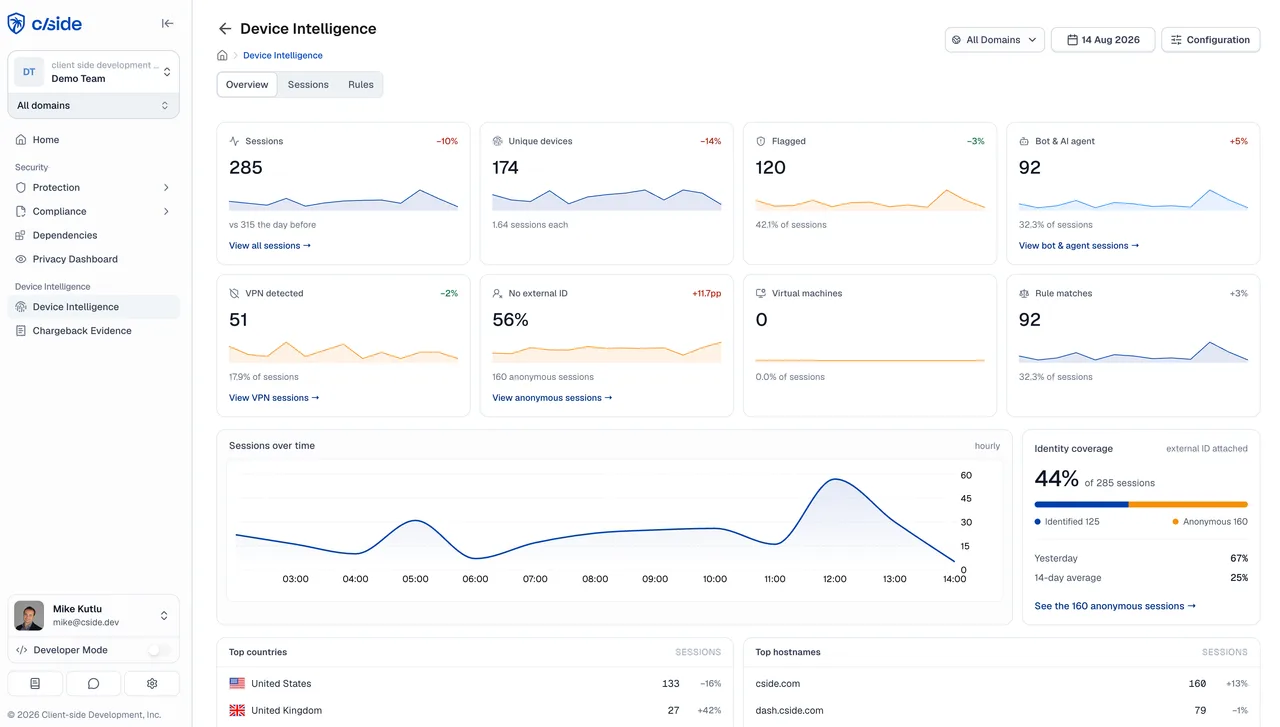
Setup takes minutes: add the cside script to your site, and fingerprinting starts working immediately. Sessions are captured, identities are resolved, and your dashboard populates with fraud signals.
Start free, scale when ready
No credit card required. Free plan stays free.
Free
Up to 1,000 API calls/month. Device fingerprint ID, cross-session recognition, and basic intelligence signals.
- Up to 1,000 API calls per month
- Device Fingerprint ID
- Cross session recognition
- Basic intelligence signals
- 7-day data retention
Business
Full browser fingerprinting that holds across sessions, VPNs, and incognito mode. All intelligence signals including AI agent detection and VPN detection.
- All intelligence signals
- AI agent detection
- VPN and proxy detection
- 30-day data retention
- IP enrichment and threat intelligence
Enterprise
For high-volume traffic and organisations that need chargeback fingerprinting, custom data retention, SSO, and dedicated support.
- Chargeback Evidence (CB911)
- Custom data retention
- 99.9% uptime SLA
- SSO and organisation layer
- Dedicated account manager
- Source data fields
Need more? See the full pricing breakdown.
View all plansQuestions, answered
01 How does cside fingerprinting help reduce fraud?
cside helps you spot suspicious browser environments, repeat devices, and risky sessions earlier. That gives your team better signals for blocking, challenging, or reviewing activity before it turns into losses.
02 Can I get raw fingerprinting signals through an API or webhook?
Yes. cside can send raw fingerprinting signals through APIs and webhooks so your team can use them in your own systems. That makes it easier to plug browser intelligence into internal workflows, rules, and case review tools.
03 What types of fraud can fingerprinting help identify?
Common examples include account takeover, multi-accounting, account sharing, promo abuse, and stolen card testing. It is especially useful when the same actor keeps changing IPs but shows similar browser or device patterns.
04 Why is browser fingerprinting useful if I already have IP-based fraud checks?
IPs are still useful, but they change fast and are easy to rotate. The rise of residential proxies is decreasing the effectiveness of IP-based blocking. Fingerprinting gives you a deeper view of the browser and device environment, which helps uncover repeat abuse that IP checks alone can miss.
05 Can fingerprinting help detect AI agents and stealth automation?
Yes. Fingerprinting can help surface suspicious browser environments and automation patterns that look more human than old-school bots. That matters more now because AI agents are getting better at blending into normal traffic. For a deeper look, read our full guide to detecting AI agent traffic using browser-layer signals.
06 Do I need to replace my current fraud platform to use cside fingerprinting?
No. Most teams run cside as an additional device intelligence solution layered on top of what they already have. It fits well with existing anti-fraud tools, review queues, and custom decisioning systems.
07 How quickly can I get started with cside fingerprinting?
Teams can start quickly and begin collecting browser signals without a huge implementation project. From there, you can decide how deeply to wire the signals into your fraud workflows.
08 Will cside fingerprinting add latency or block the UI?
No. The fingerprinting script exposes fingerprinting functions on window without affecting rendering. Fingerprint collection runs asynchronously in the background, typically completing within milliseconds, so it does not introduce noticeable latency or block the user interface.
09 What makes cside different from traditional anti-fraud suites?
Most anti-fraud suites are strongest at orchestration, rules, and case management. cside adds browser-layer visibility, which helps teams see signals those systems often do not collect on their own.
10 Can fingerprinting help reduce friction for trusted users too?
Yes. Better signals don't just help you catch bad traffic. They also help you avoid challenging every session the same way, which can lead to a smoother experience for good users.
11 What should I look for when comparing device intelligence solutions?
When you evaluate the leading providers in device intelligence, look for browser-layer visibility, resilient device IDs that survive cookie clears and VPNs, raw signal access through an API or webhooks, and evidence you can use for chargeback disputes. The best device intelligence service pairs 250+ signals with a fast, privacy-compliant deployment: cside is a single first-party JavaScript snippet, with no DNS changes and no traffic routed through cside.
12 How does cside device intelligence handle privacy and data residency?
cside is built to be privacy-compliant and does not use cookies to identify devices. It deploys as a single first-party JavaScript snippet, so it does not require DNS changes and does not route your site traffic through cside. Device and browser signals are collected passively on your own domain during normal page loads, so you keep control over how that data flows into your systems, and our team can walk through regional data handling and data residency requirements as part of your evaluation.
Didn't find what you were looking for?
Talk to a fraud expertStop fraud at the browser layer
Free plan includes 1,000 API calls/month. Upgrade for full intelligence.