Fake Accounts Are Cheaper Than Ever
New account fraud jumped 31% in 2025, hitting 5.4 million victims, and a single fake account now costs less than a penny to create. Off-the-shelf automation, CAPTCHA solvers, and AI-generated identities have flipped the economics in the attacker's favor.
Inflated Metrics
Fake signups inflate registration numbers, distort analytics, and leak your new-user promo budget.
Downstream Abuse
Fake accounts become the launchpad for promo fraud, review manipulation, and account takeover.
Why Fake Signups Keep Growing
The tooling is off the shelf: browser automation, CAPTCHA-solving services, and LLM-generated identities. If your platform offers a $10 new-user credit and an account costs $0.05 to spin up, the math is obvious. A single operator can deploy hundreds of registrations within hours.
A valid inbox receipt and a solved CAPTCHA are fully compatible with an automated, fully fake signup pipeline. Disposable email APIs provision throwaway inboxes and retrieve OTPs programmatically, and human-powered CAPTCHA services solve challenges in under 30 seconds.
Commercial tools like Multilogin and GoLogin present a unique, synthetic device fingerprint per registration, spoofing canvas, WebGL, audio, fonts, and timezone. Combined with residential proxies and rotated emails, each fake account looks like a brand-new independent user to traditional checks.
How cside delivers new account fraud prevention
Fingerprint every signup
cside collects 250+ device, network, and behavioral signals on every registration to build a persistent visitor ID that holds across sessions, incognito, cleared storage, and VPNs.
- Capture device fingerprint, geolocation, VPN/proxy, browser configuration, and form-fill behavior at the moment of registration.
- Surface the same device fingerprint appearing across many registrations with different emails and IPs, the strongest multi-accounting signal there is.
- Detect that an anti-detect browser or automation framework is in use, not just the spoofed output it produces.
Decide before the account exists
Stop a fake-account operator before their second account is created. Feed signals into your rules engine to block, challenge, or allow each registration in real time.
- Send raw signals to your rules engine via API/webhook, or use pre-built alert templates for high-risk signup patterns.
- Apply step-up friction only when signals cross a threshold, so legitimate registrations stay frictionless.
- Block high-confidence fakes at registration, the highest-leverage moment, before promo abuse or downstream fraud begins.
Raw signals for fake signup detection
Access signals through a developer friendly API or webhooks. Protect registration & login pages, forms, and platform integrity.
Built for platforms hit by fake signups
SaaS Platforms
Free-tier and trial abuse depends on creating many accounts cheaply; one operator can run hundreds of trial accounts.
Gaming Platforms
Bonus abuse, multi-accounting, and smurfing all begin at account creation, where anti-detect browsers are standard tooling.
FinTech Websites
Account opening fraud combines synthetic identities with browser-layer spoofing to pass KYC-adjacent checks at signup.
Resources to help you stop fake account creation
Why cside outperforms traditional signup defenses
cside adds browser-layer visibility that endpoint verification and CAPTCHA can't see.
| vs. Email/OTP Verification | vs. CAPTCHA | vs. Server-Side Fraud Tools |
|---|---|---|
| Catches the same device behind many different inboxes | Reads the browser environment, not a single checkpoint | Captures client-side signals invisible to server logs |
| Flags automation even when a valid OTP is submitted | Detects AI agents and solver services that pass the challenge | Sees anti-detect browsers running inside real Chrome |
| Decides before the account exists, not after | Runs passively with zero added user friction | Fires during registration, earlier in the flow |
Get started with cside
Free plan includes 1,000 API calls per month with basic signals. Upgrade for full intelligence starting at $99/month for 50K API calls.
Trusted by enterprise security & fraud teams:

















“Evolving fraud tactics and shifts in consumer behavior are colliding for merchants. By joining forces with cside, we're delivering solutions that address real-world issues merchants struggle with daily, such as friendly fraud chargebacks.”
Monica Eaton, CEO of Chargebacks911.
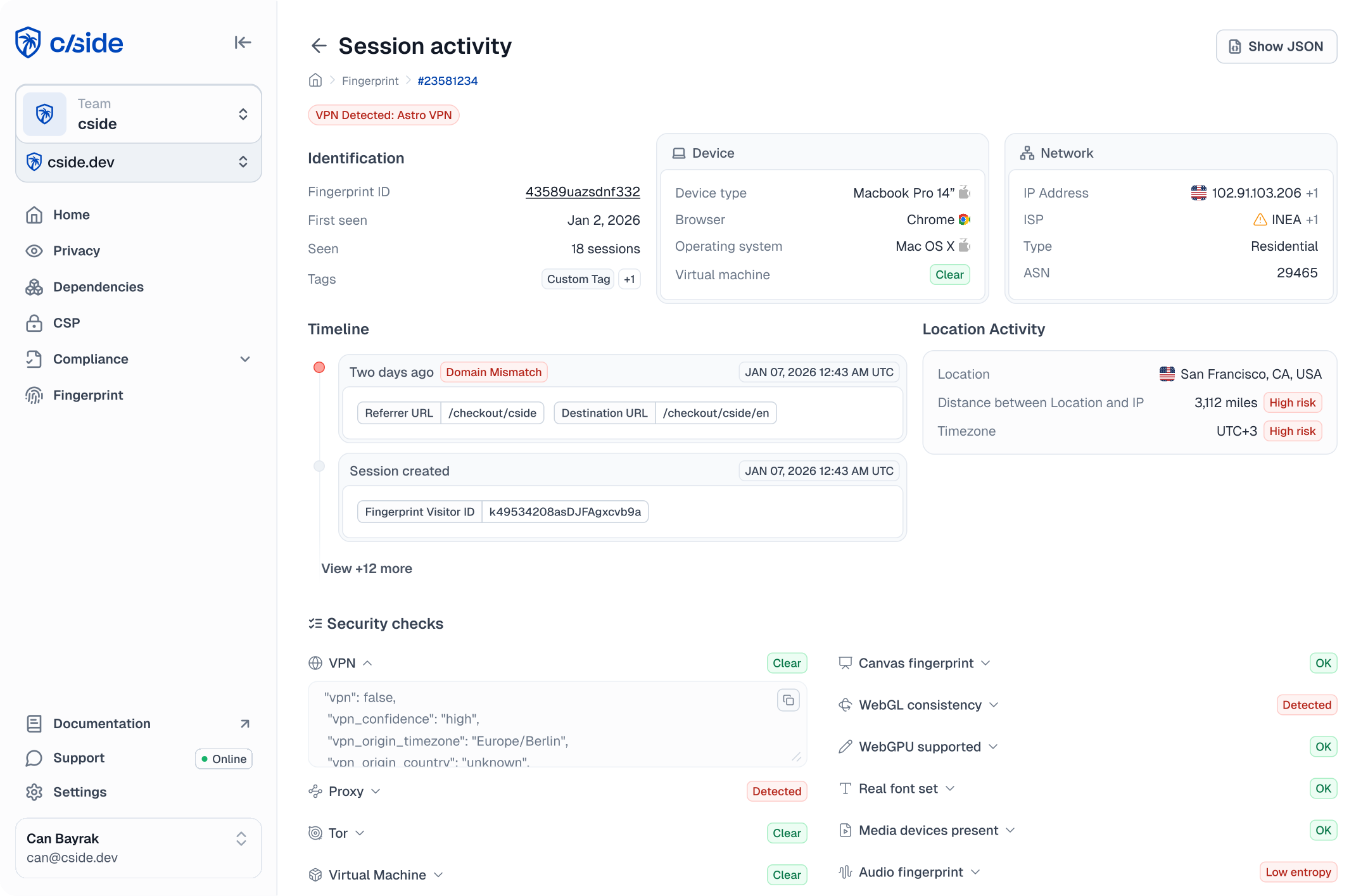
Passive detection with zero signup friction
cside collects device and browser signals passively while a visitor fills out your registration form. There are no challenges, pop-ups, or extra steps. Legitimate users sign up with zero friction, while automated and AI-driven signups are flagged by the signals they cannot hide.
One device, many accounts
An operator can rotate email providers and proxy IPs freely, but hardware is rare to rotate. The same device fingerprint appearing across fifteen registrations over a week, each with a different email, is a strong multi-accounting signal even when every individual signup passed your velocity rules cleanly.
Getting started with new account fraud prevention
Add the cside script to your registration and login pages. Fingerprinting starts working immediately, signups are captured, and your dashboard populates with risk signals. From there, wire the signals into your signup flow to challenge or block fake account creation before it completes.
FAQ
Frequently Asked Questions
New account fraud prevention stops fraudulent accounts from being created rather than cleaning them up after the fact. cside reads 250+ device, network, and behavioral signals during registration to flag automation, anti-detect browsers, and AI agents, and links many fake signups back to one device even when emails and IPs rotate. That lets you block, challenge, or allow each registration in real time, before the account exists.
cside reads 250+ device, network, and behavioral signals during the registration interaction itself, before any email or OTP step. It flags automation frameworks and anti-detect browsers by the traces they leave in the browser execution environment, and links many fake signups back to one device by matching fingerprints that persist even when the operator rotates emails and IPs.
No. Email and OTP verify the endpoint, not the registrant. A valid inbox receipt and a valid OTP submission are fully compatible with an automated, fully fake signup pipeline. Disposable email APIs provision throwaway inboxes and retrieve verification codes programmatically. cside verifies the environment the registrant operates in, which the attacker cannot swap out.
Not reliably. AI vision models solve image CAPTCHAs at near-human accuracy, and human-powered solving services return solved challenges in under 30 seconds at low cost. CAPTCHA is a single checkpoint that announces itself to the attacker. cside runs continuous, session-level evaluation that does not tip off the operator that detection is present.
A device fingerprint is much harder to change than an email address or an IP. An operator running a campaign from the same hardware leaves a consistent device fingerprint across every registration, even with rotated email providers and proxies. The same fingerprint across many signups with freshly registered email domains is a strong multi-accounting signal.
Account takeover compromises an existing legitimate account through stolen credentials, phishing, or session hijacking. Fake account creation builds a new fraudulent account from scratch. The detection signals overlap, but fake signups are detectable at the moment of registration, while account takeover calls for session termination and credential resets. cside covers both.
cside runs as one first-party JavaScript snippet on your registration page and reads 250+ device, network, and behavioral signals during the signup interaction. Anti-detect browsers like Multilogin and GoLogin spoof canvas, WebGL, audio, fonts, and timezone to present a clean fingerprint, but the act of spoofing leaves detectable inconsistencies in the browser execution environment. cside flags those artifacts, along with headless frameworks and AI agents automating a real Chrome instance, rather than trusting the fingerprint they present.
Yes. cside collects its signals passively while a visitor fills out your form, with no challenges, pop-ups, or extra steps for the user. Legitimate registrants sign up exactly as before, while automated and AI-driven signups are flagged by the signals they cannot hide. You apply step-up friction such as an extra verification only when the signals cross your risk threshold, so friction lands on suspicious registrations instead of everyone.
cside does not verify a person's identity documents; it verifies the environment the registration comes from. A synthetic identity still has to be submitted through a browser, and the operator behind a batch of them typically reuses the same hardware, automation tooling, or anti-detect setup. cside links those registrations back to one device by matching fingerprints that persist across rotated emails, names, and IPs, so a run of synthetic-identity signups that each look independent surfaces as a single operator. Pair those signals with your identity or KYC-adjacent checks for defense in depth.
No. cside loads as one lightweight first-party JavaScript snippet and collects its signals asynchronously while the visitor interacts with your form, so it does not block page rendering or the submit action. Risk signals are available through a developer-friendly API or webhooks, and you decide whether to evaluate them inline in your signup flow or asynchronously after submission, depending on how much you want the decision to gate account creation.
cside is a single first-party JavaScript snippet that does not sit in front of your traffic and does not act as a proxy. Its device intelligence does not rely on third-party cookies to recognize a device across registrations; the fingerprint is derived from device, network, and browser signals. That keeps the signal durable even when a visitor clears cookies or uses incognito, and it keeps the approach compatible with a privacy-conscious, cookieless setup. Deploy it in line with your own consent and data-handling policies.
cside returns raw risk signals rather than a single block-or-allow verdict, so you stay in control of the threshold. Legitimate users share hardware, use VPNs, and clear cookies too, so cside is built to weigh many signals together rather than reject on any one of them. You can start in a monitor-only mode to tune thresholds against your real traffic, apply step-up verification to borderline cases, and reserve hard blocks for high-confidence patterns such as the same device fingerprint spinning up many accounts. That keeps false positives low while still stopping the operators who matter.