Attackers Are Bypassing MFA
Credential stuffing runs 24/7 (AI-based bots testing at scale), session hijacking replays stolen cookies, and phishing attacks are getting more advanced. Even if you use MFA, user accounts can still be compromised.
Why Account Takeover Is Growing
Billions of username-password pairs are available on the dark web. Credential stuffing tools test them against login pages at scale, and most businesses have no visibility into these attacks at the browser level.
Attackers steal session tokens through phishing, malware, or man-in-the-browser attacks. Once they have a valid session, they skip login entirely and traditional auth checks see nothing wrong.
Most anti-fraud platforms trigger after a suspicious transaction. By then, the attacker already has access to the account, changed recovery details, and extracted value. Effective account takeover attack prevention has to start at the login, not after the money moves.
How cside detects account takeover
Fingerprint every session
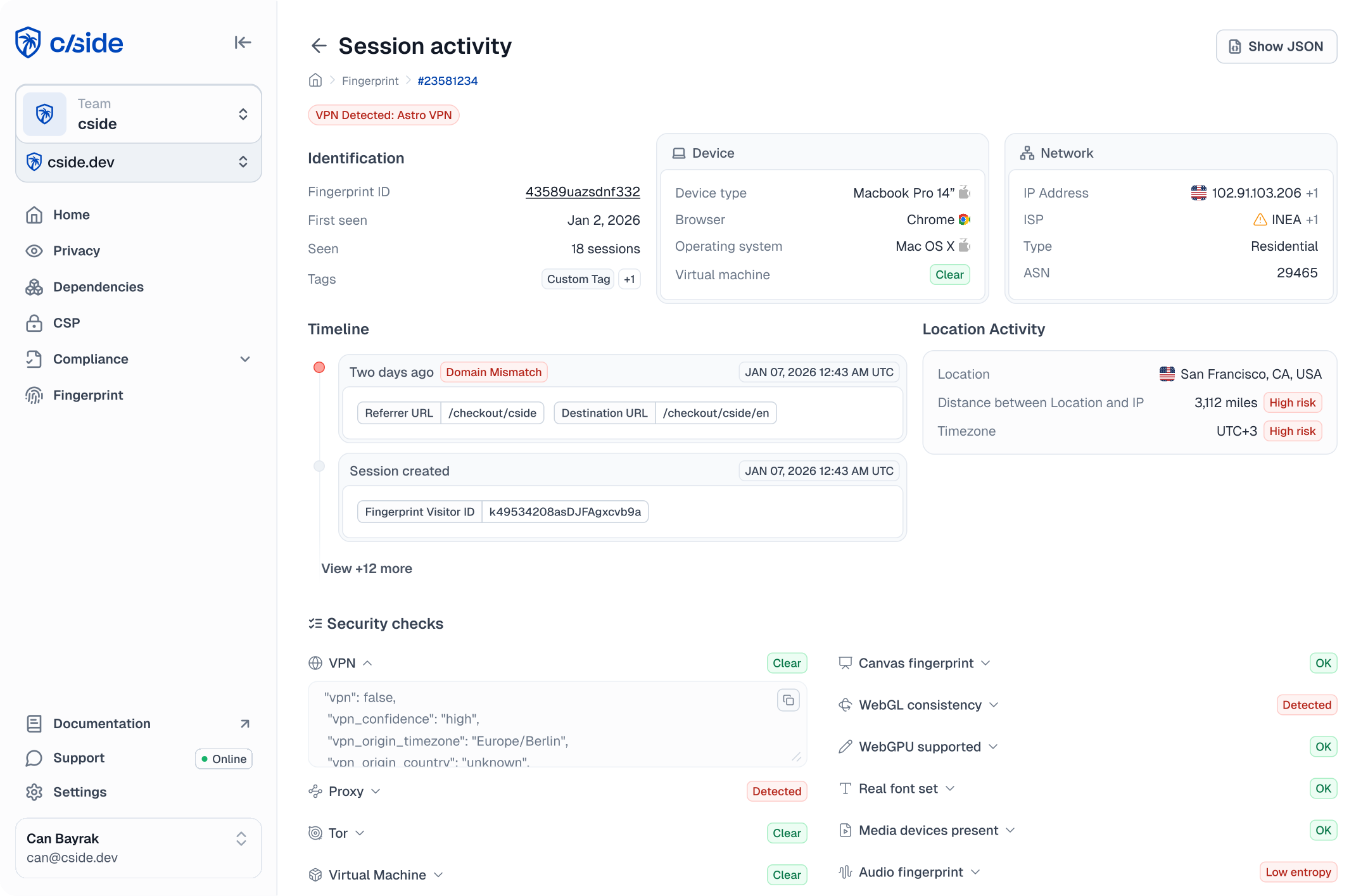
cside collects 250+ device, network, and behavioral signals on every session to build a real-time risk profile without adding user friction.
- Capture device fingerprint, geolocation, VPN/proxies, browser configurations, and more.
- Detect bots, headless browsers, and AI agents that mimic human behavior to bypass traditional authentication.
- Establish a behavioral baseline for every visitor and flag deviations. New devices, impossible travel, or unusual session patterns.
Inform fraud decisions
Challenge, block, or flag suspicious activity for account takeover fraud prevention that protects your users and cuts down your fraud losses.
- Feed raw signals into your existing rules engine via API/webhook or use pre-built alert templates of high risk patterns.
- Combine with your account activity data (user behavior patterns) for high-accuracy decisions with fewer false positives.
- Enable risk-based authentication that only steps up when something looks wrong, allowing trusted users to sail through smoothly.
Raw signals for account takeover prevention
Access signals through a developer friendly API or webhooks. Protect payment & login pages, forms, and platform integrity.
Designed for industries targeted by ATO
eCommerce Websites
Hijacked accounts drain stored payment methods and generate costly chargebacks.
FinTech Websites
Credential stuffing and session hijacking target banking logins for direct financial theft.
Travel Websites
Stolen accounts are used to book trips with saved cards, then cancelled for credit or resold.
Why cside outperforms traditional ATO defenses
cside adds browser-layer visibility that server-side tools lack.
| vs. IP-Based Rate Limiting | vs. MFA Alone | vs. Server-Side Fraud Tools |
|---|---|---|
| Detects distributed attacks across rotating IPs | Catches session hijacking related JavaScript injections | Captures client-side signals invisible to server logs |
| Identifies returning attackers even when IPs change | Adds a passive risk layer with zero user friction | Links sessions across devices and accounts |
| Distinguishes residential proxies from legitimate users | Social engineering bypasses MFA | Provides forensic evidence for incident investigation |
Get started with cside
Free plan includes 1,000 API calls per month with basic signals. Upgrade for full intelligence starting at $99/month for 50K API calls.
Trusted by enterprise security & fraud teams:

















“Evolving fraud tactics and shifts in consumer behavior are colliding for merchants. By joining forces with cside, we're delivering solutions that address real-world issues merchants struggle with daily, such as friendly fraud chargebacks.”
Monica Eaton, CEO of Chargebacks911.
Passive detection with zero login friction
cside collects device and browser signals passively during login. There are no challenges, pop-ups, or extra steps. Legitimate users experience zero friction, while attackers are flagged by the signals they cannot hide.
Real-time signals on every session
cside delivers device, network, and behavioral signals the moment a session starts. Your fraud stack gets risk data before login completes, so you can challenge or block suspicious attempts as they happen instead of investigating after the damage is done.
Getting started with ATO prevention
Add the cside script to your login and account pages. Fingerprinting starts working immediately, sessions are captured, and your dashboard populates with risk signals. From there, wire the signals into your auth flow to challenge or block suspicious logins.
FAQ
Frequently Asked Questions
cside fingerprints every visitor through 250+ device, network, and behavioral signals. This establishes a safe baseline for account takeover prevention. When a visitor logs in from an unrecognized device or shows suspicious patterns that deviate from the baseline, you can challenge or block them before unauthorized access turns into a costly fraud case.
Yes. Every signal we collect is available via API and real-time webhooks. You can pipe them into whatever system you're already using.
"Impossible travel" (e.g. two logins from different continents within minutes of each other), multiple failed attempts in a short window, VPN or proxy usage on a previously clean account, and mid-session device changes. Any one of these is worth a second look. Several together is a strong indicator of compromise.
Yes. cside has an API and webhook option that feeds raw signals into your own rules engine, SIEM, or fraud platform. We also offer pre-built rule templates if you want alerts out of the box.
cside is client-side account takeover prevention software that runs as one first-party JavaScript snippet on your login and account pages. It fingerprints every session with 250+ device, network, and behavioral signals, then feeds real-time risk data into your existing auth and fraud stack, so you can challenge or block suspicious logins without adding friction for legitimate users.
Credential stuffing runs stolen username-password pairs against your login page at scale, almost always with automation. cside fingerprints every session with 250+ device, network, and behavioral signals, so it spots the tells that credential stuffing tools leave behind: headless browsers, automation frameworks, mismatched device attributes, and abnormal request velocity. Because detection happens at the browser layer instead of just counting failed logins from one IP, account takeover prevention still works when attackers distribute the attack across thousands of rotating residential IPs to stay under rate limits.
Yes. Session hijacking and cookie replay let an attacker skip the login screen entirely, so a check that only runs at sign-in never sees them. cside keeps reading device, network, and behavioral signals for the length of the session, so a mid-session device change, a sudden jump in location, or a switch to a VPN on a previously clean session all surface as deviations from the baseline. That gives your fraud stack a chance to step up authentication or block before the attacker changes recovery details or moves money.
MFA raises the bar, but it does not close every gap. Phishing kits and man-in-the-browser attacks harvest one-time codes in real time, session hijacking replays a valid cookie after MFA has already passed, and social engineering talks users into approving prompts. cside adds a passive layer that keeps evaluating the session after the login screen, so a takeover that slips past MFA still trips on the device and behavioral signals the attacker cannot fake. It runs alongside your MFA, not instead of it.
Yes. cside flags VPNs, datacenter and residential proxies, Tor exit nodes, and virtual machines among its 250+ signals. Attackers lean on residential proxies to make credential stuffing and account access look like it comes from ordinary home connections, which defeats simple IP block-lists. cside treats these as risk inputs rather than automatic blocks, so you can weigh a proxy against the rest of the session: a returning customer on a corporate VPN is not the same as a brand-new device behind a rotating residential proxy.
No. cside deploys as one first-party JavaScript snippet on your login and account pages and collects signals passively in the background. There are no challenges, CAPTCHAs, or extra steps for the visitor, so legitimate users sign in exactly as before. The risk signals reach your fraud stack in real time, which lets you reserve step-up authentication for the sessions that actually look risky instead of taxing everyone.
cside builds its device fingerprint from browser and network signals, not cookies, so it keeps working when a visitor clears cookies, uses incognito, or blocks third-party tracking, which is exactly what many attackers do to look like a fresh user. Because it does not depend on cookies and does not sit in front of your traffic, it fits into a privacy-conscious stack: you stay the data controller and decide how signals are stored and acted on.
cside gives you raw risk signals rather than a single accept-or-reject verdict, so you decide how strict to be. By combining the 250+ session signals with your own account history, most legitimate logins clear without any challenge and only genuinely anomalous sessions get flagged. Because a returning visitor is recognized by their device and behavior even when their IP changes, you avoid the blunt IP or geo blocks that tend to catch real customers alongside attackers.