One Person, Many Accounts
Multi-accounting is one of the most consistent drivers of first-party misuse: a single real person creating many accounts to claim value you meant to give once. Disposable emails, residential proxies, and anti-detect browsers make every duplicate look like a brand-new user.
First-Party Misuse Rising
64% of merchants report a meaningful increase in first-party misuse, and multi-accounting is a top driver.
Bonus & Referral Payouts
Every duplicate account claims sign-up bonuses again and farms referral rewards through self-referral loops.
Trial Farming
Free trials extended indefinitely through a sequence of new emails turn would-be customers into permanent freeloaders.
AI-Driven Volume
AI-powered fraud rose 1,210% in 2025, letting one operator run hundreds of accounts at once.
Why Multi-Accounting Keeps Growing
Disposable email services generate functional inboxes in seconds, and freshly registered domains pass every blocklist check. Residential proxy networks rotate IPs so each registration looks like a different household. To IP- and email-based checks, one operator looks like dozens of unrelated users.
An operator who understands the thresholds your velocity rules monitor can stay under them indefinitely by spacing out account creation and rotating identifiers. Velocity rules catch the obvious case and miss the patient one.
Commercial tools like Multilogin and GoLogin present a unique, synthetic device fingerprint per account, spoofing canvas, WebGL, audio, fonts, and timezone. Combined with rotated emails and proxies, each duplicate account looks like brand-new hardware to traditional checks.
How cside detects multi-accounting
Fingerprint every registration
cside collects 250+ device, network, and behavioral signals on every signup to build a persistent visitor ID that holds across sessions, incognito, cleared storage, and VPNs.
- Build a stable device fingerprint that persists even when the operator rotates email providers and proxy IPs.
- Surface the same fingerprint appearing across many registrations with different emails and IPs, the strongest multi-accounting signal there is.
- Detect that an anti-detect browser or automation framework is in use, not just the spoofed output it produces.
Dedupe before the payout
Multi-accounting fraud prevention happens at the payout step: catch duplicate accounts before a bonus is credited, a trial is granted, or a referral reward is paid. Feed signals into your rules engine to merge, challenge, or block in real time.
- Correlate device fingerprints across registrations and flag accounts that share one as likely operated by the same person.
- Decide at the referral or trial step, before the reward is paid, which is materially cheaper than clawing it back later.
- Apply step-up friction only when signals cross a threshold, so legitimate new users sign up without friction.
Raw signals for multi-accounting fraud detection
Access signals through a developer friendly API or webhooks. Protect signups, referral programs, and trial conversions.
Built for platforms hit by multi-accounting
SaaS Platforms
Free-tier and trial farming is pure conversion loss: users who would otherwise pay maintain continuous free access by cycling accounts.
iGaming & Gaming
Bonus abuse, promo stacking, and smurfing all start with one operator running many accounts behind anti-detect browsers.
Crypto Platforms
Airdrop farming and sybil attacks depend on making one person look like thousands of independent wallets and accounts.
Resources to help you stop multi-accounting and trial abuse
Multi-accounting fraud prevention beyond velocity-based controls
cside adds a persistent device identity that email checks and velocity rules can't see.
| vs. Velocity Rules | vs. Email/Phone Verification | vs. Server-Side Fraud Tools |
|---|---|---|
| Links accounts by shared hardware, not by request rate | Catches the same device behind many different inboxes | Captures client-side signals invisible to server logs |
| Catches the patient operator who spaces signups out | Flags duplicates even when each phone and email is valid | Sees anti-detect browsers running inside real Chrome |
| Correlates across accounts instead of one at a time | Decides before the bonus or trial is granted | Fires during registration, earlier in the flow |
Get started with cside
Free plan includes 1,000 API calls per month with basic signals. Upgrade for full intelligence starting at $99/month for 50K API calls.
Trusted by enterprise security & fraud teams:

















“Evolving fraud tactics and shifts in consumer behavior are colliding for merchants. By joining forces with cside, we're delivering solutions that address real-world issues merchants struggle with daily, such as friendly fraud chargebacks.”
Monica Eaton, CEO of Chargebacks911.
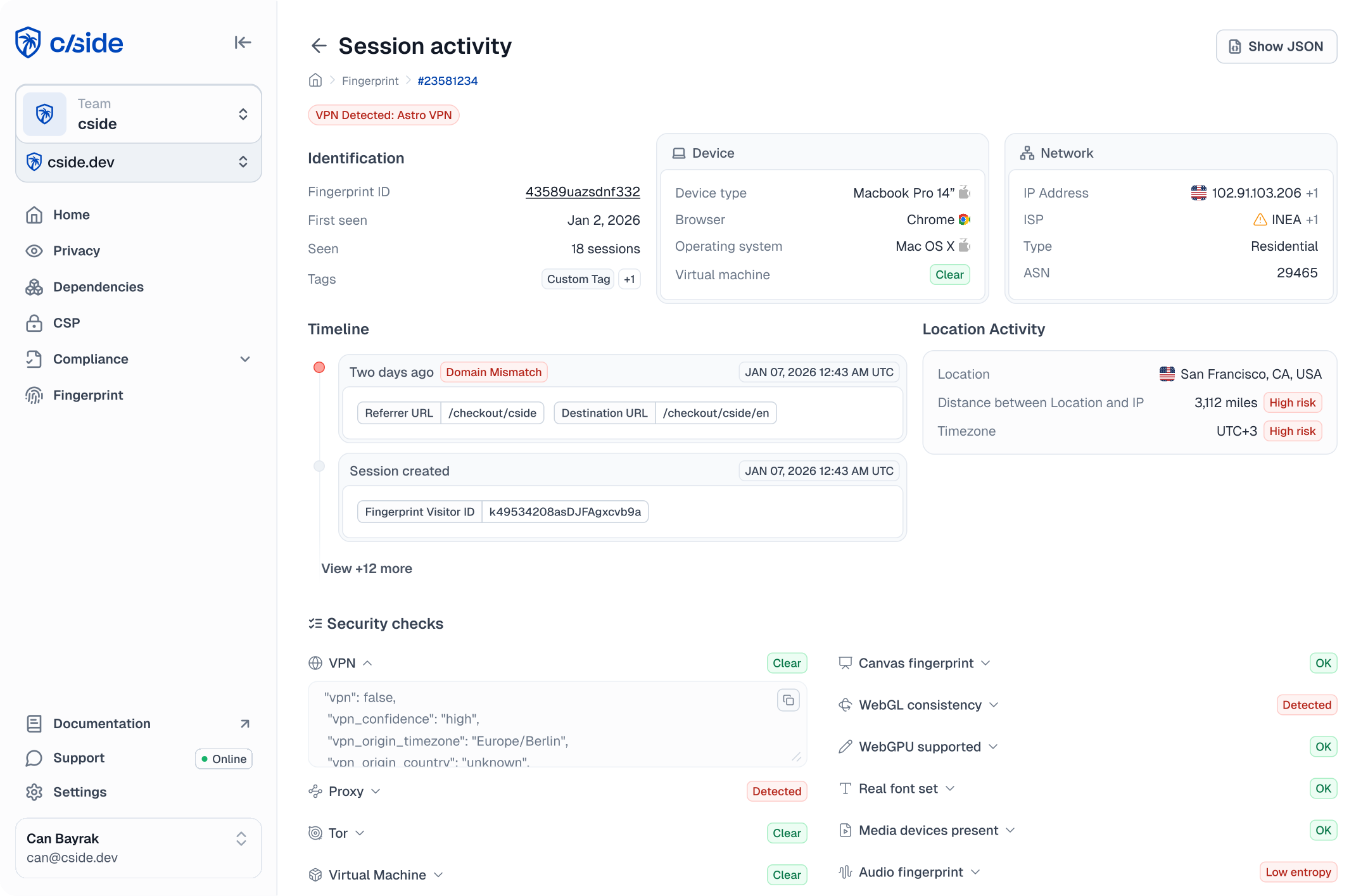
Detection without friction for real users
cside collects device and browser signals passively while a visitor registers. Legitimate new users sign up with zero added steps, while duplicate and farmed accounts are flagged by the device they cannot rotate.
One device, many accounts
An operator can rotate email providers and proxy IPs freely, but hardware is rare to rotate. The same device fingerprint across fifteen registrations over a week, each with a different email, is a strong multi-accounting signal even when every individual signup passed your velocity rules cleanly.
Catch abuse at the referral and trial step
Add the cside script to your registration, referral, and trial flows. Fingerprinting starts immediately, and you can correlate accounts before a bonus is credited or a trial is granted rather than clawing the value back after it is gone.
FAQ
Frequently Asked Questions
cside captures the hardware and software characteristics of the browser and device on every registration. These are far more stable than an email address or IP: the same device produces the same fingerprint even when the operator rotates email providers and proxies. cside correlates fingerprints across registrations and flags accounts that share one as likely operated by the same person, and anti-detect browser detection catches operators who use profile tools to rotate their fingerprint.
No. Disposable email APIs generate functional inboxes in seconds, each passing verification, and an operator who understands your velocity thresholds can stay under them indefinitely by spacing out account creation and rotating identifiers. Velocity catches the careless operator and misses the patient one. cside links accounts by the device behind them, which the operator cannot swap out as easily.
A device fingerprint is much harder to change than an email address or an IP. An operator running a campaign from the same hardware leaves a consistent fingerprint across every registration, even with rotated email providers and proxies. The same fingerprint across many signups is a strong multi-accounting signal even when each account looks unique to email and IP checks.
Multi-accounting is one person creating many accounts to claim value meant to be given once, like bonuses, referrals, or free trials. Account sharing is many people using one account to avoid paying for additional seats or subscriptions. The detection signals overlap, but the goal differs. cside covers both; see our account sharing use case.
Yes. cside runs passively, collecting device and browser signals while a visitor registers, with no challenges or extra steps. Real users convert with zero friction. You apply step-up friction or block only when signals cross a threshold, so trial farming is stopped without taxing legitimate signups.
Multi-accounting fraud prevention is the practice of stopping one person from creating many accounts to claim value meant to be given once, such as sign-up bonuses, referral rewards, and free trials. cside approaches it by fingerprinting every registration with 250+ device, network, and behavioral signals, linking accounts back to a single device even when emails, IPs, and proxies rotate, so duplicates are caught before a bonus or trial is granted rather than clawed back afterward.
No. cside deploys as one first-party JavaScript snippet that collects device and browser signals in the background while a visitor fills out your registration form. It does not sit in front of your traffic and does not gate the page load, so the signup experience is unchanged for legitimate users. Fingerprint correlation and scoring happen on cside infrastructure, keeping that work off your critical path.
Yes. cside identifies a device from its hardware and software characteristics rather than a cookie, so the fingerprint persists even when a user clears cookies or opens an incognito window. Because the signal is derived from the device configuration rather than a stored personal identifier, cside can link accounts to a shared device without depending on cookies. This keeps the approach privacy-conscious while still catching operators who reset browser storage between registrations.
Sharing a device or a network is not treated as fraud on its own. cside correlates 250+ device, network, and behavioral signals, so a household where two people each register once looks very different from one operator spinning up dozens of accounts from the same hardware in a short window. You set the threshold and the action, so borderline cases can trigger a review or a step-up check rather than an automatic block, which keeps false positives low.
Both, and cside supports checking at either point. Screening at signup stops duplicates before a bonus or trial is granted, which is cheaper than clawing the value back later. Screening again at payout or reward redemption catches operators who stayed dormant to avoid early detection. Because a device fingerprint is captured on every session, you can correlate an account back to its origin device whenever you evaluate it.
Referral and bonus abuse usually means one person registering as both the referrer and the referred user, or creating many fake accounts to farm sign-up rewards. cside links those accounts by the device behind them, so self-referral rings and bonus farms surface as many accounts sharing one fingerprint even when the emails, payment details, and IPs differ. You can hold or reject the reward before it pays out rather than reversing it afterward.
Yes. Alongside the web client, cside offers native iOS and Android SDKs in beta that run the same engine, capturing the same 250+ signals as the web client plus signals only an app can see, such as emulator, jailbreak, and root detection. This helps catch operators who farm accounts from emulators or tampered apps. Mobile SDK access is early access today, so talk to us to enable it for your app.