Shared Accounts Are Costing You Revenue
Every shared login is a paying customer you already acquired but never converted. Account sharing erodes per-seat pricing, inflates infrastructure costs, and destroys the audit trail you need for compliance.
Per-Seat Leakage
Converting even 10% of shared SaaS users represents significant ARR recovery.
Broken Audit Trails
When multiple people use one login, you can't attribute actions to individuals. This creates compliance exposure.
Security Exposure
Shared credentials in Slack channels, emails, or shared docs extend the attack surface of credential theft.
Why Account Sharing Keeps Growing
As SaaS costs rise, teams share a single login to avoid paying for additional seats. The more expensive the tool, the stronger the incentive. Shared credentials end up in Slack channels and shared docs where anyone can access them.
Platforms like Sharesub and Spliiit let account holders sell access to strangers. While users see it as saving money, it creates a pipeline for credential exposure and unauthorized access at scale.
Traditional IP-based approaches flag legitimate users who log in from work, home, and mobile networks. VPNs make things worse. Without device-level signals, you end up either blocking real users or ignoring actual sharing.
How cside powers account sharing prevention
Fingerprint every session
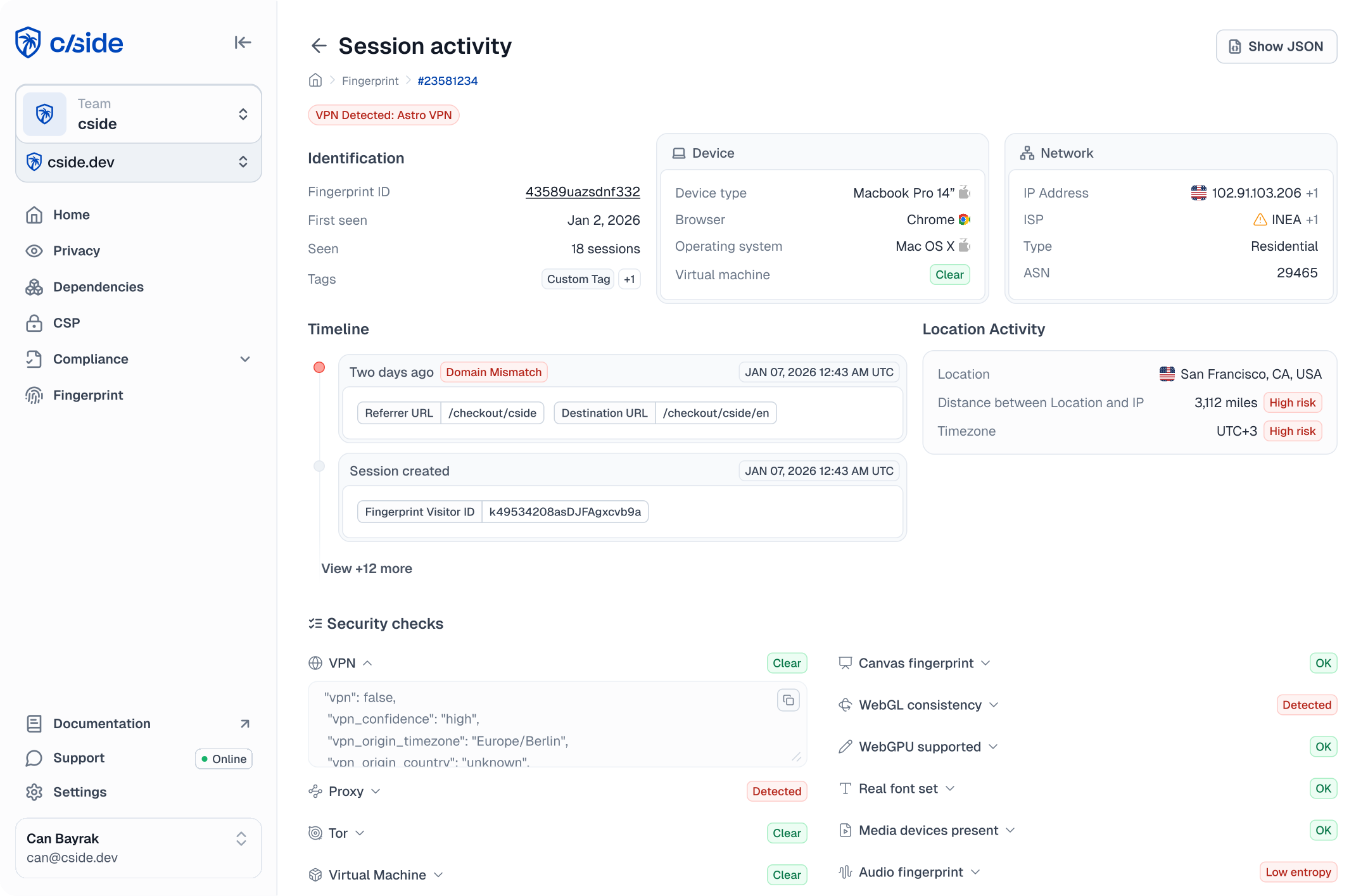
cside collects 250+ device, network, and behavioral signals on every session to build a persistent device identity without cookies or user friction.
- Generate a stable visitor ID that holds across sessions, incognito mode, cleared storage, and VPN use.
- Track unique devices per account and detect when new devices appear. Flag rapid device accumulation as a sharing indicator.
- Identify impossible travel, concurrent sessions from different locations, and behavioral anomalies that signal shared credentials.
Enforce limits and recover revenue
Turn detection into account sharing prevention: wire fingerprinting signals into your auth flow to enforce device limits, trigger upgrade prompts, and convert shared users.
- Feed device IDs and risk signals into your existing rules engine via API or webhooks. Build enforcement that fits your product.
- Trigger soft upgrade prompts when sharing is detected. Convert freeloaders into paying users without punishing anyone.
- Set device ceilings per account and plan tier. When the limit is hit, prompt users to manage devices or upgrade their plan.
Raw signals for account sharing detection
Access signals through a developer-friendly API or webhooks. Enforce account limits and protect revenue.
Industries hit hardest by account sharing
SaaS Platforms
Per-seat pricing makes credential sharing a direct revenue leak. Teams dodge seat costs by sharing a single login.
Streaming Services
Password sharing cost streaming platforms billions before enforcement. Netflix added 50 million subscribers after their crackdown.
Paywalled Content
News sites, research platforms, and premium publishers lose subscriptions when one login serves an entire team.
Why cside outperforms traditional sharing defenses
cside combines fingerprinting signals with deep browser runtime monitoring that traditional fingerprinting tools ignore.
| vs. IP-Based Detection | vs. Session Limits Alone | vs. MFA Alone |
|---|---|---|
| Identifies devices regardless of IP, VPN, or network changes | Distinguishes genuine multi-device usage from actual sharing | Detects sharing even when the account holder approves MFA for others |
| No false positives from users logging in at home, work, and mobile | Adds device identity to session counts for higher accuracy | Adds a passive detection layer with zero user friction |
| Catches sharing behind residential proxies and corporate VPNs | Tracks device accumulation over time, not just concurrent sessions | Provides forensic evidence of which devices accessed the account |
Get started with cside
Free plan includes 1,000 API calls per month with basic signals. Upgrade for full intelligence starting at $99/month for 50K API calls.
Trusted by enterprise security & fraud teams:

















“Evolving fraud tactics and shifts in consumer behavior are colliding for merchants. By joining forces with cside, we're delivering solutions that address real-world issues merchants struggle with daily, such as friendly fraud chargebacks.”
Monica Eaton, CEO of Chargebacks911.
Passive detection with zero friction
cside collects device and browser signals passively during every page load. There are no challenges, pop-ups, or extra steps. Legitimate users never know it's there, while shared accounts are flagged by the device signals they produce.
Device limits and concurrent session enforcement
Track unique visitor IDs per account that are checked against limits per plan tier. When a new device exceeds the limit, trigger an enforcement action: an MFA challenge, a device management screen, or an upgrade prompt. Combine device counts with concurrent session monitoring for high-accuracy detection.
Getting started with cside account sharing prevention
Add the cside script to your website and fingerprinting starts working immediately. Device IDs populate your dashboard and are available via API. From there, wire the signals into your auth flow, session management, or upgrade prompts to enforce limits and recover revenue.
FAQ
Frequently Asked Questions
Account sharing prevention is the practice of detecting when one set of credentials is used by multiple people or devices, then acting on it before it erodes revenue. cside handles both halves: a persistent device ID built from 250+ signals surfaces shared accounts, and API and webhook integrations let you enforce device limits, trigger upgrade prompts, or step up verification, all with no added friction for genuine users.
cside generates a persistent device ID from 250+ browser, device, and behavioral signals. This ID holds across sessions, incognito mode, cleared storage, and VPN use. By tracking unique device IDs per account, you can detect when more devices are accessing an account than your policy allows and trigger enforcement actions.
Rapid device accumulation on a single account, impossible travel (the same account active in two distant locations within a short window), concurrent sessions from different devices, and unusual patterns like a consumer account suddenly accessed from five different operating systems. No single signal confirms sharing. Combining multiple signals produces the most reliable detection.
Account sharing is voluntary. The account holder knowingly gives their credentials to someone else. Account takeover is unauthorized. An attacker gains access through stolen credentials, phishing, or session hijacking. The detection signals overlap, but the response is different: sharing calls for upgrade prompts and device limits, while takeover calls for session termination and credential resets.
Yes. cside provides device IDs and raw signal data via REST API and real-time webhooks. You can feed them into your session management, rules engine, MFA tools, or in-app upgrade prompts. Most teams integrate within a day.
Yes. GDPR Recital 47 recognizes fraud prevention as a legitimate interest, which allows device fingerprinting for security purposes without requiring explicit consent. cside's fingerprinting is cookieless and collects no personally identifiable information.
Start soft and escalate gradually. Begin with an upgrade prompt: 'It looks like this account is being used on multiple devices. Add a team member for $X/month.' If sharing continues, enforce device limits or require verification on new devices. Reserve hard blocks for commercial credential reselling.
The device pattern differs. Household sharing usually clusters on a small, stable set of devices in one or two locations, while commercial reselling shows rapid device turnover across many regions. cside's persistent device IDs expose that shape, how many unique devices touch an account, how quickly new ones appear, and how far apart they are, so you can respond proportionately: a gentle upgrade nudge for a family, firmer enforcement for reselling.
No. cside is a single first-party JavaScript snippet that collects signals passively during normal page loads, with no captchas, challenges, or extra login steps for genuine users. It does not sit in front of your traffic, so it stays out of the login path. Device IDs and risk signals are available through the API and webhooks, letting you decide where enforcement happens without blocking the page.
Yes. The same engine that powers account sharing detection also powers bot and AI agent detection. When a login or session token is handed to an automated agent instead of a person, the browser and behavioral signals differ from a human session. cside flags AI agent and bot activity so you can separate a shared human login from automated access that quietly inflates usage and API costs.
Accuracy comes from combining 250+ signals into a persistent device ID rather than leaning on IP address alone, which is why one person logging in from home, work, and mobile is not mistaken for three users. No single signal confirms sharing, so cside layers device counts, impossible travel, and concurrent sessions, and you set the thresholds that fit your product. Because you control enforcement, you can start with soft prompts and reserve firm action for clear-cut cases.
The web client collects 250+ signals per session for browser-based SaaS and streaming platforms. cside also offers native iOS and Android SDKs in beta that run the same engine, so mobile apps get the same 250+ signals as the web client plus signals only an app can see. Streaming services typically enforce a device ceiling per plan while SaaS focuses on converting shared seats, and the same persistent device ID supports both models. Talk to us for early access to the mobile SDKs.