Card Testing Fraud Detection: Stop Carding Attacks
Card testing fraud detection that catches carding and BIN enumeration at checkout by reading how the session behaves as it happens, not just velocity rules, links rapid card cycling to one device, and blocks AI card-testing agents before the transaction completes.
Card Testing Is a Checkout-Layer Problem
Fraudsters validate stolen card numbers by running small or rapid transactions through your checkout. Each successful test becomes a chargeback, and a single run can push you into a card-network monitoring program with escalating fines.
$1.1B in Enumeration Losses
Visa estimates enumeration attacks cause $1.1 billion in annual fraud losses globally.
Chargebacks & Fees
Every successful test becomes a chargeback: the transaction amount, chargeback fees, and operational processing time, all on you.
Monitoring Programs & Fines
Cross Visa's VAMP 20% enumeration ratio or Mastercard's EFM threshold and fines escalate until your ability to process payments is at risk.
Raw signals for card testing fraud detection
Access signals through a developer friendly API or webhooks. Protect checkout, payment, and donation flows.
Why Card Testing Slips Past Checkout Defenses
Card testers route through residential proxy networks, real consumer IP addresses with no prior fraud history. They are clean by every standard reputation measure, so IP blocking never fires.
Modern card-testing agents run inside real Chrome, mimic human behavior, and vary their timing. They slow down and spread requests across sessions to stay under velocity thresholds built for fast, scripted bots. In cside testing, engineers bypassed traditional bot detection in 81 of 100 scenarios.
Card testers favor donation forms and low-minimum checkouts with no cart flow and no login required. A real Chrome user-agent, a clean residential IP, and a sub-threshold amount clear basic fraud checks, while the real cardholder discovers the test later.
How cside delivers card testing fraud detection
Fingerprint every checkout
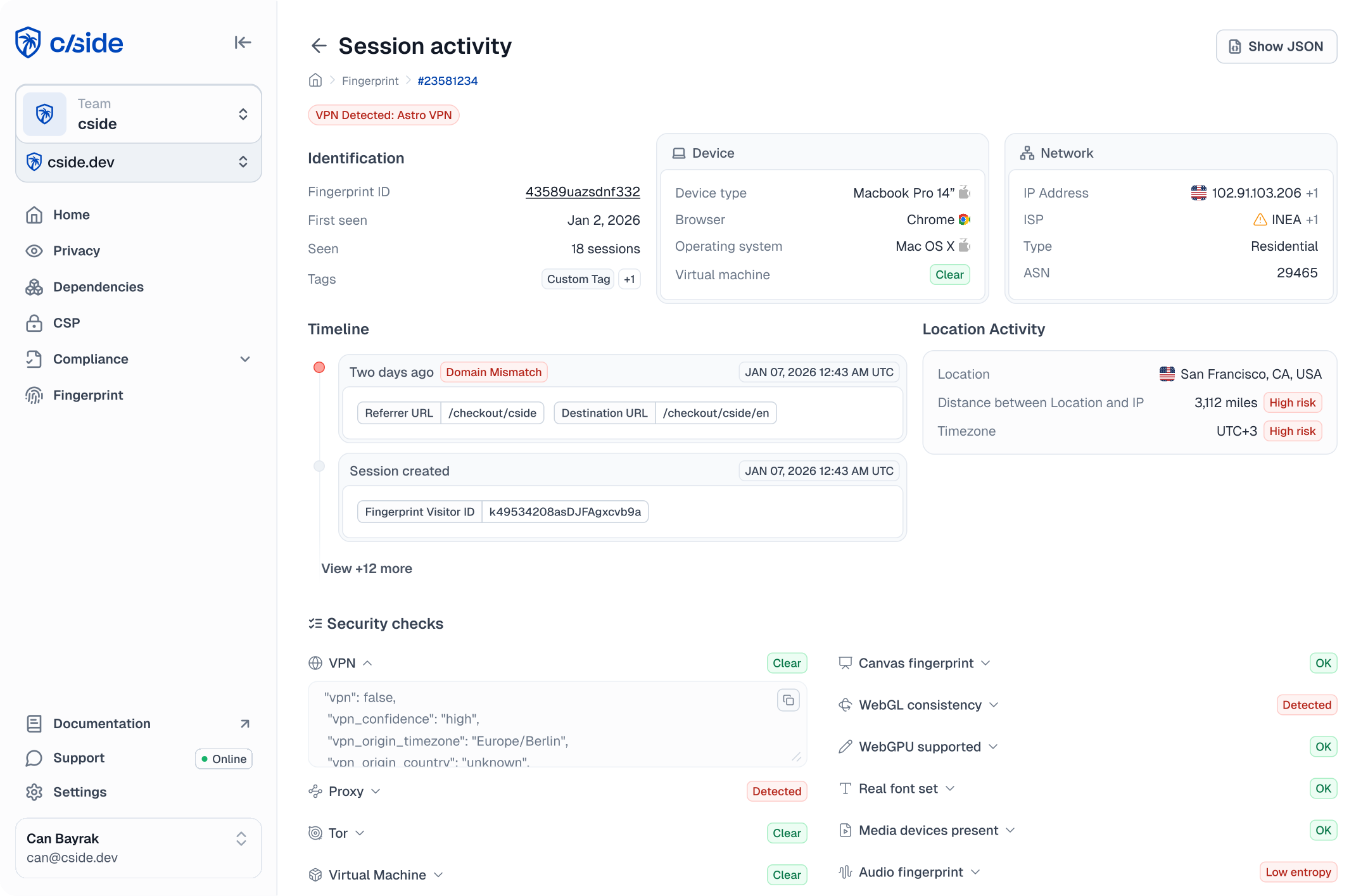
cside collects 250+ device, network, and behavioral signals on every payment attempt to build a persistent device identity that holds across sessions, incognito, cleared storage, and VPNs.
- Capture device fingerprint, geolocation, VPN/proxy, browser configuration, and form-fill behavior at the moment of payment.
- Surface rapid card cycling and repeated CVV attempts tied to the same device fingerprint cluster, even across rotated cards and IPs.
- Detect that an anti-detect browser or automation framework is in use, not just the spoofed output it produces.
Block before the charge
Stop a card-testing run before the transaction completes, the moment that prevents every downstream cost. Feed signals into your rules engine to block, challenge, or allow each attempt in real time.
- Send raw signals to your payment and rules stack via API or webhook to score each checkout before submission.
- Apply a challenge such as 3DS or a behavioral CAPTCHA when signals are elevated but not definitive, so legitimate fast checkouts pass.
- Hard-block high-confidence sessions that match a flagged fingerprint cluster, before a chargeback or monitoring-program fine.
Built for platforms hit by card testing
eCommerce
Checkout and donation forms with low minimums are prime targets for validating stolen cards at scale.
Payment Platforms
PSPs and gateways absorb enumeration attacks across every merchant they serve, and the monitoring-program risk that follows.
Crypto Platforms
On-ramps and exchanges are heavily carded because stolen cards convert straight into hard-to-reverse assets.
Resources to help you stop credit card testing
Why cside outperforms traditional payment fraud tools
cside adds browser-layer visibility that velocity rules, IP reputation, and CAPTCHA can't see.
| vs. Velocity Rules | vs. IP Reputation | vs. 3DS / CAPTCHA |
|---|---|---|
| Catches testers that slow down to stay under thresholds | Flags clean residential proxies by the device behind them | Detects AI agents and solvers that pass the challenge |
| Reads the browser environment, not the request rate | Sees anti-detect browsers running inside real Chrome | Runs passively with no added checkout friction |
| Links rapid card cycling across rotated sessions | Captures client-side signals invisible to server logs | Fires before submission, not after the chargeback |
Get started with cside
Free plan includes 1,000 API calls per month with basic signals. Upgrade for full intelligence starting at $99/month for 50K API calls.
Trusted by enterprise security & fraud teams:

















“Evolving fraud tactics and shifts in consumer behavior are colliding for merchants. By joining forces with cside, we're delivering solutions that address real-world issues merchants struggle with daily, such as friendly fraud chargebacks.”
Monica Eaton, CEO of Chargebacks911.
Passive detection with zero checkout friction
cside collects device and browser signals passively while a shopper completes checkout. There are no challenges or extra steps for legitimate buyers, while automated and AI-driven card testers are flagged by the signals they cannot hide.
One device, many cards
A card tester can rotate stolen card numbers and residential IPs freely, but the device running the session is rare to rotate. The same fingerprint cycling through fourteen cards in one sitting is high-confidence card testing even when each individual transaction stays under your velocity rules.
Getting started with card testing prevention
Add the cside script to your checkout and payment pages. Fingerprinting starts working immediately, payment attempts are scored, and your dashboard populates with risk signals. From there, wire the signals into your payment flow to challenge or block card testing before the transaction completes.
FAQ
Frequently Asked Questions
cside's card testing fraud detection reads 250+ device, network, and behavioral signals during the checkout interaction itself. It flags automation frameworks and anti-detect browsers by the traces they leave in the browser execution environment, and links rapid card cycling and repeated CVV attempts back to one device fingerprint cluster, even when the tester rotates cards and residential IPs.
Card testing rarely hits one merchant in isolation, the same operation cycles stolen cards across many sites. cside strengthens card testing fraud detection with shared attack-signal intelligence: a device fingerprint, automation pattern, or behavioral trace tied to abuse in one session raises the risk score on the next, so a tester flagged elsewhere is recognized on your checkout before the first successful charge. This cross-session threat intelligence turns isolated velocity checks into coordinated detection.
AI card testers use residential proxy networks with clean IP reputations and vary transaction timing to stay under velocity thresholds. They rotate sessions across different IPs, fingerprints, and browser instances. Controls built for fast, scripted bots using known-bad IPs do not catch a well-configured card-testing operation. cside evaluates the browser environment, which the tester cannot make look clean.
Key signals include rapid card-number cycling, repeated CVV attempts on the same card, checkout paths with no prior shopping context, and form-fill timing outside human variance. When those behavioral signals combine with a detected VPN or fingerprint inconsistencies, the risk score climbs, and a shared fingerprint across flagged sessions confirms a coordinated run.
Apply a challenge, such as a 3DS prompt or behavioral CAPTCHA, when signals are elevated but not definitive, since the session may be a legitimate fast checkout. Apply a hard block when signals are high-confidence and the session matches a flagged fingerprint cluster or adapts to your fraud controls. A graduated response reduces false positives on real fast checkouts.
Successful tests become chargebacks, costing the transaction amount, chargeback fees, and processing time. High chargeback and enumeration rates trigger card-network monitoring programs like Visa's VAMP and Mastercard's EFM, which impose escalating fines and can restrict your ability to process payments. A single testing run can push a compliant merchant into a monitoring program, and exiting takes months of clean volume.
BIN enumeration is a form of card testing where an attacker takes a known bank identification number, the first six to eight digits of a card, and systematically guesses the remaining digits, expiry date, and CVV to find working combinations. Because each guess can arrive from a fresh residential IP and a rotated session, request-rate rules miss it. cside detects BIN enumeration by tying the guesses back to the device driving them: the same 250+ signal cluster running through sequential card numbers is enumeration, even when every attempt looks like a separate clean visitor.
Yes. Modern AI card-testing agents run inside real Chrome, solve CAPTCHA, and can clear step-up challenges, so a control that only checks whether the challenge was passed no longer proves a human was present. cside reads the browser execution environment directly and flags the automation framework, anti-detect browser, or headless traces the agent leaves behind, independent of whether it cleared the challenge. That signal feeds your rules stack so you can block or step up a session the CAPTCHA already waved through.
A real returning shopper checking out quickly and a card tester can both move fast, so speed alone is a weak signal. cside separates them on the browser and device evidence: a genuine customer presents a consistent, coherent device fingerprint with human form-fill behavior and no automation traces, while a tester shows anti-detect browser characteristics, a fingerprint cycling through many cards, or a device already flagged across other sessions. Because detection is passive, the legitimate fast checkout is never asked to prove anything.
No. cside is one first-party JavaScript snippet that collects signals passively while the shopper completes checkout, with no challenge, redirect, or extra step for legitimate buyers. Signals reach your payment and rules stack through an API or webhook, so you score each attempt inline without slowing the page. Friction only appears when you choose to apply a step-up, such as 3DS, to an elevated-risk session.
No. cside builds its device identity from device, network, and behavioral signals rather than cookies, so it holds across incognito, cleared storage, and blocked cookies, which are exactly the conditions a card tester operates in. That also keeps detection privacy-conscious: it identifies the device driving the abuse without depending on persistent tracking cookies, and that durable identity is what links rotated cards and IPs back to one operator.
Yes. Alongside the web client, cside offers native iOS and Android SDKs in beta that run the same engine, so app checkouts and in-app donation flows get the same 250+ signals as the web client, plus signals only an app can see, such as emulator and app-tampering detection. Card testers increasingly target mobile checkouts for the same reasons they target web ones. Mobile SDK access is early access today, so talk to us to get set up.