
TL;DR: Castle alternatives
- Why teams look: Castle scores account events well, but teams outgrow it when they need coverage beyond login and registration, or when per-event pricing stops matching how their traffic actually behaves.
- What to compare: Whether you need an account score or a device identity. A score tells you this event looks risky; a stable device ID tells you this is the same actor who abused you last month under a different account.
- The shortlist: Eight alternatives ranked, cside first for device intelligence plus client-side coverage from one first-party script, then SEON, Sift, DataDome, HUMAN, Arkose Labs, Fingerprint and Sardine.
Short on time? See cside device intelligence. It covers everything below in one deployment.
If you are searching for a Castle alternative, you probably already know what Castle does well. Castle (castle.io) scores login and account activity in real time, returning Bot, ATO, and Abuse scores through a JavaScript SDK and REST API, and it ships generally available mobile SDKs across four platforms. Teams still look for alternatives, usually because their threat model has grown past pure account-event scoring, because the browser layer is a blind spot, or because the entry price is higher than a smaller team wants to commit to. This guide ranks the eight best Castle alternatives for 2026, with cside first where that is honest, and it is clear about when Castle or another tool is the right call.
Two things are worth clearing up before the list. First, Castle sits in the "data capture plus enforcement flexibility" camp, not the "full end-to-end fraud suite" camp, so a fair replacement should give you raw signals and a rules engine, not just a black-box score. Second, most tools in this space specialize: some are device-intelligence layers, some are bot-mitigation specialists, and some are broad fraud-and-compliance suites. Knowing which you actually need halves the shortlist.
Why teams look for a Castle alternative
Castle is a well-built account-security product. Teams still leave it, and the reasons cluster into four:
- The browser layer is a blind spot. Castle scores identity events (logins, registrations, transactions) but does not watch the scripts executing on your pages. If a compromised third-party tag starts skimming your checkout, an account-event scorer never sees it.
- AI agents are not scored as a distinct category. Castle provides a general Bot Score, and its research team has written about the challenge of AI agents, but it does not ship a dedicated AI agent signal. As agentic browsers (OpenAI Operator, Claude for Chrome, Perplexity Comet) moved into production purchasing flows, trial signups, and login endpoints at scale through 2026, teams found that folding agent traffic into one general bot score is not enough. A tool that flags an AI agent as a distinct category (separate from human users and traditional bots) lets you apply a different risk policy, rate limit, or challenge rather than treating all automated sessions the same. See how AI agents break account security for the attack patterns.
- Compliance and chargeback workflows sit outside the product. Castle is not positioned against PCI DSS script-monitoring requirements, and it does not offer a Visa CE 3.0 or Mastercard chargeback integration, so teams with those needs buy a second tool.
- The entry price is higher. Castle's lowest paid plan starts at $200/month; smaller teams often want a lower on-ramp to validate signals first.
Device and behavioral signals are the primary pre-authentication defense against the credential-stuffing campaigns that drive account takeover at scale. Javelin Strategy & Research put US account takeover losses at $13.5 billion in 2025, up 18% year on year. A risk score helps; a first-party signal layer that also sees the browser and the payment page helps more. That is the lens this list uses.
How to evaluate a Castle alternative
Before the ranking, here is the checklist that separates the options. Score any candidate against these and the shortlist writes itself:
- Do you need identity risk scoring, or a broader signal layer? Castle scores account events. If you also need to see what runs on your pages, an account-event scorer is only half the answer.
- Web only, or mobile too? Confirm platform coverage, and whether mobile SDKs are generally available or in beta. This is the single biggest honest differentiator between Castle and most alternatives.
- Are AI agents part of your threat model? If agentic browsers are hitting your login or checkout, you want a tool that separates AI agents from both traditional bots and humans, not one general bot score.
- Is the collector blockable? A third-party collector origin can sit on privacy filter lists (uBlock Origin, AdGuard, Brave), producing no signal for privacy-conscious visitors. A first-party script loaded from your own origin has no third-party domain to block.
- Do you need chargeback or PCI DSS coverage? If Visa CE 3.0, Mastercard chargeback programs, or PCI DSS 6.4.3 and 11.6.1 are in scope, most account-security tools do not address them and you will be buying a second product.
- Build vs buy on enforcement. Some tools ship a full challenge/mitigation flow; others give you raw signals plus a rules engine and let you enforce in your own stack. Pick the model that fits your team.
The 8 best Castle alternatives in 2026
Ranked for teams who want account protection with more than one score attached. If all you need is edge bot mitigation, skip to the specialist entries.
1. cside, the best all-in-one Castle alternative
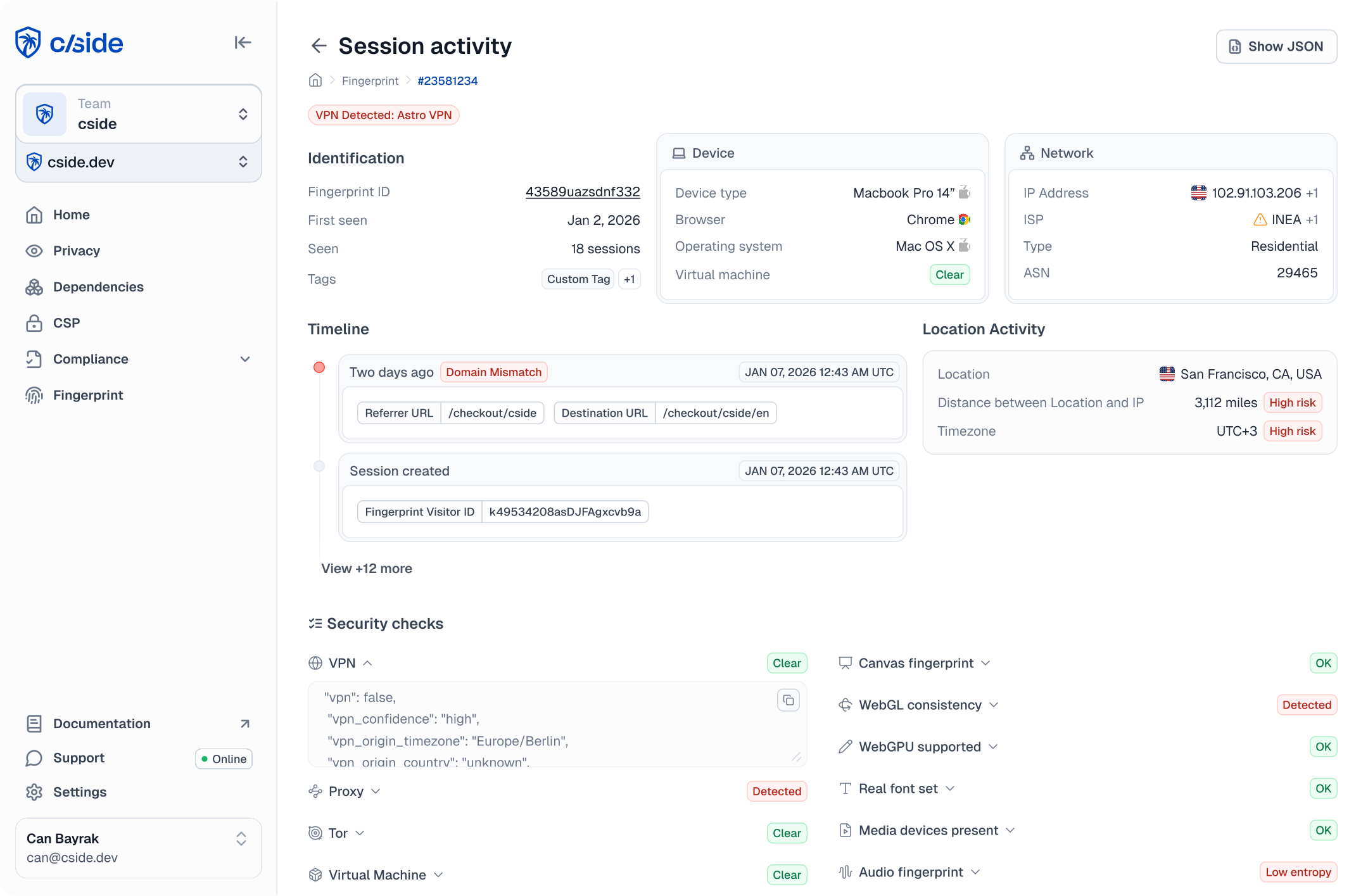
cside is a single first-party JavaScript snippet that returns a high-accuracy device fingerprint and a real-time fraud verdict, plus a separate client-side script-monitoring product you can bundle from the same vendor. It is the strongest Castle alternative for teams whose surface is mostly web and whose problems run from account takeover to AI agent abuse to payment-page compliance.
What makes it the top pick:
- A verdict, not just a score. Alongside the fingerprint, cside runs separate machine-learning models for cursor movement, typing cadence, and broader behavioral signals, then combines their verdicts, rather than scoring a session with one general model. That is how it flags AI agents and automated sessions as a distinct category.
- Specialized AI agent detection. cside identifies agentic browsers (OpenAI Operator, Claude for Chrome, Perplexity Comet) and automation frameworks (Playwright, Puppeteer, Selenium) separately from traditional bots and human users. Castle provides a general Bot Score but does not ship a dedicated AI agent signal.
- First-party by design. Because the snippet loads from your own origin, there is no third-party collector domain for a filter list or an attacker to block, so you keep signal on privacy-conscious visitors. Castle's collector loads from third-party origins on the EasyPrivacy list that uBlock Origin, AdGuard, and Brave block by default.
- Chargeback evidence and PCI DSS coverage. cside exports chargeback evidence (CE 3.0, via a Chargebacks911 partnership) keyed to the same fingerprint ID, and its script-monitoring product satisfies PCI DSS 4.0.1 requirements 6.4.3 and 11.6.1, which Castle does not address.
- Identification at scale. cside builds its device identifier from 250+ browser, device, and network signals per session rather than a stored cookie, so the identifier holds across incognito sessions, VPN connections, and cookie-clearing.
- Better economics on entry. cside starts at $99/month for 50,000 API calls with $2 per 1,000 overage, against Castle's $200/month for 100,000 calls. There is a free-forever tier of 1,000 API calls per month with no card.
- Mobile in beta. cside has native iOS and Android SDKs in beta (early access), covering the same jailbreak, emulator, and rooted-device signals as Castle, running the same engine as its web client.
Choose cside over Castle when your surface is mostly web, you want device signals and AI agent detection and PCI DSS script scope from one first-party snippet, and a lower entry price matters. See the full cside vs Castle comparison for the head-to-head.
2. SEON
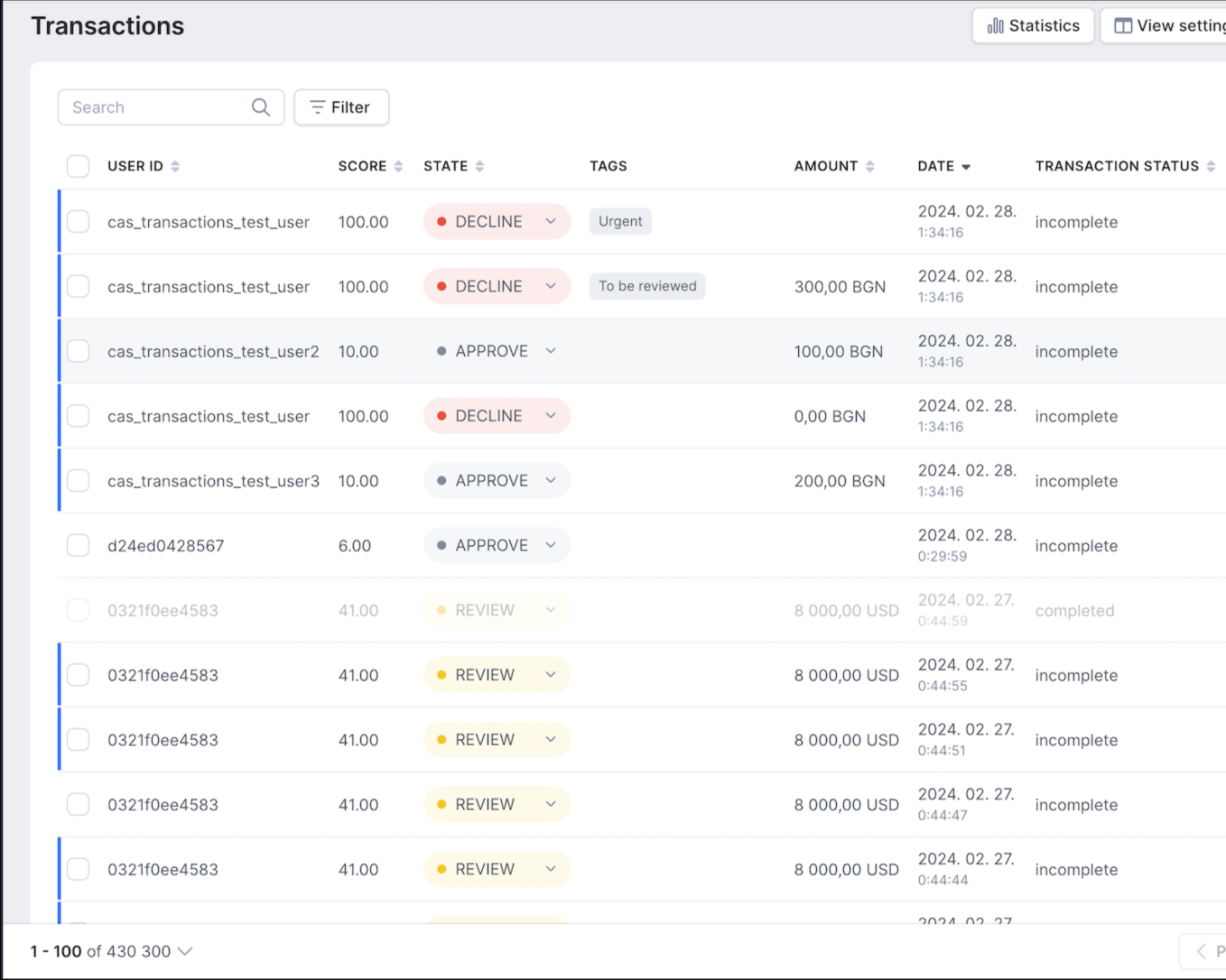
SEON's device intelligence sits inside a larger fraud platform that also does email, phone, and IP enrichment plus KYC and AML workflow. Where Castle is focused on account events, SEON's pitch is that the device signal sits next to digital-footprint enrichment in one decision. Buying it purely for device fingerprinting is unusual; buying it because you want fraud decisioning and compliance workflow in one suite is the normal path.
Source: docs.seon.io
Choose SEON over cside when you want a full fraud-and-KYC suite with digital-footprint enrichment rather than a focused first-party signal layer with client-side security.
3. Sift
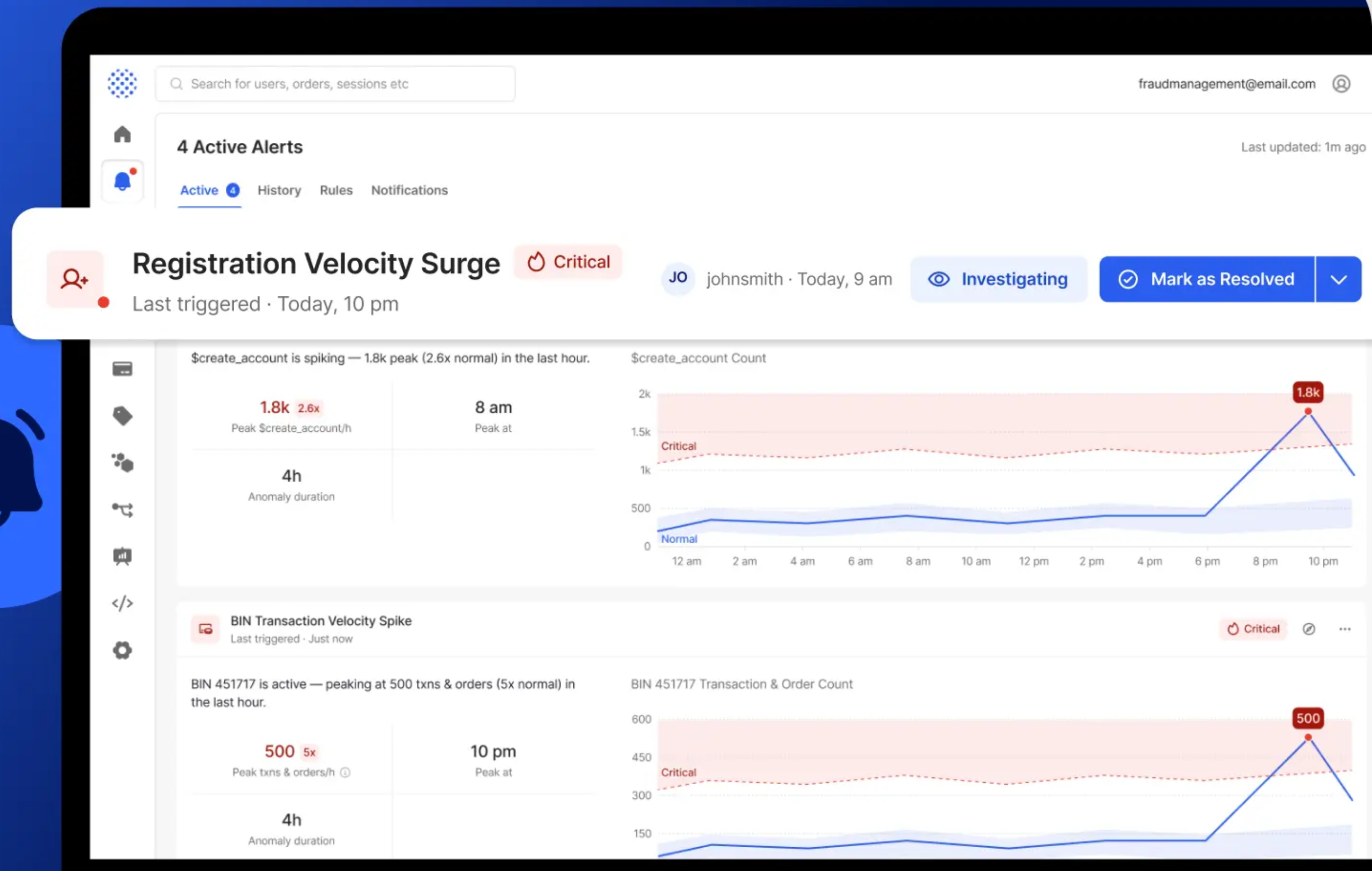
Sift is a machine-learning fraud platform with a dedicated Account Defense product aimed squarely at account takeover, plus payment protection and content-abuse modules. It is a direct Castle competitor on the account-security axis and leans on a large cross-customer data network to score risk. It is a heavier, more suite-like commitment than a focused signal layer, and enforcement lives largely inside Sift's own decisioning.
Source: sift.com
Choose Sift over cside when you want a mature, network-backed ML fraud suite that owns more of the decisioning pipeline and you do not need first-party delivery, AI agent specialization, or PCI DSS script scope.
4. DataDome
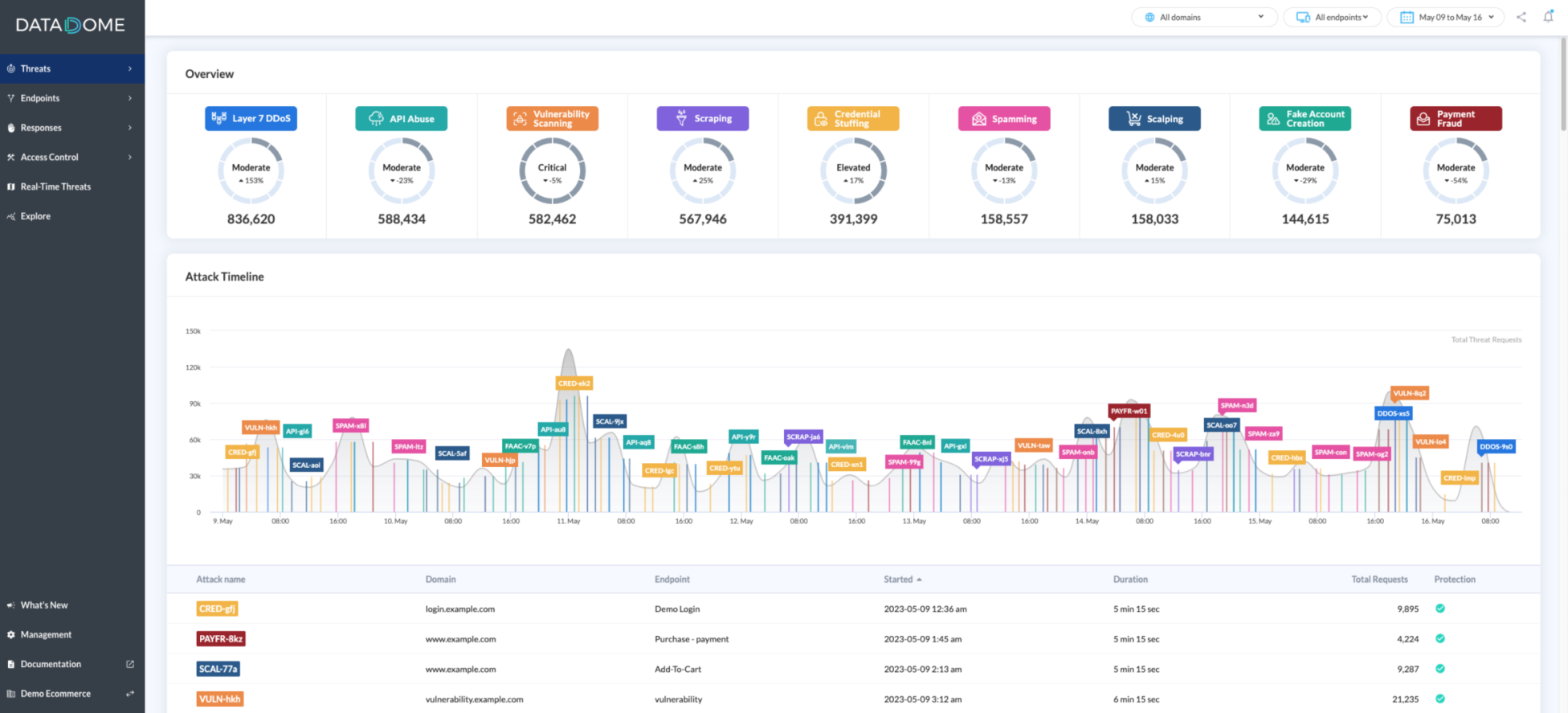
DataDome is a bot and online-fraud protection specialist that runs primarily at the edge, with account-protection and account-takeover modules on top of its core bot mitigation. If your problem statement is "automated traffic is overwhelming our endpoints", DataDome is built for that in a way an account-event scorer is not. It is real-time and low-latency by design, but it is a bot-mitigation product first and a device-intelligence layer second.
Source: docs.datadome.co
Choose DataDome over cside when high-volume bot mitigation at the edge is the primary requirement and account fraud is a secondary concern.
5. HUMAN
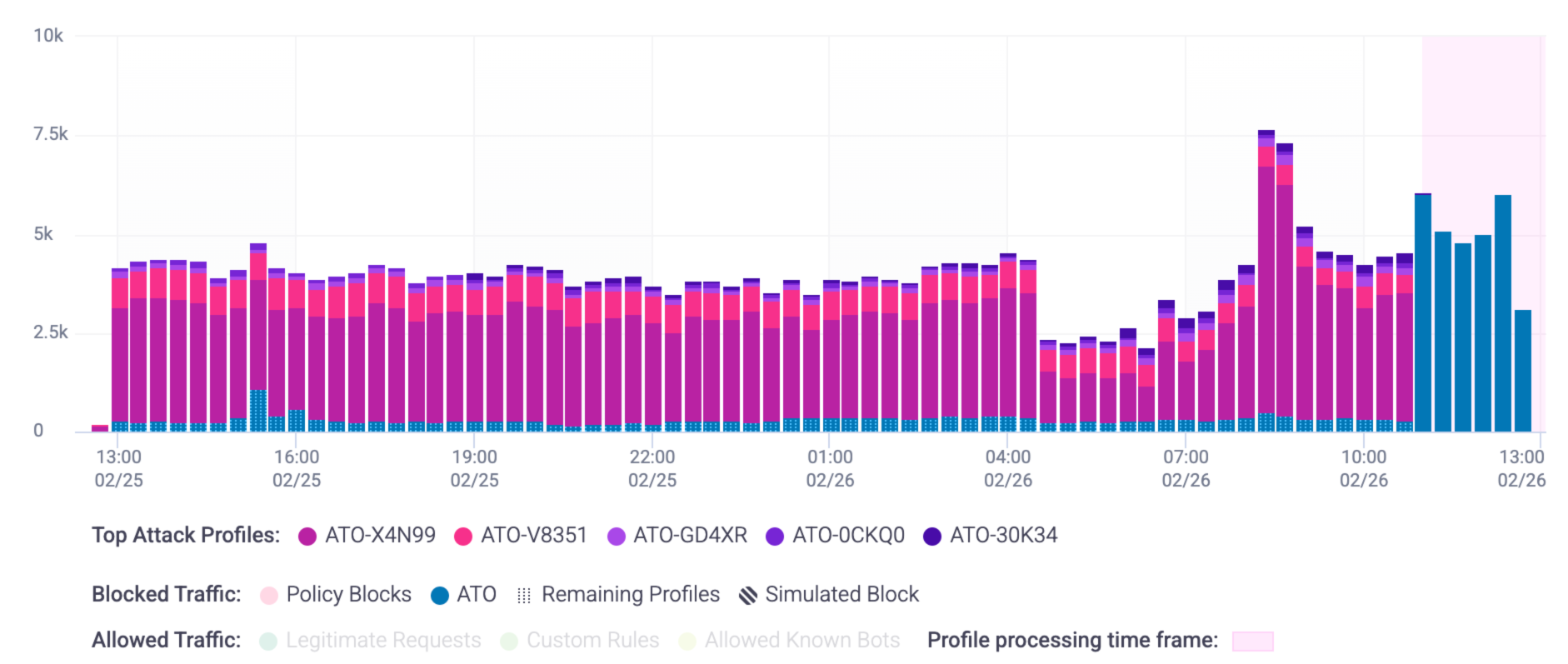
HUMAN (formerly White Ops) is a bot-mitigation and fraud-defense platform with strong roots in ad fraud and sophisticated-bot detection, and an account-takeover defense offering built on the same detection network. Like DataDome, it is a specialist in separating automated traffic from humans at scale. It is enterprise-oriented and typically sold on custom terms.
Source: docs.humansecurity.com
Choose HUMAN over cside when you need enterprise-grade bot defense across a large surface (including ad-fraud and app contexts) and account protection is one of several bot problems you are solving.
6. Arkose Labs
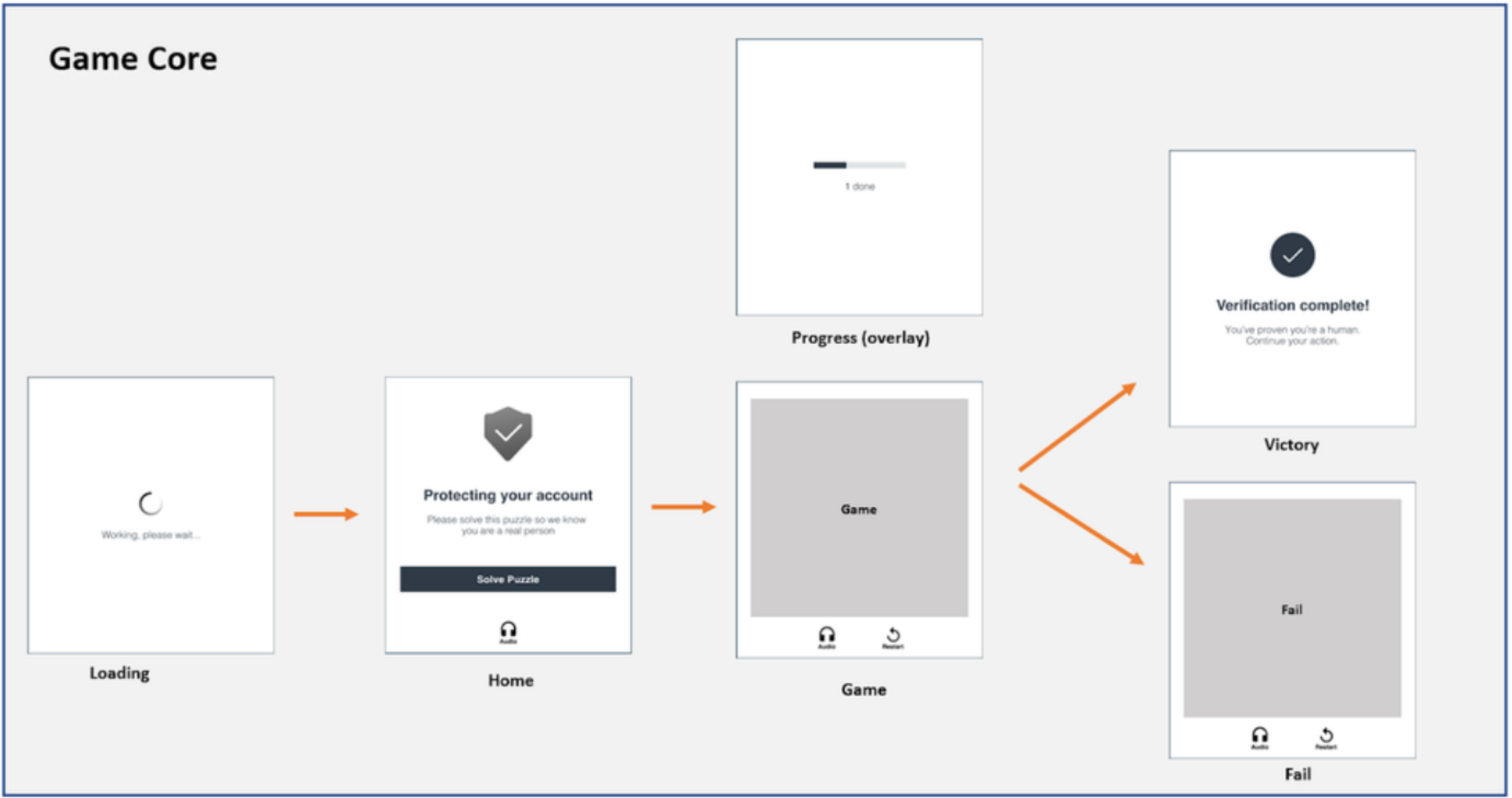
Arkose Labs pairs bot and account-security detection with an enforcement layer built around adaptive challenges (its interactive puzzles), aiming to raise the cost of attack rather than just score it. It is a fit for teams who want a challenge-based deterrent on registration and login abuse and are comfortable adding an interactive step to the user flow. It is more of an active-defense product than a passive signal layer.
Source: developer.arkoselabs.com
Choose Arkose Labs over cside when you want challenge-based enforcement that increases attacker cost on specific high-abuse flows, rather than a passive first-party signal you enforce on yourself.
7. Fingerprint
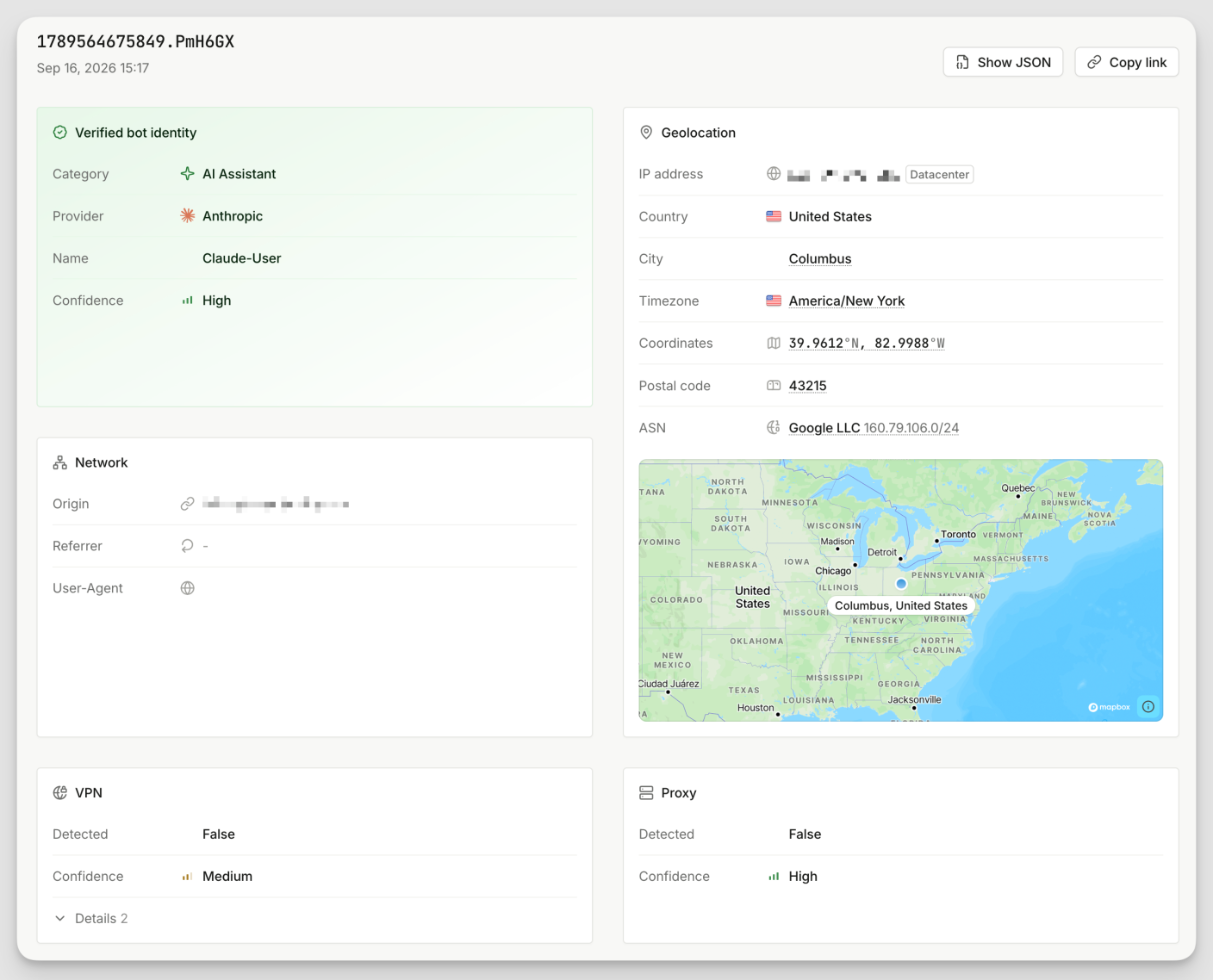
Fingerprint (formerly FingerprintJS Pro) is a device-identification specialist with the broadest signal surface in the identification category and generally available mobile SDKs across four platforms. It returns a visitor ID plus Smart Signals (bot, VPN, incognito, browser tampering). Compared to Castle, it is identification-first: the fingerprint is the product, and you build the account-security logic around it. Compared to cside, it stops at identification rather than shipping a fraud verdict, chargeback evidence, or script monitoring.
Source: docs.fingerprint.com
Choose Fingerprint over cside when raw device-identification accuracy and GA mobile SDKs across four platforms are the whole requirement and you will build your own account-security decisioning.
8. Sardine
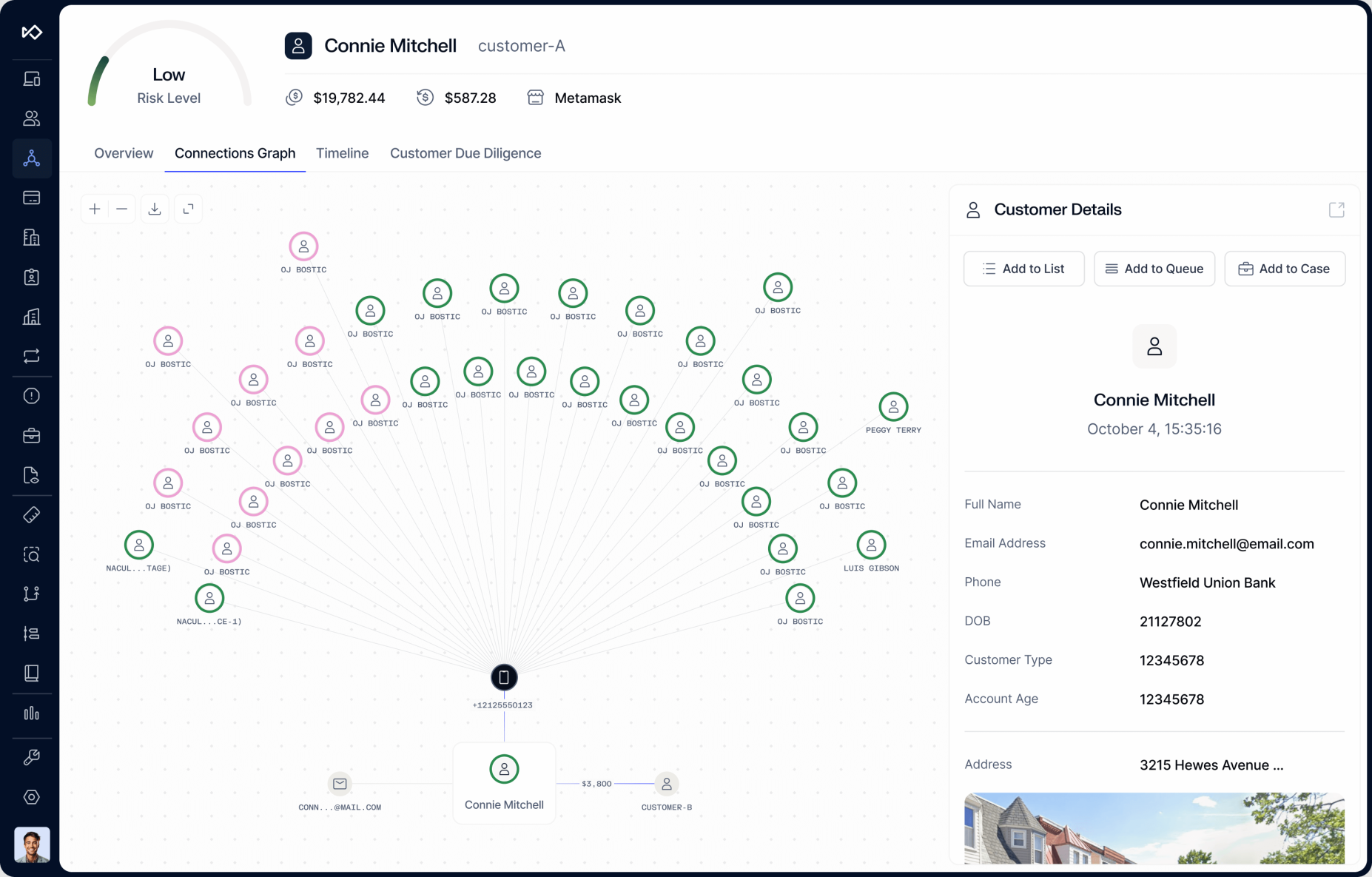
Sardine is a fraud-and-compliance platform that combines device intelligence and behavioral biometrics with AML, KYC, and payment-risk tooling, aimed heavily at fintech and payments. Its device signal is one input into a broader risk-and-compliance decision. It is a strong pick when your account fraud, payment fraud, and compliance obligations all need to live in one platform, and a heavier commitment than a focused signal layer if they do not.
Source: sardine.ai
Choose Sardine over cside when you are a fintech or payments team that needs device intelligence, behavioral biometrics, and AML/KYC compliance in one suite.
cside vs Castle: feature comparison
The head-to-head that most buyers weighing a Castle alternative actually care about. This is where the "web-layer depth and a fraud verdict, not just an account score" difference shows up concretely.
| Feature | cside | Castle |
|---|---|---|
| Pricing (entry) | $99/mo, 50,000 API calls | $200/mo, 100,000 API calls |
| Per-call overage | $2 per 1,000 | $2 per 1,000 |
| Free tier | Yes (1,000 API calls/month, no card) | Yes (1,000 API calls/month) |
| Device + browser fingerprinting | Yes (250+ signals) | Yes (99.5% accuracy claimed) |
| Signals per session | 250+ | Not published as a count |
| Collector | First-party (your origin, not filter-list blockable) | Third-party origin (on privacy filter lists) |
| Bot detection | Yes | Yes (Smart Signal) |
| Behavioral biometrics | Yes (cursor movement, typing cadence, device motion) | Built into Bot/ATO scoring |
| AI agent detection | Yes (distinct category) | General Bot Score, not specialized |
| VPN/proxy detection | Yes | Yes |
| Client-side script monitoring | Yes (separate product, bundleable) | No |
| PCI DSS 4.0.1 evidence | Yes (Req 6.4.3 + 11.6.1) | Not positioned |
| Chargeback evidence (CE 3.0) | Yes (Chargebacks911 partnership) | No dedicated product |
| Mobile SDKs | Beta (native iOS, Android) | GA (Android, iOS, React Native, Flutter) |
| Reviews | See reviews on G2 and SourceForge | 3.7/5 on G2 |
Both cover mobile-specific signals like jailbreak, emulator, and rooted-device detection. Castle's advantage is that its mobile SDKs are generally available across four platforms; cside's cover iOS and Android and are in beta. cside's advantages are specialized AI agent detection, first-party delivery, client-side script monitoring, and the chargeback and PCI DSS coverage Castle does not offer.
Where cside goes beyond an account score
This is the reason cside tops the list rather than sitting mid-pack with the other account-security tools. A Castle score tells you the risk of an account event. cside returns a device fingerprint and then answers what is happening in the browser:
- AI agent and bot detection. The verdict flags automated sessions, including agentic browsers like OpenAI Operator and Claude for Chrome and automation frameworks like Playwright, Puppeteer, and Selenium, on your login and checkout flows, as a distinct category from traditional bots. The behavioral biometrics layer (cursor movement, typing cadence, and device motion signals) is what separates genuine agentic sessions from bots that mimic human behavior. See catching AI agents by their behavioral signals.
- VPN and proxy detection. cside flags connections routed through VPNs and proxies, including the residential proxies that evade IP reputation lists, so you can enforce geographic rules or raise risk on hidden connections. See VPN and proxy detection.
- Chargeback evidence. The chargeback evidence export packages device-level proof keyed to the fingerprint ID, so you can prove a fraudster used a specific device when disputing under CE 3.0.
- PCI DSS script monitoring. cside's script-monitoring product inventories and verifies the integrity of the scripts on your payment pages, which is what PCI DSS 4.0.1 requirements 6.4.3 and 11.6.1 ask for, and which an account-event scorer never sees.
Bundling these under one first-party snippet is the practical argument: one vendor, one integration, one contract, instead of an account-security tool plus an AI-agent tool plus a chargeback tool plus a script monitor.
Which Castle alternative should you choose?
- Mostly-web surface, account takeover plus AI agent abuse, want script monitoring and chargeback or PCI DSS scope from one first-party snippet: cside.
- Need generally available mobile SDKs across four platforms today: Castle itself, or Fingerprint for identification-first mobile.
- Want a full fraud-and-KYC suite with digital-footprint enrichment: SEON, or Sardine for fintech and payments.
- Network-backed ML fraud suite focused on account defense: Sift.
- High-volume bot mitigation at the edge is the priority: DataDome, HUMAN, or Arkose Labs for challenge-based enforcement.
- Just need the broadest device-identification signal surface: Fingerprint.
If you want the direct head-to-head instead of this survey, the cside vs Castle comparison puts the two side by side, feature by feature.