TL;DR: Q1 2025 client-side attack recap
- Not just a WordPress problem: The industry keeps framing Q1 2025 as a WordPress plugin problem, but nearly 300,000 compromised sites, four backdoors from a single CDN, and full-page hijacks show the front-end is now the primary battlefield, not the perimeter.
- 300,000 attack signals: Fake browser updates delivered AMOS Stealer to macOS and SocGholish to Windows in the same March campaign; cside's browser-layer monitoring detected 300,000 attack signals across monitored sites without threat-feed lookups or sampled sessions.
- First-class or hygiene? Before signing off Q2 tabletop exercises, decide whether iframe hijacks, SEO poisoning on .edu/.gov domains, and CDN-hosted backdoors are treated as first-class threats in your incident response playbook, or as WordPress hygiene.
Short on time? See cside's in-browser Magecart and skimmer blocking. It covers everything below in one deployment.
Authored by: cside Threat Research Team
Executive Summary
Q1 2025 was marked by a sharp escalation in client-side attacks targeting websites across multiple industries, with a particular focus on WordPress-powered platforms. cside's research uncovered nearly 300,000 compromised websites. Attackers increasingly rely on JavaScript-based delivery mechanisms, third-party supply chain vulnerabilities, and deceptive social engineering tactics such as fake browser updates.
For CISOs, digital risk leaders, and security stakeholders, this report outlines the most critical campaigns detected this quarter, with technical detail and strategic insight to support proactive decision-making.
Key Insight for Executives: Modern cyber threats now exploit browser-based interactions and user trust in common CMS platforms. Defending against them requires visibility into runtime behaviors, rigorous script governance, and coordinated threat intelligence. Client-side attacks targeting cryptocurrency platforms and payment environments also pose outsized risks, despite representing a smaller volume of total incidents.
Major Client-Side Campaigns
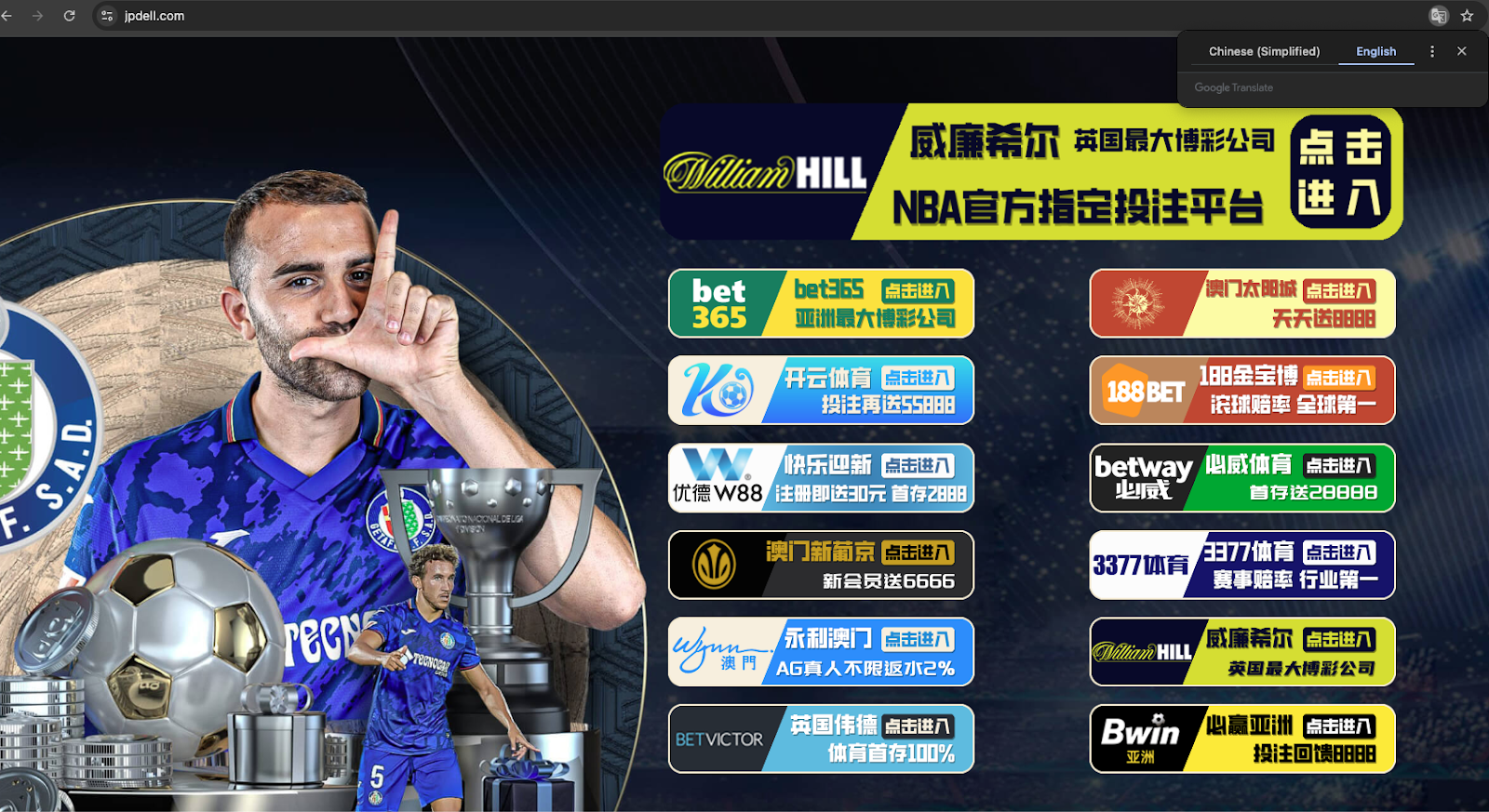
1. Full-Page Hijacks Redirecting to Chinese Gambling Sites
- Detected: January 2025
- Websites Impacted: 150,000+
- Root Cause: JavaScript injected via hijacked plugin or asset CDN.
- Attack Infrastructure: Domains like zuizhongyj[.]com and its subdomains were responsible for injecting iframes that took over the entire viewport.
- Notable Traits: conditional redirection based on region and browser, script obfuscation and dynamically constructed URLs, and a high mobile focus with Android-targeted click-throughs.
- Strategic Risk: Significant loss of trust and SEO penalties; several sites blacklisted by Google.
- Read more: over-150k-websites-hit-by-full-page-hijack-linking-to-chinese-gambling-sites
2. JavaScript Supply Chain Compromise (4 Embedded Backdoors)
- Detected: January 2025
- Websites Impacted: 5,000+
- Payload Origin: cdn.csyndication[.]com (formerly trusted asset hosting provider).
- Embedded Malicious Actions: plugin installation for persistent access, wp-config.php infection, SSH key injection via scheduled tasks, and reverse shell communication to gsocket[.]io.
- Adversary Goals: Maintain long-term control, harvest credentials, and pivot laterally across shared hosting environments.
- Read more: thousands-of-websites-hit-by-four-backdoors-in-3rd-party-javascript-attack
3. Kaiyun Chinese Gambling Scam - Variant Campaign
- Detected: February 2025
- Websites Impacted: 35,000+
- Tactics: Mimicked legitimate gaming advertisements via full-screen overlays and used geo-targeted language variants.
- Key Observations: domain reuse (mlbetjs[.]com, zuizhongjs[.]com) and IP and browser profiling to evade detection.
- Outcome: Brand confusion and conversion siphoning for affected commercial websites.
- Read more: over-35-000-websites-targeted-in-full-page-hijack-linking-to-a-chinese-language-gambling-scam
4. Fake Browser Update Campaign with Cross-Platform Malware
- Detected: March 2025
- Websites Impacted: 10,000+
- Mechanism: JavaScript loaded via iframe delivered fake update modal for Chrome/Firefox.
- Delivered Payloads: AMOS Stealer (macOS), which captured iCloud Keychain, browser, and file data; and SocGholish (Windows), which used WMI and PowerShell for persistence.
- Compliance Concern: Sites used for distribution may face regulatory exposure (GDPR, CCPA).
- Read more: 10-000-wordpress-websites-found-delivering-macos-and-microsoft-malware

5. ScriptAPI SEO Poisoning on Academic and Government Sites
- Detected: January 2025
- Websites Impacted: ~1,000
- Target Profile: .edu and .gov domains using outdated JS bundles
- Attack Behavior: Hidden DOM injections for SEO link building; cloaked redirections to gambling and adult content
- Business Impact: algorithmic demotion in SERPs and abuse of academic/governmental trust for backlink poisoning.
- Read more: government-and-university-websites-targeted-in-scriptapi-dev-client-side-attack
6. WP3.XYZ Campaign - Automated WordPress Backdoor Creation
- Detected: January 2025
- Websites Impacted: 5,000+
- Initial Vector: JS script from wp3[.]xyz included in compromised themes/plugins
- Key Findings: silent creation of a wpx_admin account, plugin deployment to modify login flows, and exfiltration of credentials and tokens.
- Remediation: Requires admin credential rotation, malware cleanup, and plugin verification.
- Read more: over-5k-wordpress-sites-caught-in-wp3xyz-malware-attack
Strategic Recommendations for Executives and CISOs
- Client-Side Risk Governance: Mandate pre-deployment reviews and post-deployment monitoring for all third-party JavaScript assets.
- Runtime Detection Capabilities: Invest in behavior-based monitoring of web pages to catch threats like iframing, credential theft, or redirection chains.
- Web CMS as a High-Value Target: WordPress, despite being widely used, requires enterprise-grade attention with automated patching and plugin vetting.
- Zero Trust for Content Delivery: Apply Zero Trust principles to JS scripts. Assume compromise and log every interaction.
- Response Playbooks & Simulations: Create tabletop exercises for supply chain attacks, client-side injection, and credential compromise based on real scenarios.
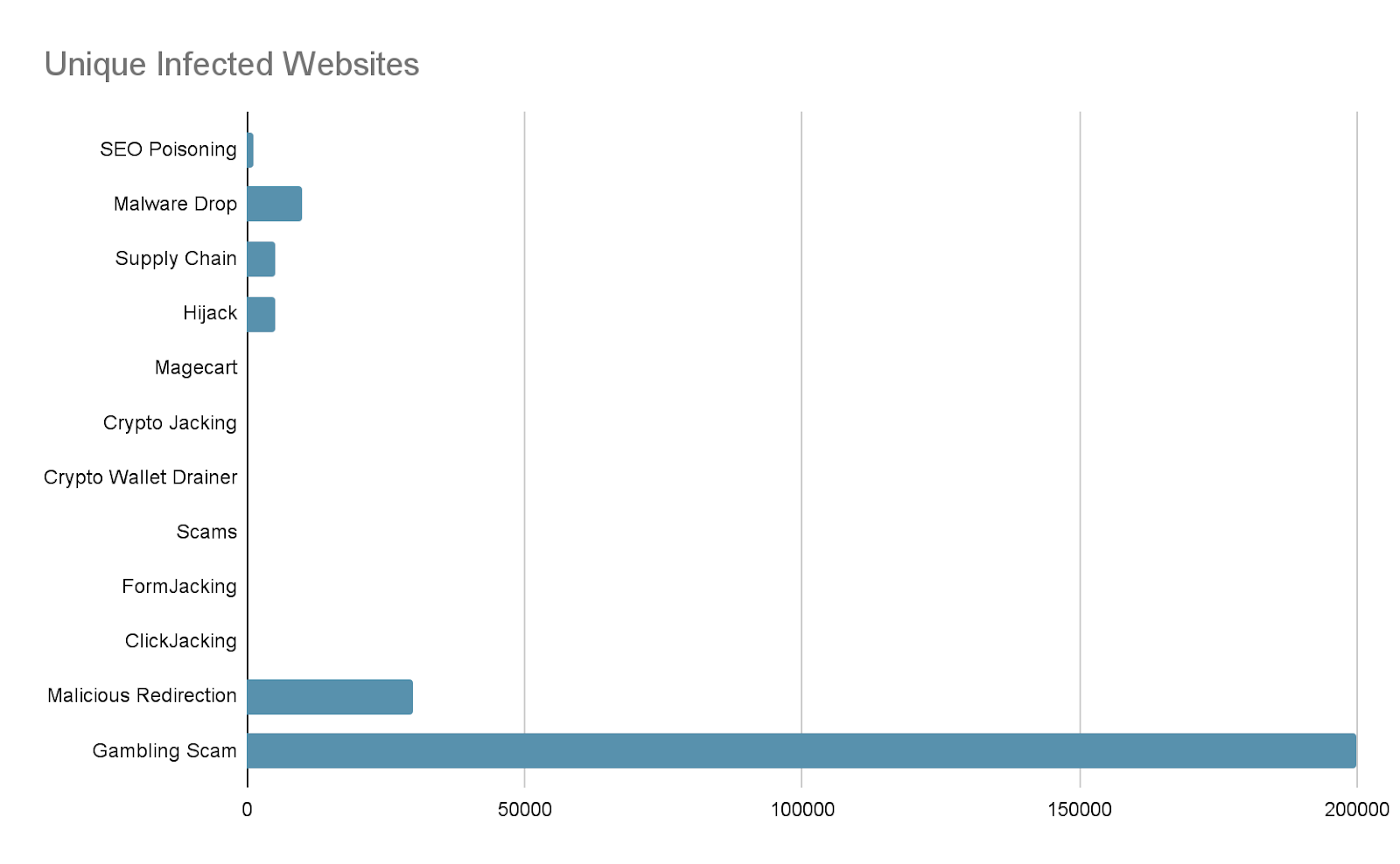
Key Metrics Overview
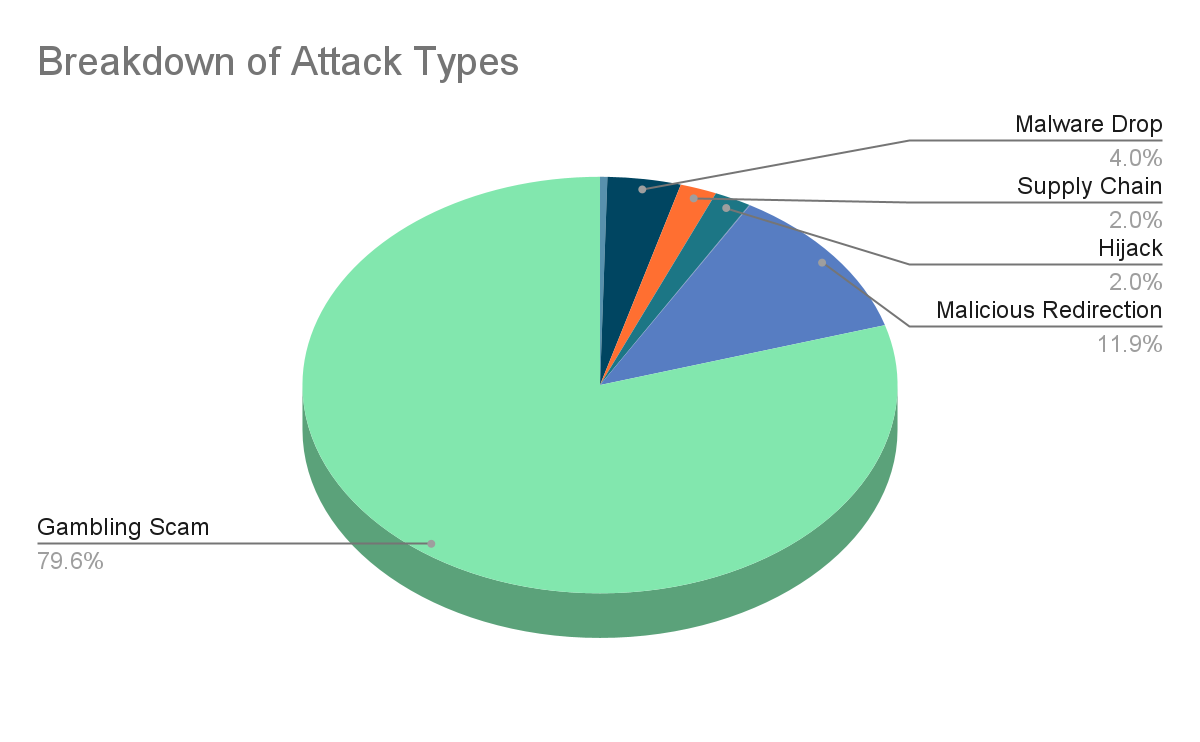
Number of Websites Impacted by Attack Type
Strategic Trends Observed in Q1 2025
During Q1 2025, several important strategic patterns emerged across client-side attack activity:
1. Rise of Cross-Platform Threats
- Attacks are no longer targeting just Windows users; malware campaigns (e.g., AMOS Stealer) expanded aggressively into macOS ecosystems as well.
2. Abuse of Trusted Supply Chains
- The compromise of cdn.csyndication[.]com demonstrates that attackers increasingly target reputable third-party vendors to maximize impact at scale.
- Supply chain attacks now extend beyond software to asset delivery infrastructures (JavaScript/CDNs).
3. Increased Sophistication in Evasion Techniques
- Widespread use of IP geofencing, browser fingerprinting, and mobile prioritization to evade automated detections and increase user targeting precision.
4. Proliferation of SEO Poisoning
- Attacks increasingly abuse high-authority domains (e.g., .edu, .gov) for search engine poisoning, aiming for indirect monetization instead of direct exploitation.
5. WordPress Remains the #1 Attack Surface
Despite years of awareness, unpatched WordPress plugins/themes continue to be the primary entry point for large-scale compromises.
Compliance and Regulatory Impact
Client-side compromises, especially those delivering malware or misusing personal information, trigger serious compliance risks.
1. General Data Protection Regulation (GDPR)
- Malware-laden redirects or compromised websites can be interpreted as a breach of data security obligations under GDPR Article 32.
- Potential fines up to €20 million or 4% of global turnover, whichever is higher.
2. PCI-DSS Risk: Client-Side Payment Compromises
Client-side skimming attacks like Magecart and Formjacking create direct violations of PCI-DSS v4.0 requirements. Organizations processing cardholder data must secure client-side scripts to prevent unauthorized interception. Breach of this environment could result in:
- Mandatory disclosure under PCI guidelines
- Hefty fines
- Brand and trust damage among customers
Given the prevalence of JavaScript-based attacks, securing the browser-side environment is now essential for PCI compliance.
3. California Consumer Privacy Act (CCPA)
- Websites unintentionally serving malware or phishing may face private right of action lawsuits and regulatory penalties under CCPA.
4. Brand Reputation and Legal Exposure
- Organizations that fail to secure client-side assets risk customer lawsuits, reputational loss, and delisting from advertising and search engine platforms (Google, Microsoft).
Risk Forecast for Q2 2025
Based on attack trends observed in Q1, cside forecasts the following developments for Q2:
Strategic Recommendations for Executives and CISOs
Organizations must evolve from traditional perimeter defenses to real-time browser security monitoring. Here are cside's actionable recommendations:
1. Client-Side Risk Governance
- Establish formal policies for pre-deployment review and continuous monitoring of all third-party JavaScript assets.
- Maintain an inventory of approved scripts with versioning and integrity checks.
2. Runtime Detection Capabilities
- Implement behavior-based monitoring of live website activity: detect iframe injections, monitor DOM manipulation events, and flag unauthorized outbound connections.
- Solutions should alert on suspicious behaviors before users are impacted.
3. Zero Trust for Third-Party Content
- Treat all external content as untrusted by default: apply CSP (Content Security Policy) headers to restrict loading of unapproved assets, and use Subresource Integrity (SRI) to verify script integrity.
4. Enhanced WordPress Security Posture
- Require automated patching for all plugins and core WordPress updates.
- Mandate the use of vetted, high-quality plugins and themes only.
- Monitor administrative account creations for anomalies.
5. Prepare and Test Incident Response Playbooks
- Conduct regular tabletop exercises focused on client-side script compromise, supply chain breach scenarios, and SEO poisoning cleanup.
- Include communication workflows for rapid disclosure to regulators if required (GDPR, CCPA).
Final Words
The threat landscape in early 2025 shows that attackers no longer need to breach infrastructure: they just need to compromise a script. The front-end is the new battlefield. Organizations must evolve beyond server-side defenses and embrace proactive, real-time client-side security strategies. Defenders must recognize that even low-frequency threats, such as crypto asset compromises and card skimming, carry the potential for outsized impact. Defense strategies must prioritize both volume-based and high-value, low-frequency attack scenarios.
cside continues to monitor and publish emerging threats to empower defenders and protect digital trust.