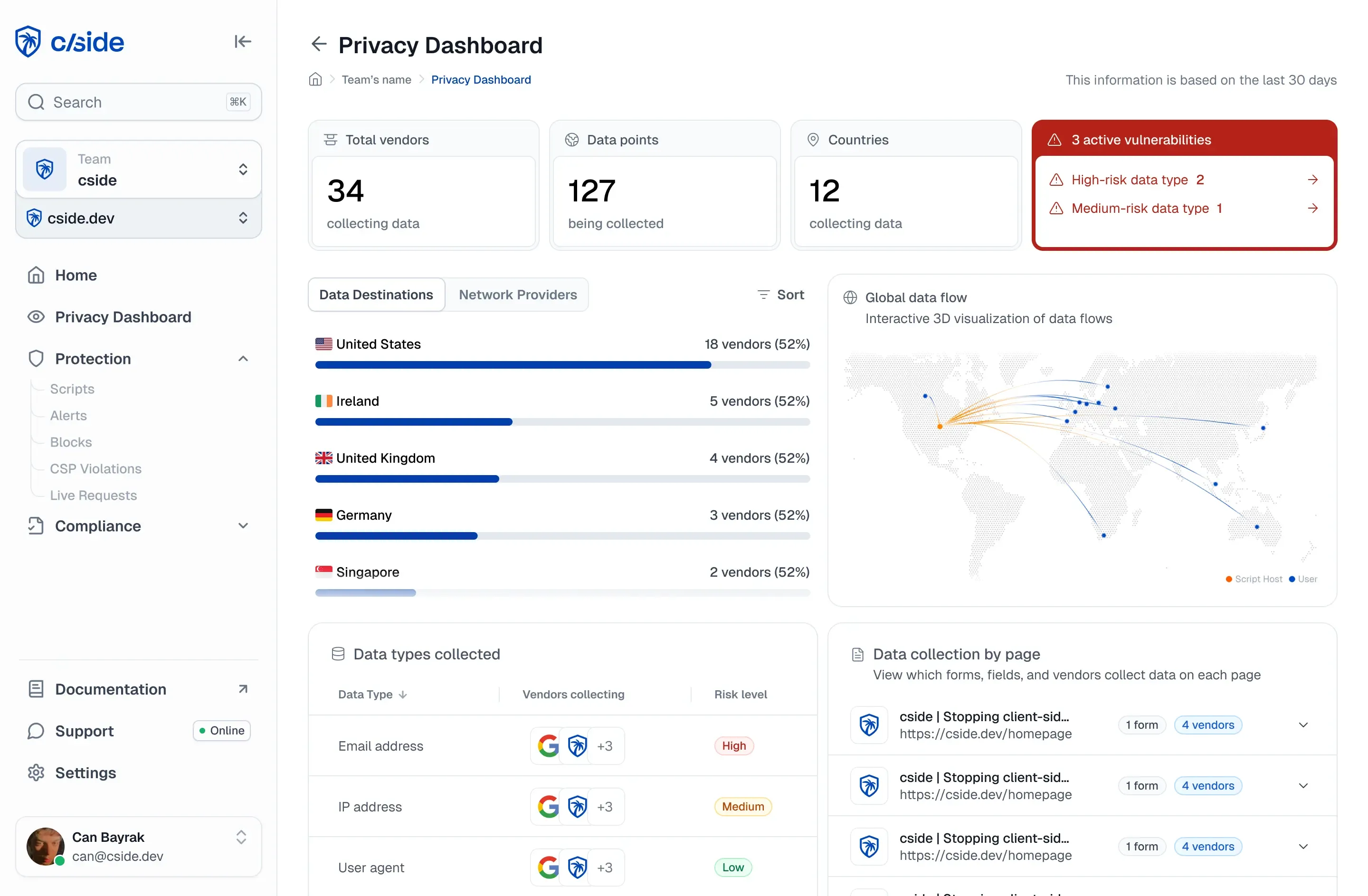

TL;DR: SEON alternatives
- The top three: cside for first-party device intelligence with built-in fraud signals, Sardine for fintech and crypto teams that need fraud and compliance together, and Sift for mature fraud scoring across payments, accounts, and content abuse.
- How to pick: Decide which part of SEON you are replacing. SEON bundles digital-footprint enrichment, device intelligence, identity verification, and AML, and its Starter plan is $699 per month for 2,500 fraud checks. Most teams only need one or two of those modules.
- The shortlist: Nine alternatives in three groups (device intelligence, fraud-decisioning suites, compliance-first platforms), each with pros, cons, and a starting price where one is published.
Short on time? See cside device intelligence: a device ID, AI agent and bot detection, and VPN detection from one first-party script.
| # | Tool | Best for |
|---|---|---|
| 1 | cside | First-party device intelligence with built-in fraud signals |
| 2 | Sardine | Fintech and crypto businesses that need fraud and compliance together |
| 3 | Sift | Mature fraud prevention across payments, accounts, and content abuse |
cside: device intelligence as a product, not a module
cside is a browser-layer security and fraud platform that shows what happens during a visitor's session. Most fraud suites treat device fingerprinting as one input to a broader risk score; cside builds device intelligence as a product in its own right. It is aimed at fintech, iGaming, crypto, and e-commerce teams, and it deploys as a single first-party script with no DNS changes.
Besides device fingerprinting, cside runs AI agent and bot detection, VPN and proxy detection, and chargeback evidence linked to the same device ID for Visa Compelling Evidence 3.0 disputes. Its script-monitoring product also covers PCI DSS 4.0.1 requirements 6.4.3 and 11.6.1, a scope few fraud-decisioning suites touch.
Why teams look for a SEON alternative
SEON is a capable platform, and teams that leave it usually do so for one of these reasons:
- You are paying for a suite when you need a signal. SEON bundles digital-footprint enrichment, device intelligence, identity verification, transaction monitoring, and AML screening. If your real problem is device fingerprinting or account abuse, you are pricing against modules you will never switch on.
- Entry pricing is high and sales-led. As of October 2026, SEON's Starter plan is $699 per month for 2,500 fraud checks, and both of its plans start with a sales conversation. Teams that want to test a device signal on real traffic first look for a self-serve option.
- Client-side script security is out of scope. SEON does not monitor the third-party scripts running on your payment pages. If PCI DSS 4.0.1 requirements 6.4.3 and 11.6.1 are on your roadmap, that is a separate tool.
Device fingerprinting is the main pre-authentication signal against the credential-stuffing campaigns behind account takeover. Javelin Strategy & Research's 2026 Identity Fraud Study put account takeover losses above $15 billion in 2025, still the costliest fraud type despite a 4% decline. Matching the tool to the actual fraud problem is the point of this list.
SEON alternatives compared
The nine tools below fall into three broad groups: dedicated device intelligence platforms, full fraud-decisioning suites, and compliance-first platforms. Choose the one that matches the problem you are actually solving. Prices are list prices as of October 2026.
| Tool | Type | Key capabilities | Starting price |
|---|---|---|---|
| cside | Device intelligence | Device ID and fraud signals, AI agent and bot detection, VPN detection, from one first-party script | Free; $99/mo for 50,000 API calls |
| Sardine | Fraud and compliance platform | Device, behavioral, and transaction risk scoring for fintech and crypto | Custom |
| Sift | Fraud suite | Cross-merchant ML risk scoring across account, payment, and content abuse | Custom |
| Fingerprint | Device identification | Visitor ID plus Smart Signals (bot, VPN, browser tampering) | $99/mo for 20,000 API calls |
| IPQualityScore | Fraud API | Proxy and VPN scoring, email and phone validation, device fingerprinting | Free tier; paid plans published (check current tier) |
| Kount | Fraud suite | Enterprise payment fraud decisioning backed by Equifax identity data | Custom |
| DataVisor | Fraud suite | Unsupervised ML fraud-ring detection at enterprise scale | Custom |
| Feedzai | Financial-crime platform | Bank-grade transaction fraud and AML monitoring | Custom |
| ComplyAdvantage | AML and compliance | Sanctions, PEP, and adverse-media screening with ongoing monitoring | From $99/mo (Starter, screening) |
1. cside
SEON combines many fraud and compliance capabilities in one platform. cside takes a narrower approach and focuses on device intelligence, fraud signals, and browser-layer security.
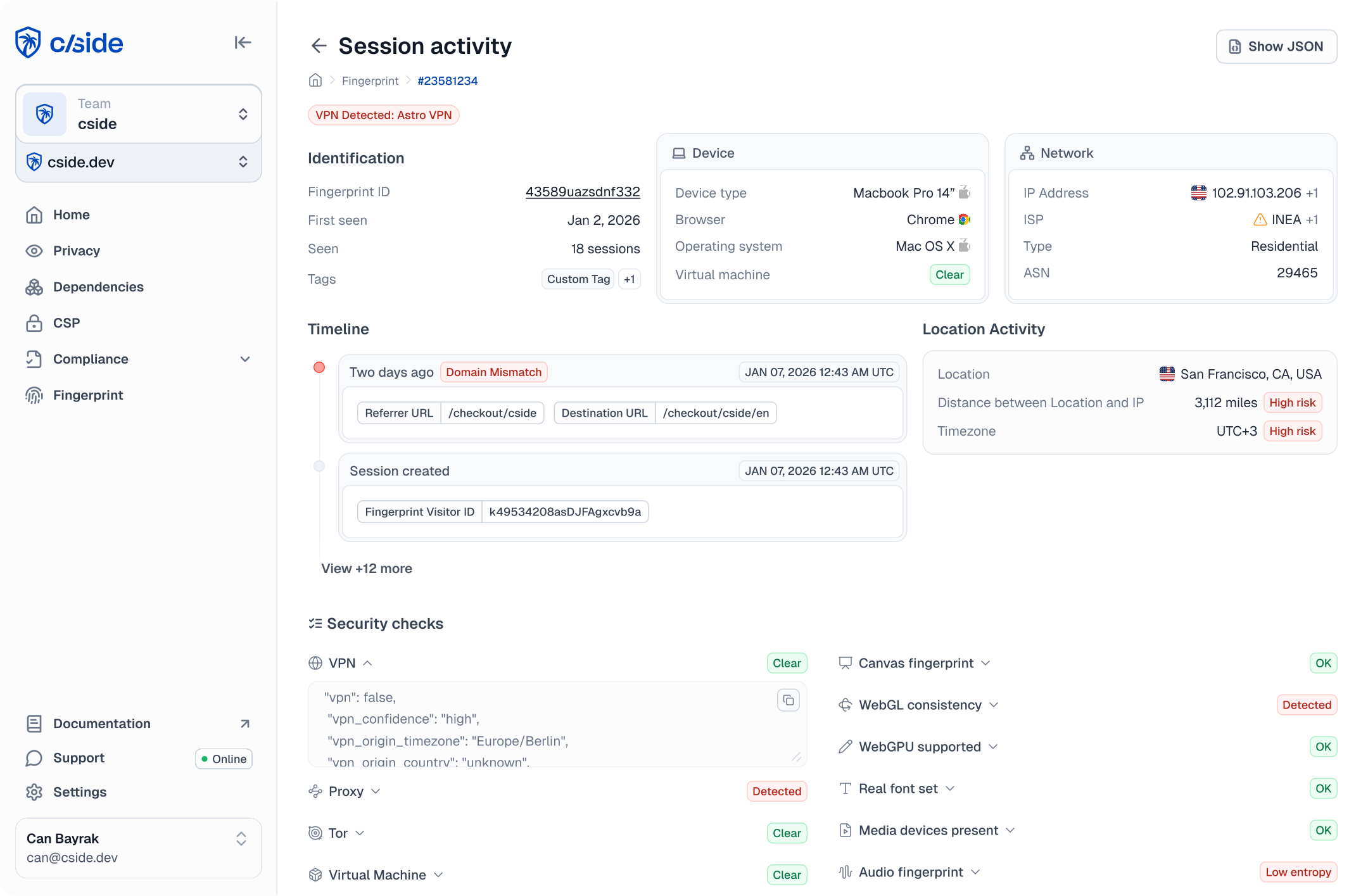
cside's device intelligence Business plan is $99 per month for 50,000 API calls, with a 14-day free trial, and the free plan covers up to 1,000 API calls a month so teams can test before committing. The device identifier draws on 250+ browser, device, and network signals per session. Separate behavioral models add another layer by analyzing cursor movement, typing cadence, and interaction patterns.
If your goal is to build fraud decisions on high-quality device signals rather than replace your entire fraud stack, cside is the strongest fit on this list.
Pros
- Runs on your own pages as a single first-party snippet with no DNS changes, so most teams start collecting signals quickly
- Exposes raw signals through an API and webhooks, so you can write your own fraud rules
- Signals include WebGL and WebGPU rendering, the installed font set, virtual-machine checks, and network attributes such as VPN, proxy, and Tor
- AI agent detection, VPN detection, and chargeback evidence (Enterprise plan) tie back to the same device ID
Cons
- It deliberately stays out of KYC, AML, and transaction scoring, so a team that needs those will still run a second platform alongside it
- The native iOS and Android SDKs are in beta, so mobile coverage is early access rather than generally available
2. Sardine
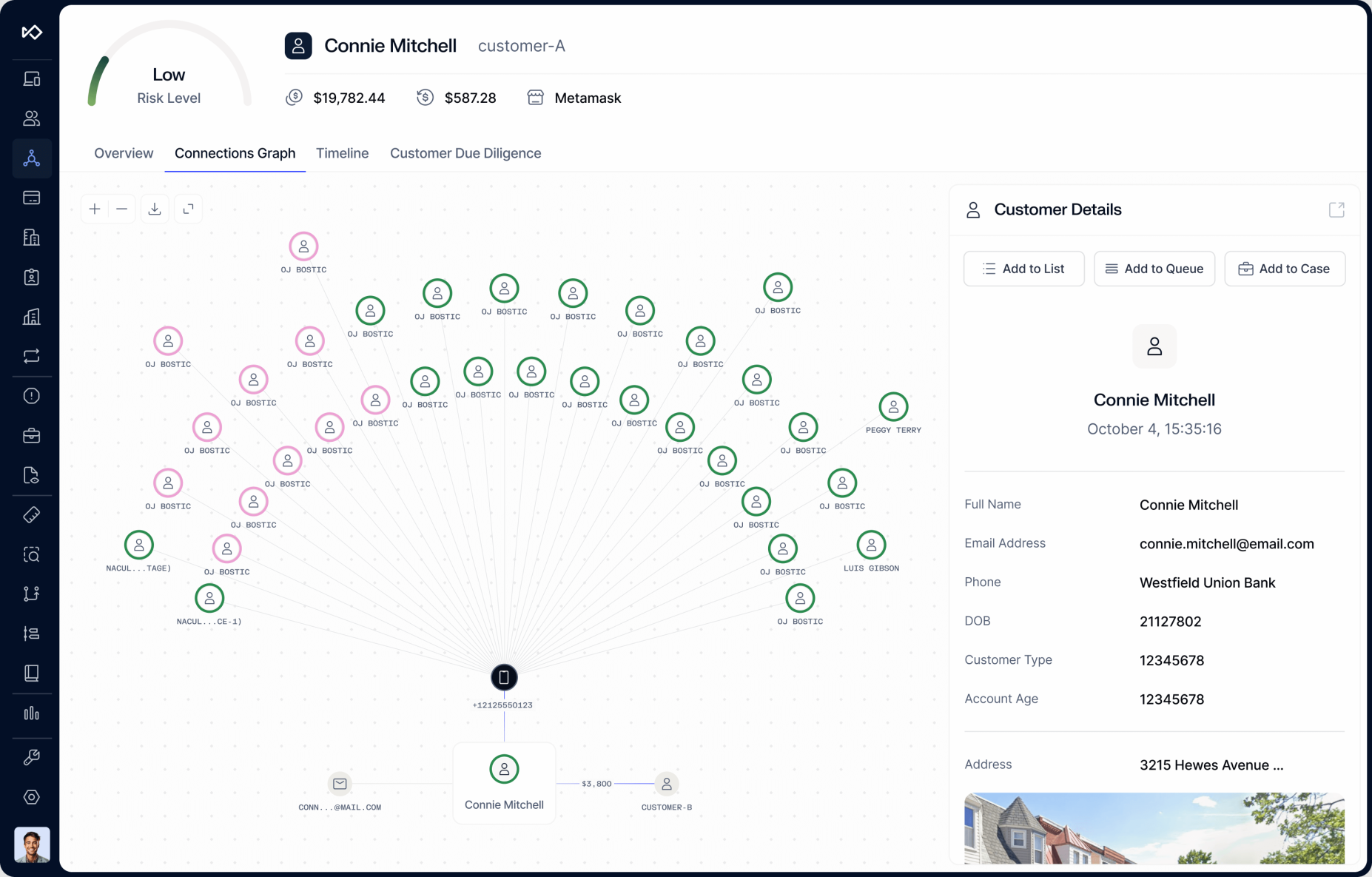
Sardine and SEON both pair device intelligence with fraud and compliance tools. The difference is focus. Sardine was built for fintech, crypto, and payments, so its risk models center on transaction and payment fraud. Teams that run regulated payment flows may prefer Sardine's depth, while teams outside fintech may find SEON's range a better fit. For the head-to-head with cside, see Sardine vs cside.
Source: sardine.ai
Pros
- Remote access detection flags screen-sharing and remote desktop tools such as AnyDesk and TeamViewer, a common thread in scams
- Fraud scoring, KYC and KYB, and AML transaction monitoring run in one platform
- A sandbox dashboard supports integration testing, and new rules can run in shadow mode before they go live
Cons
- The fintech-first focus means less out-of-the-box tuning for verticals like marketplaces or content platforms
- No published pricing or self-serve plan
3. Sift
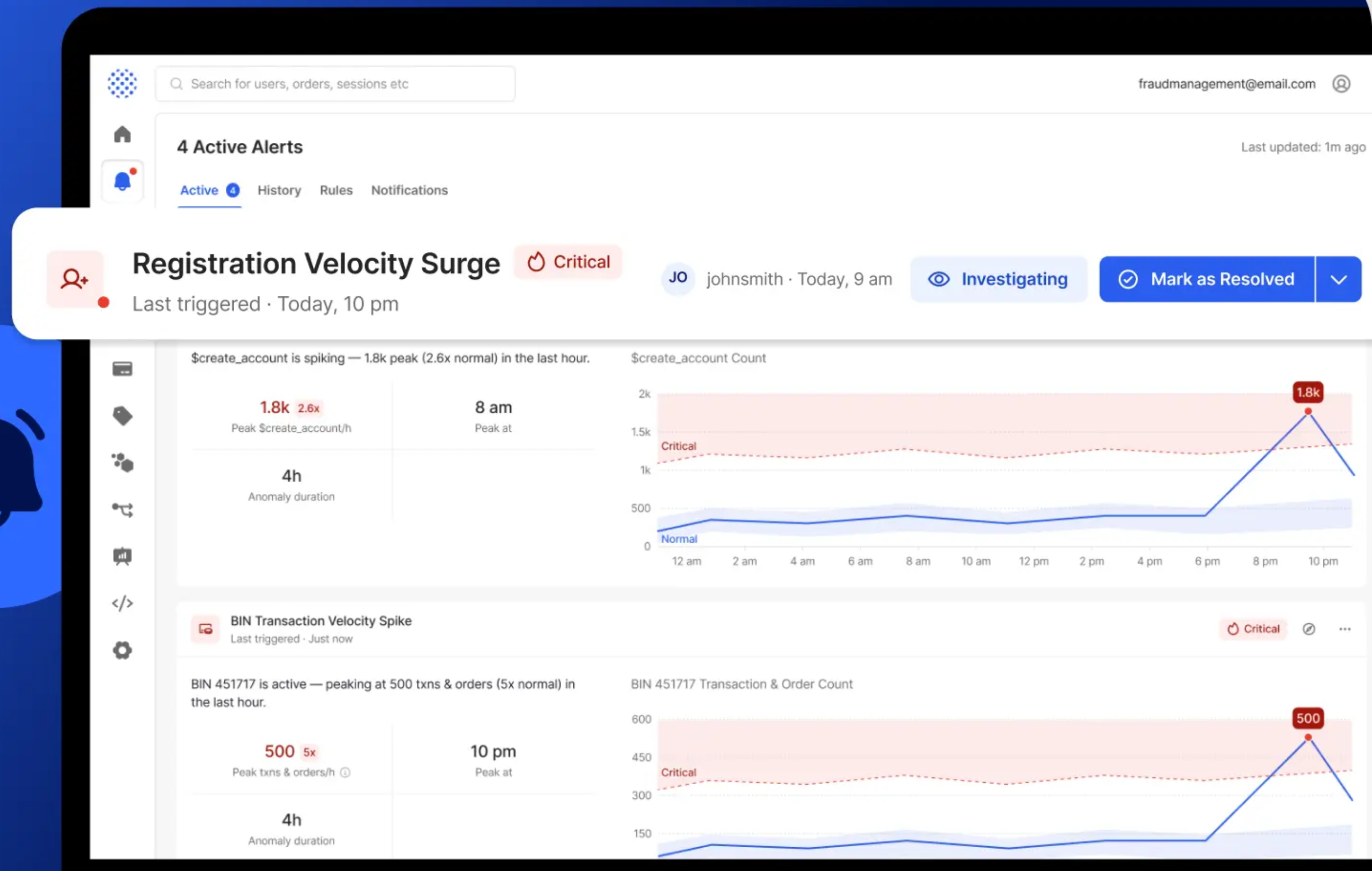
Sift is one of the longest-established fraud platforms on the market. Its biggest advantage is its Global Data Network, which Sift says processes more than 1 trillion events a year and which helps identify risky accounts and devices across participating businesses. It suits companies that want payment fraud, account abuse, and content abuse handled in one platform. For the head-to-head with cside, see Sift vs cside.
Source: sift.com
Pros
- Dispute management sits next to prevention, after Sift's 2021 acquisition of Chargeback
- Workflow backtesting replays historical data through a changed rule before it goes live
- Manual review queues in the Sift Console are built for fraud analysts
Cons
- Network-driven scores are less useful if few merchants in your industry use Sift
- There is no published pricing, so contract terms stay unclear until a sales conversation, which complicates budgeting for an early-stage team
4. Fingerprint
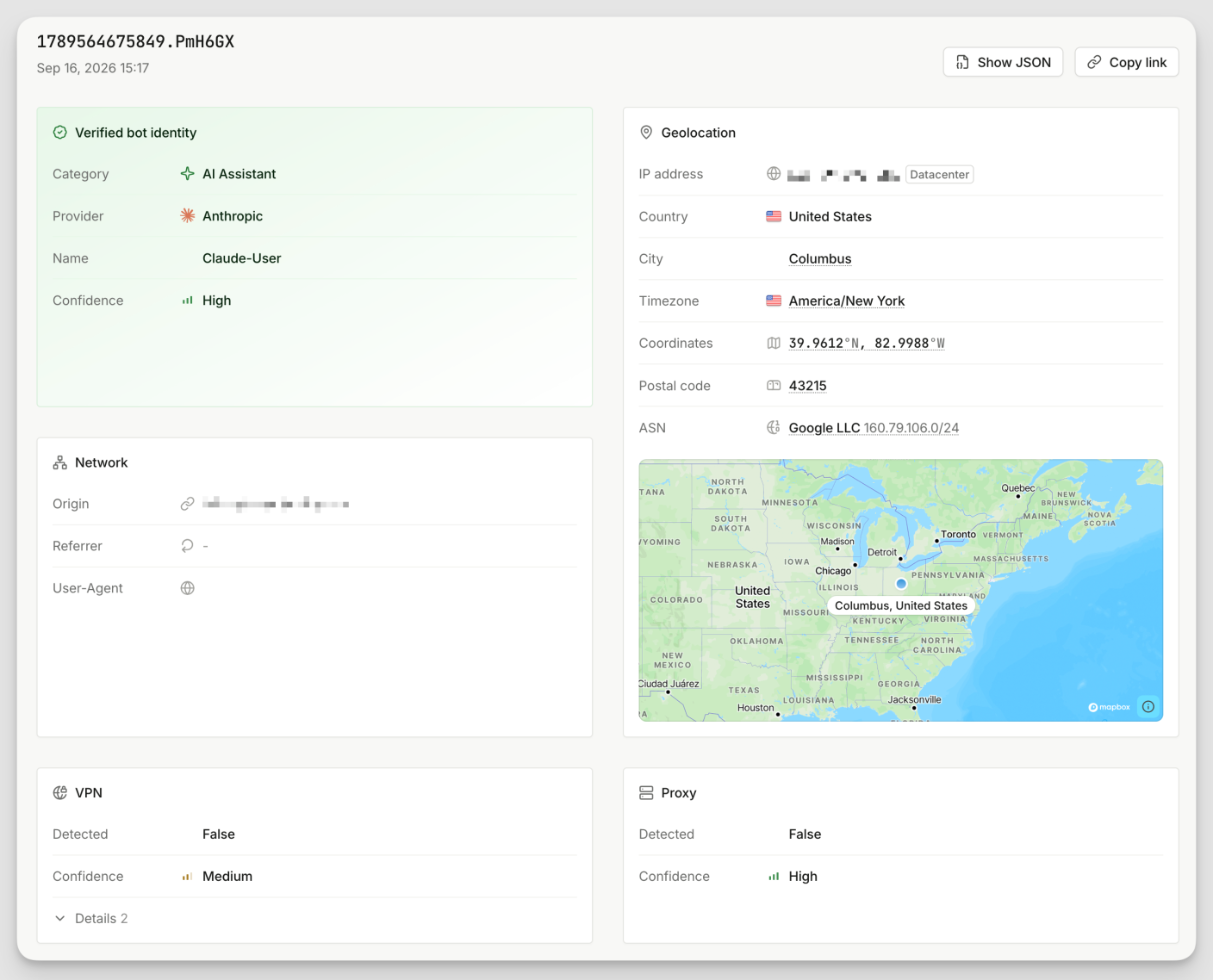
Fingerprint (formerly FingerprintJS Pro) focuses on identifying browsers and devices accurately. Unlike SEON, it leaves fraud decisions to your own systems, which suits engineering teams that already run custom risk rules. Smart Signals add bot, VPN, browser tampering, and incognito detection on top of identification; they are computed from the same device attributes and are not sold separately. For the head-to-head with cside, see Fingerprint vs cside.
Source: docs.fingerprint.com
Pros
- Generally available SDKs for web, iOS, Android, React Native, and Flutter
- Mobile Smart Signals cover rooted and jailbroken devices, emulators, and Frida instrumentation
- Public developer documentation covers each SDK and Smart Signal in detail
Cons
- The Rules Engine is in open beta and limited to allow-or-block rules on identification events, so full fraud decisioning stays in your own stack
- Overage on Pro Plus is $4 per 1,000 API calls past the included 20,000, so 50,000 calls a month lists at $219
5. IPQualityScore (IPQS)
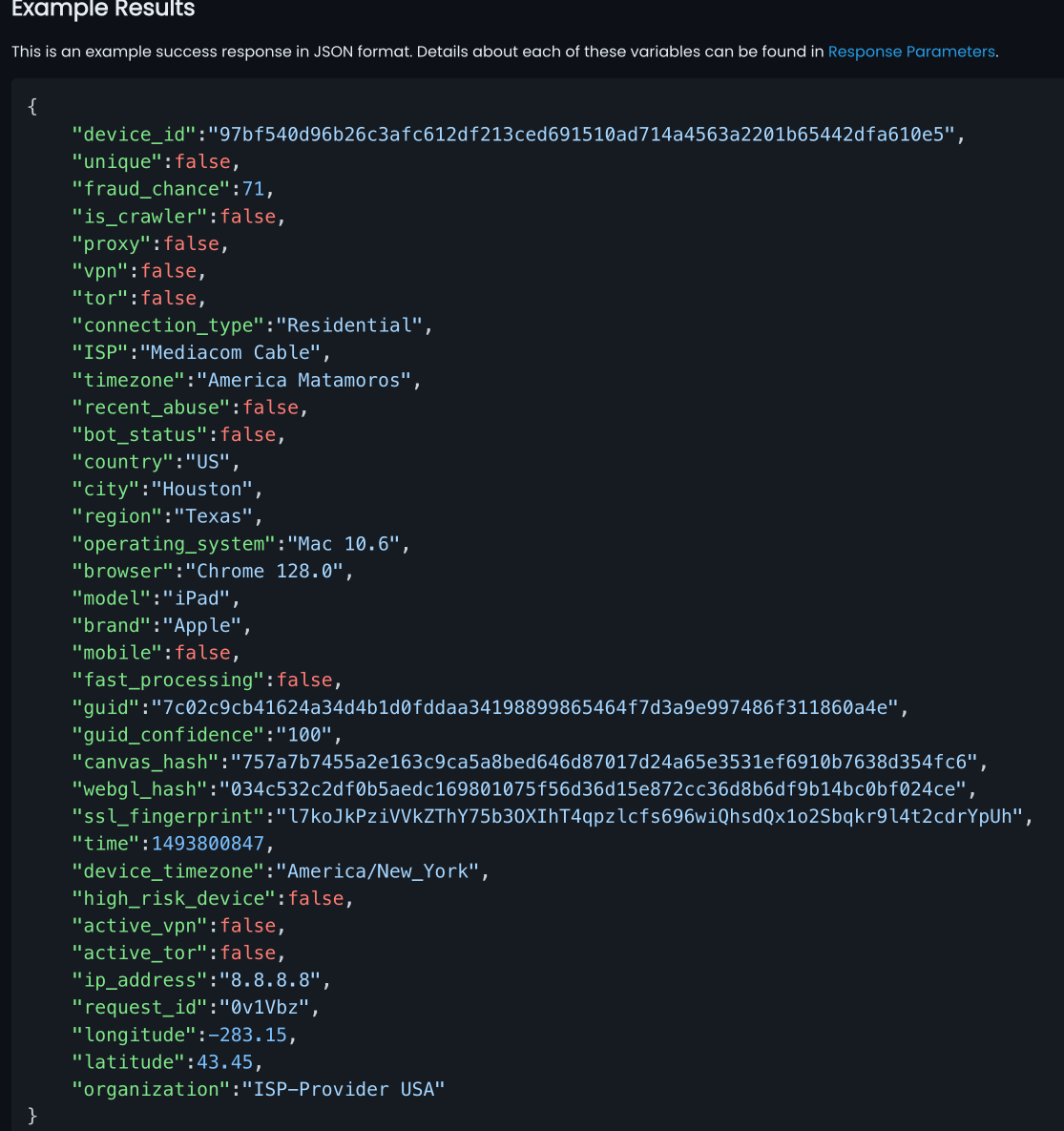
IPQualityScore is best known for IP reputation and proxy and VPN scoring, and its API now also covers email validation, phone validation, and device fingerprinting. That breadth suits teams that want one vendor for email, phone, IP, and device risk. For the head-to-head with cside, see IPQualityScore vs cside.
Source: ipqualityscore.com
Pros
- Email and phone validation APIs can be used on their own, separate from the fraud score
- A bulk validation CSV API lets a team screen an existing database of accounts in one pass
- A free tier of about 1,000 lookups a month keeps it accessible to small teams, and paid plans are published on its pricing page (check the current tier as of October 2026)
Cons
- Device fingerprinting is one module among many rather than the core product
- The public plans page gives little detail per tier, and it is unclear which plan includes device fingerprinting, so confirm before you budget
6. Kount
Kount built its reputation in card-not-present fraud prevention long before Equifax bought it for $640 million in 2021. It still works as a payment and account-risk decisioning engine, and Equifax positions the combination as pairing Kount's digital signals with its own offline identity risk indicators.
Pros
- Equifax's offline identity data adds context for identity fraud that a device signal alone cannot judge
- A dispute and chargeback management product brings card-brand programs into one dashboard
Cons
- kount.com now redirects to Equifax's identity-fraud pages, so Kount is bought inside a large credit-bureau portfolio rather than from an independent vendor
- No self-serve pricing
7. DataVisor
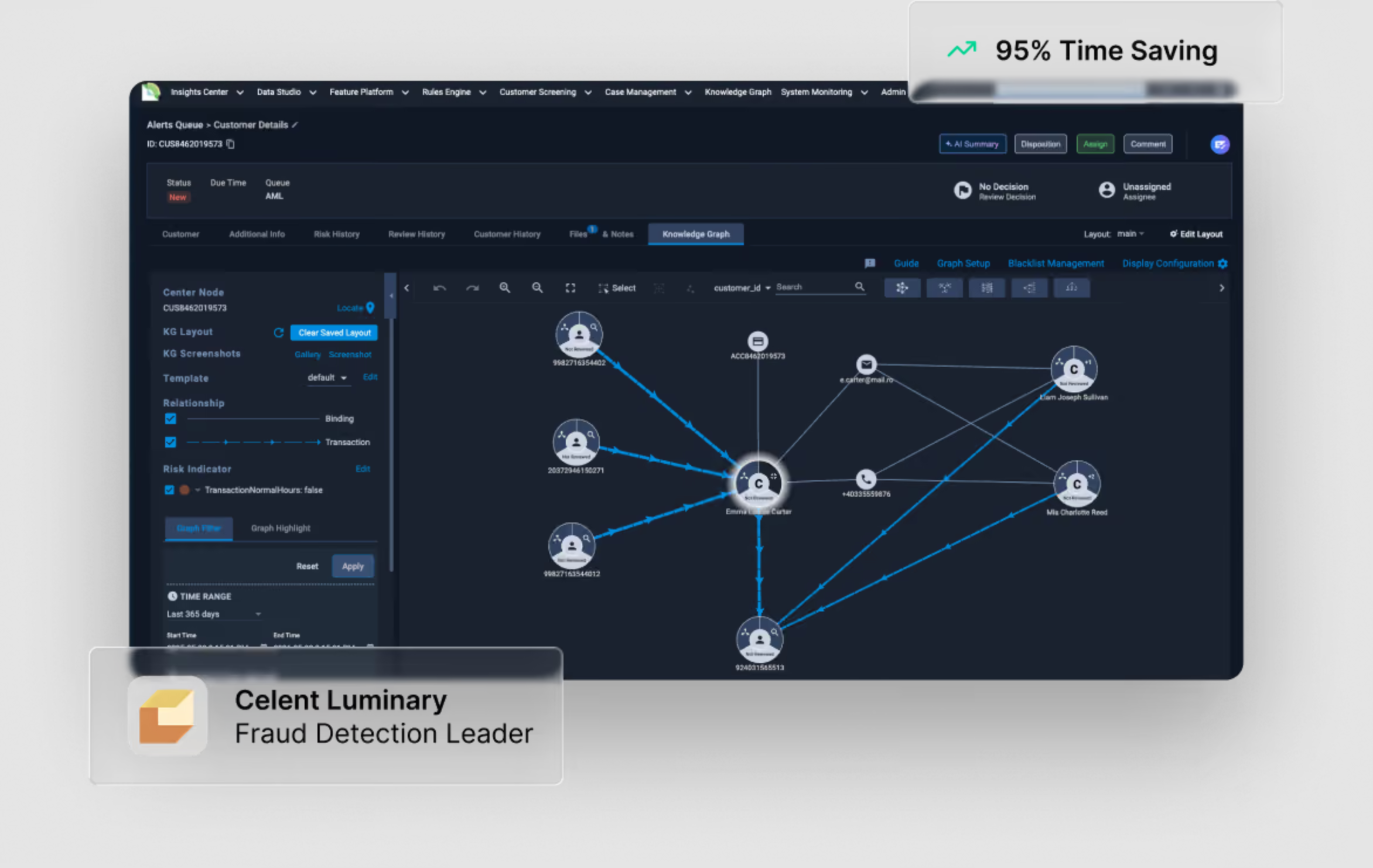
DataVisor specializes in detecting coordinated fraud rings. It uses unsupervised machine learning rather than relying only on previously labeled fraud, alongside rules and its own dEdge device intelligence. It is strongest when a business needs to uncover organized abuse across large datasets.
Source: datavisor.com
Pros
- Catches organized fraud rings whose individual accounts look normal on their own
- Applies the same clustering approach across fraud types such as fake account registration, application fraud, and promotion abuse
Cons
- Clusters are leads, so your analysts still need to review and act on them
- Its device intelligence (dEdge) is one part of an enterprise platform rather than a standalone, self-serve signal layer
8. Feedzai
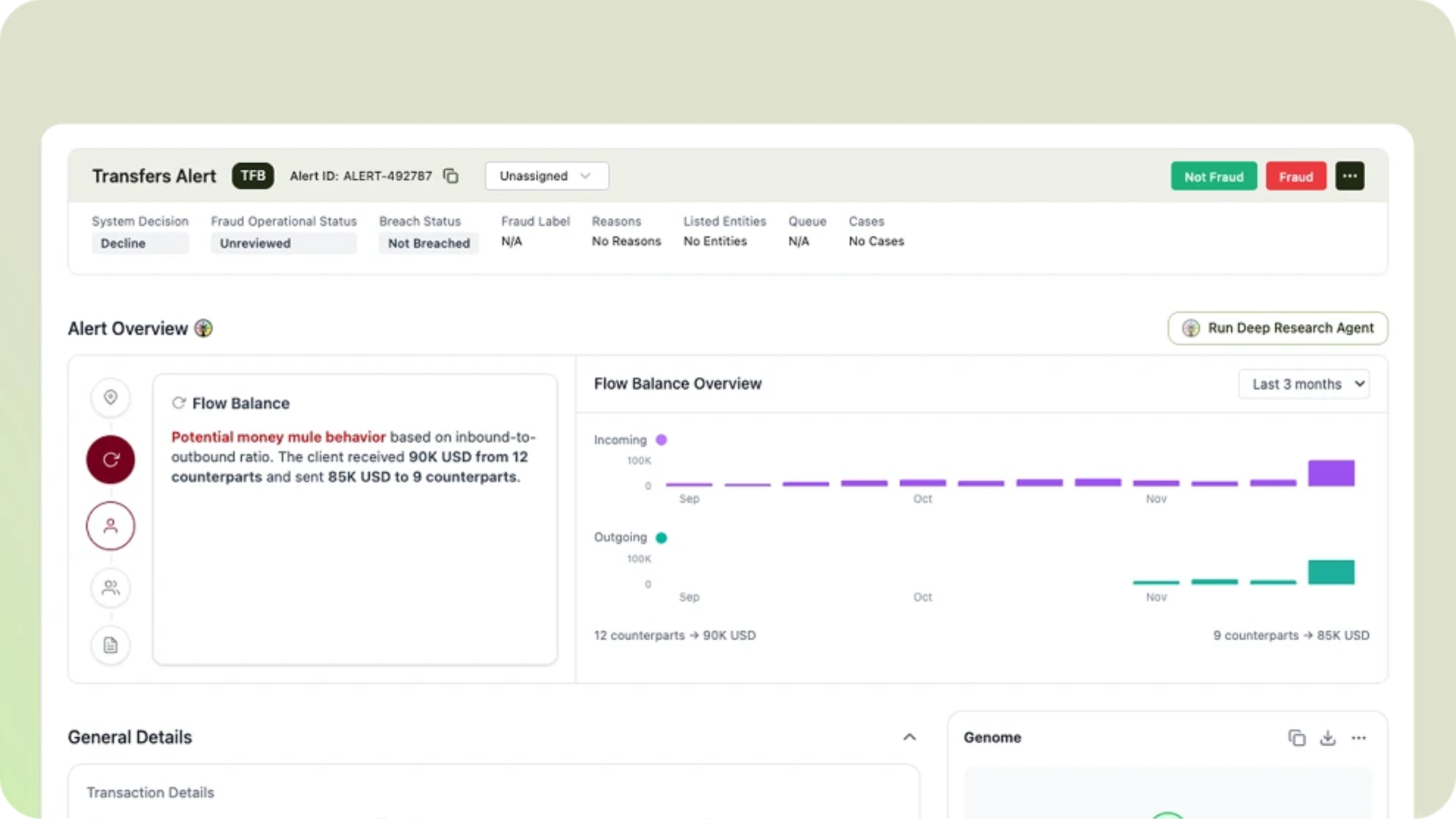
Feedzai is designed primarily for banks and financial institutions that need fraud monitoring alongside AML compliance. It is built for regulated environments rather than lightweight fraud detection.
Source: feedzai.com
Pros
- The Pulse risk engine scores data streams in real time with adjustable rules and machine learning models together
- Its RiskOps platform, launched in 2021, brings fraud prevention, AML, and risk teams into one platform
Cons
- Implementation is heavy for businesses outside banking
- Long enterprise sales cycles
9. ComplyAdvantage
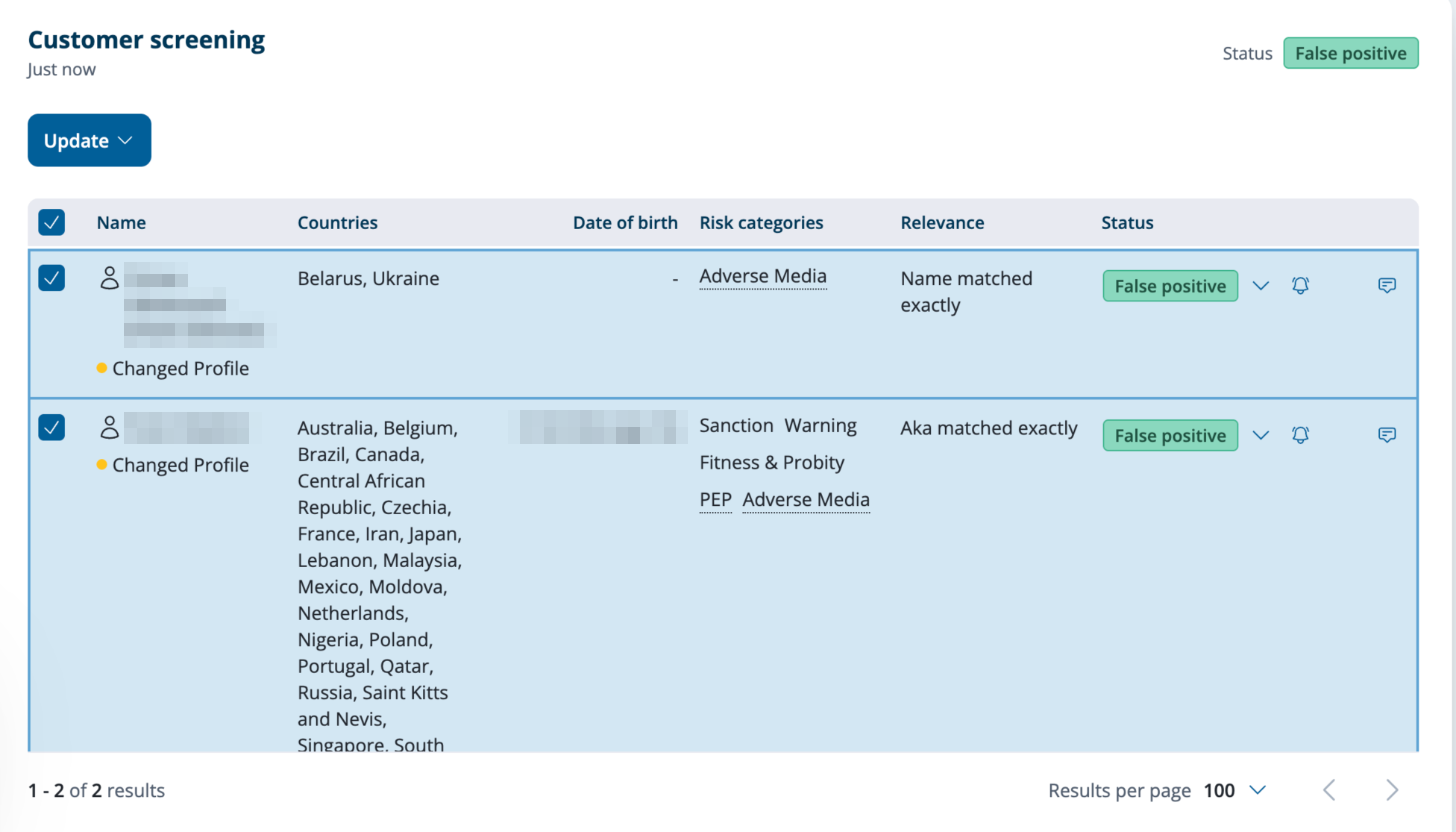
ComplyAdvantage is built around compliance rather than fraud prevention. Its core is screening individuals and businesses against global sanctions lists, politically exposed persons (PEP) registers, and adverse media, and it keeps monitoring those customers after onboarding in case their risk status changes. Transaction monitoring and payment screening sit on its Enterprise plan.
Source: support.complyadvantage.com
Pros
- Ongoing monitoring re-screens existing customers automatically
- Adverse-media screening uses natural language processing to cut false positives from keyword and common-name matches
- A self-serve Starter plan starts at $99 per month for 100 monitored entities
Cons
- Fraud detection is transaction-based, with no browser or device signals
- Transaction monitoring and payment screening need the custom-priced Enterprise plan
Which SEON alternative should you choose?
- Need device intelligence, AI agent and bot detection, VPN detection, chargeback evidence, or PCI DSS script scope from one vendor: cside.
- Need fraud and compliance together, especially for fintech or crypto onboarding: Sardine, or Sift for broad multi-type fraud scoring.
- Need device identification with generally available SDKs on more mobile platforms: Fingerprint, or IPQualityScore for a hosted fraud-scoring API with a free tier.
- Need enterprise fraud decisioning at scale: Kount for Equifax identity data, DataVisor for unsupervised fraud-ring detection, or Feedzai for regulated financial crime and AML.
- AML, sanctions screening, and compliance are the whole problem: ComplyAdvantage.
If you want the direct head-to-head instead of this survey, the SEON vs cside comparison puts the two side by side on pricing, fraud use cases, and detection features.
Try device intelligence instead of a full fraud suite
If your team only needs accurate device intelligence and fraud signals, you do not necessarily need a platform built around KYC, AML, and data enrichment.
Book a personalized demo to see:
- How one first-party script returns a device ID and fraud signals together
- AI agent, bot, VPN, and proxy detection on login and checkout flows
- What migrating from a broader platform like SEON actually looks like
Book a demo or start for free.