TL;DR: cside vs Sardine
- Sardine is a fintech fraud platform with strong KYC and compliance integrations for crypto and neo-banks. Its device signals come through a managed SDK, a known collector a sophisticated fraudster can identify and feed.
- cside collects from your own first-party JavaScript. No third-party origin to block, no fixed collector to detect. Mouse-movement patterns, scroll behavior, typing cadence, fingerprinting across 250+ signals, AI agent detection, plus AI-generated-text detection: pass a review, signup bio, or support message and cside tells you if a human or an AI wrote it.
- Fintech needing KYC and transaction fraud coverage: Sardine. cside covers the payment-page script monitoring Sardine does not sell, and collects the shared device and behavioural layer from your own first-party JavaScript.
How cside differentiates its device intelligence
The core difference is machine learning. On top of the 250+ browser, device, and network signals cside collects in each session, it runs separate models for cursor movement, for input and typing patterns, and for broader behavioural signals, then combines their verdicts, rather than scoring a session with a single general model.
cside is also specialised rather than generalistic. Instead of one broad platform stretched across every fraud category, it is tuned for specific use cases: account takeover, account sharing, chargeback evidence, and AI agent detection. That focus is what keeps the behavioural models accurate on the attacks that matter to your team.
What is Sardine?
Sardine is an agentic fraud-prevention, AML-compliance, and transaction-monitoring platform, founded in 2020 (co-founded and led by CEO Soups Ranjan) and headquartered in San Francisco. It unifies device and behavior intelligence, identity verification (KYC/KYB), sanctions and PEP screening, real-time and batch transaction monitoring, case management, and an AI/GenAI investigations layer into one platform, and it returns risk scores and decisions across payment fraud, account takeover, money laundering, and abuse. Per its own site, it serves hundreds of enterprise customers across banking, fintech, e-commerce, and marketplaces, and reports a 4.9/5 rating on G2. It states it is SOC 2 Type II, ISO 27001, PCI DSS, and GDPR compliant via its Trust Center. It is a mature, well-funded, sales-led platform.
How Sardine works
Per Sardine's own developer documentation, a lightweight web JavaScript SDK (plus iOS and Android SDKs) loads Sardine's script in the browser and captures device fingerprint and behavior-biometric signals tied to a session key, while your backend posts payments, sanctions, and AML transaction events to Sardine's server-side APIs. Machine-learning models and a low-code rule builder (Sardine cites hundreds of pre-built fraud and AML rules) then produce risk scores, customer risk ratings, and case workflows, with AI agents to speed investigations. On the device side, Sardine explicitly advertises detection of agentic browser automation, naming OpenAI Operator, Perplexity, BrowserUse, and BrowserBase, alongside headless browsers, bots, and VPN/proxy "piercing."
Two things follow from that design that matter for a client-side security buyer. First, the in-browser collector is a vendor-hosted third-party script with a fixed origin, so, like other third-party browser collectors, it can be affected by privacy extensions and filter lists for some visitors (the server-side API signal still flows). Second, that browser SDK is itself an unmonitored third-party script on your pages, precisely what PCI DSS 6.4.3 asks merchants to inventory and watch. Sardine being PCI-compliant as an organization is a separate thing from giving a merchant a tool to satisfy 6.4.3 / 11.6.1, which its site does not describe.
How cside fits
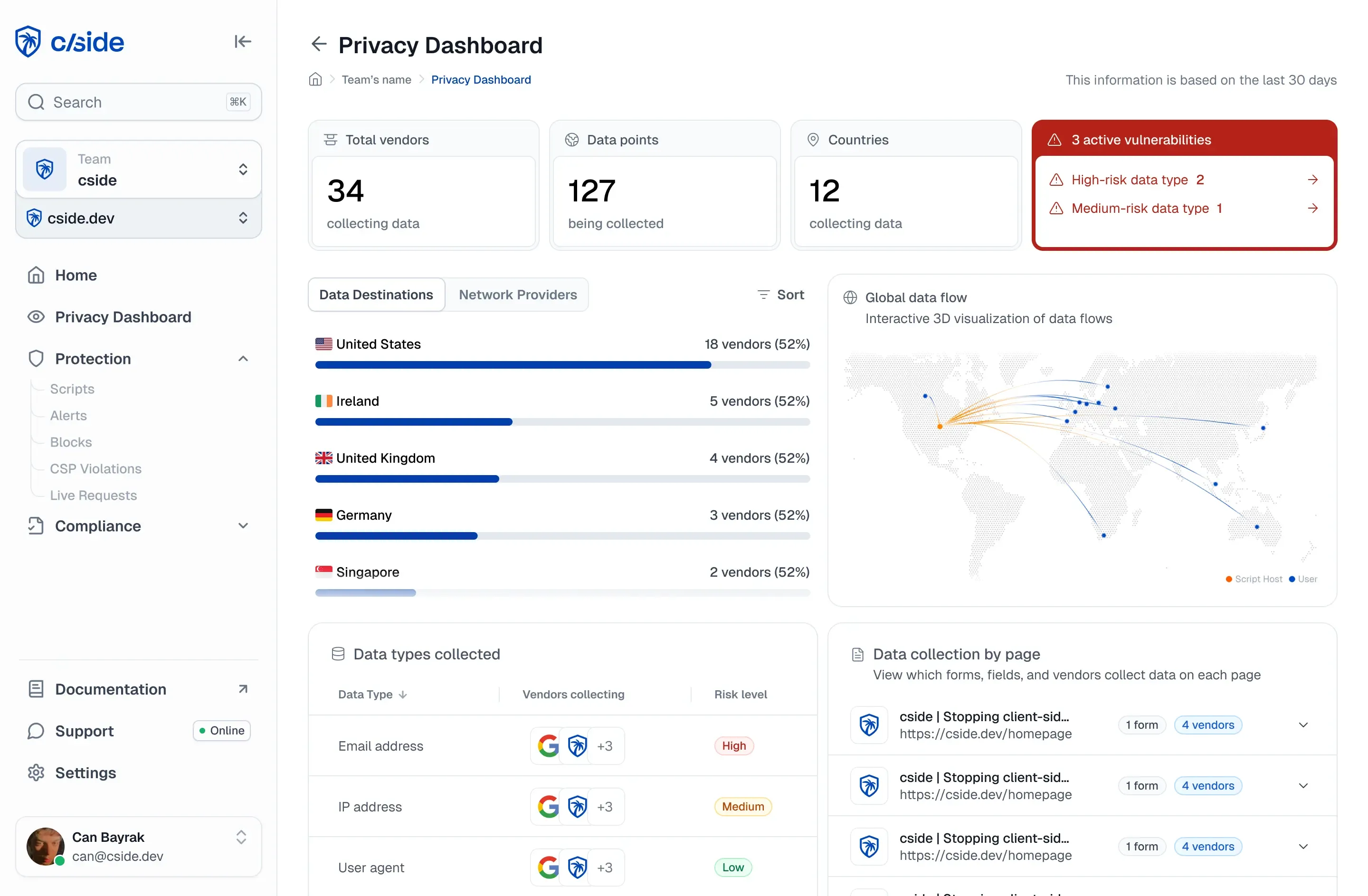
cside isn't a replacement for Sardine's fraud and AML decisioning, and we won't pretend otherwise. If you need transaction monitoring, sanctions screening, KYC/KYB, or case management, that's Sardine's job, not ours. What cside does is the layer underneath and around the device signal.
On the layer the two share, device signals, bot, and AI-agent detection, cside collects device and behavioral signals from your own first-party JavaScript, so there's no third-party origin for a filter list to block and no fixed collector for a fraudster to detect and feed. It reads in-session behavior on the live page, mouse-movement patterns, scroll behavior, and typing cadence, alongside device fingerprinting (250+ signals including IP, geolocation, VPN/proxy, and bot activity), with integrated AI agent detection. It also adds a signal Sardine doesn't offer: an AI-generated-text detection engine, pass the contents of a form field (a review, a signup bio, a support message) and cside tells you whether a human or an AI wrote it. There's more on our bot detection and AI agent detection pages, and Avneh's posts on behavioral cursor detection and the two-stage neural detection stack explain the underlying motion and session signals in more detail.
Beyond bot detection, cside does the thing Sardine doesn't: it inventories, justifies, and tamper-monitors every script on your payment pages, including collectors like Sardine's, to satisfy PCI DSS 4.0.1 requirements 6.4.3 and 11.6.1, with QSA-ready reports (VikingCloud-validated) and a single first-party script tag that adds no proxy and no DNS changes. It also gives you evidence you own, usable in chargeback disputes through our Chargebacks911 integration. Many teams run a fraud and AML platform and cside together; if the first-party device-signal layer or PCI script coverage is your gap, that's where cside fits.
Sign up or book a demo to get started.
Related resources

Founder and CEO of cside. Previously a product manager on Cloudflare Page Shield (now Cloudflare Client-Side Security). Co-chair of the W3C Anti-Fraud Community Group and a Forbes 30 Under 30 honoree. Building accessible security against client-side attacks, web security is not an enterprise-only problem.