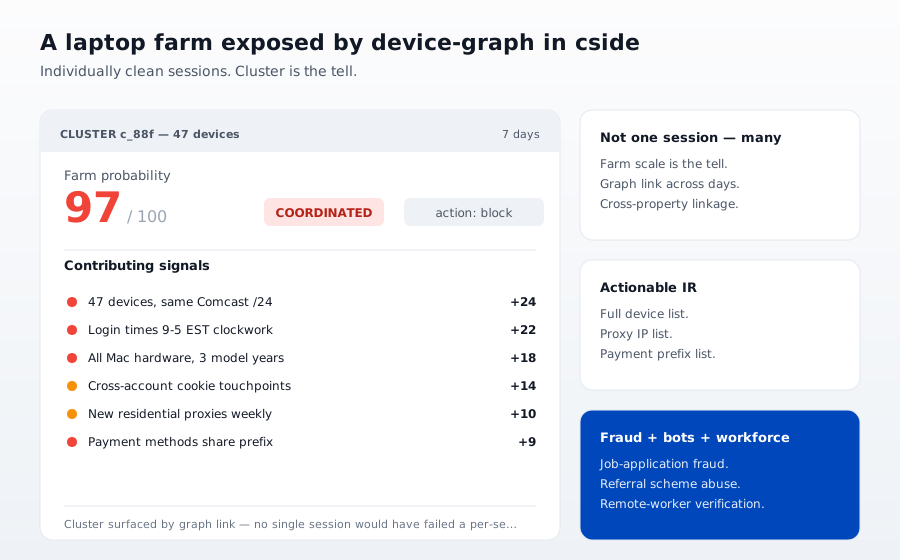

TL;DR: what is a laptop farm
- What it is: A physical rack of 30-100 real devices on residential ISPs, worked by human operators rotating between them.
- The gap: IP reputation, device fingerprint, CAPTCHAs, and MFA all fail here. Every device is real, every IP is clean, and a human is at the keyboard.
- What actually catches it: cross-account behavioral correlation, timing patterns across sessions, operator-signature keystroke rhythm.
Short on time? See cside's account-takeover detection. It covers everything below in one deployment.
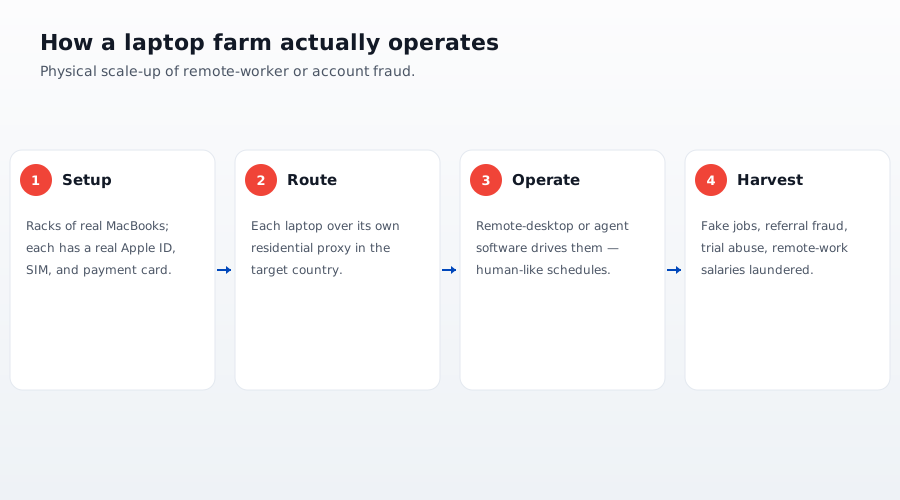
How a laptop farm works
Each device in a laptop farm gets its own IP address via a dedicated proxy or a mobile SIM. The operator loads different accounts, cookies, and browser profiles per device. More sophisticated setups use anti-detect browsers that generate randomized fingerprint values for each session, including different user agent strings, screen resolutions, and language settings.
The result is a set of sessions that look independent to any tool watching the network. From the outside, you see traffic from a residential IP in one city, a mobile carrier in another, and a datacenter proxy in a third. You do not see that the same person typed every interaction.
| Signal layer | What the attacker controls | What still leaks |
|---|---|---|
| IP address | Rotated per device or session | ASN clustering when proxy pool is shared |
| Browser agent | Spoofed via anti-detect browser | GPU renderer, audio API timing, hardware jitter |
| Account identity | Separate profile per device | Typing rhythm and mouse movement across accounts |
| Session behavior | Human-paced clicks and scrolls | Behavioral biometrics consistent across devices |
Who uses laptop farms
Laptop farms appear across several fraud types with different goals.
North Korean IT workers. The FBI issued a Public Service Announcement in May 2024 warning that state-sponsored workers apply for remote engineering roles at Western companies through laptop farms, collecting salaries that fund government programs. KnowBe4 disclosed in July 2024 that it hired one, catching it only through post-hire behavioral analysis. cside CEO Simon Wijckmans encountered the same attack during a hiring round and used device fingerprinting to screen applicants, documented here.
Ad click fraud. A farm of 20 devices generates thousands of fake ad clicks per day, draining advertiser budgets while each session looks like a distinct real person from a different location.
Bonus and promo abuse. Each device claims a welcome offer, referral credit, or first-deposit bonus under a new account. The farm cycles through account creation and withdrawal repeatedly.
Credential stuffing. When testing large lists of stolen credentials against a login endpoint, a laptop farm distributes the load across IP addresses to stay under per-IP rate limits.
Multi-account gaming and financial fraud. Operators run multiple ranked accounts in online games, trade high-ranked accounts, or claim loyalty rewards across identities from a single location.
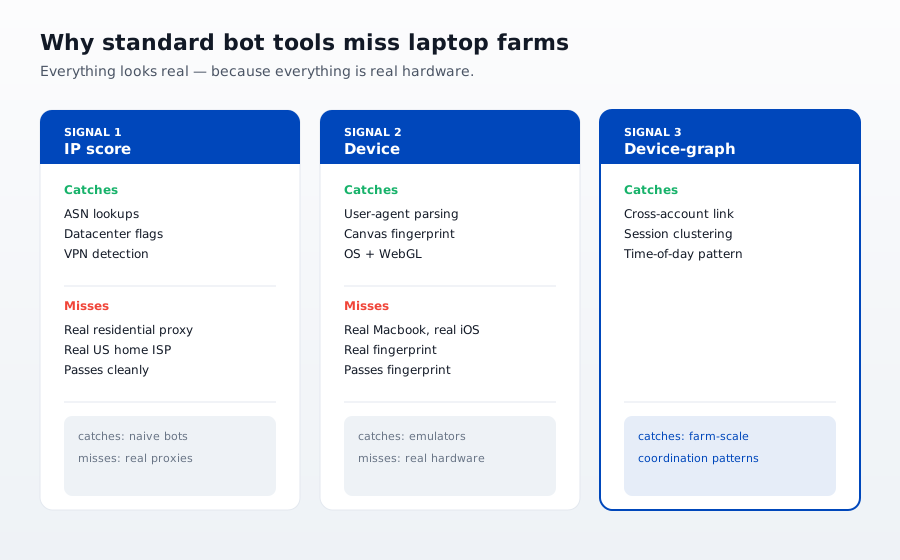
Why traditional detection misses laptop farms
IP reputation databases flag known datacenter and proxy IPs, but residential proxies and mobile SIM cards are rarely flagged. Rate limiting per IP is bypassed when each device has a separate address.
Fingerprinting is defeated when the attacker uses an anti-detect browser that randomizes the values security tools typically read: user agent strings, screen resolution, installed fonts, and WebGL renderer strings.
The signal these tools miss is at the behavioral layer: the physical person whose hands, reflexes, and habits are consistent across every device in the farm.
Browser signals that expose laptop farm operators
Behavioral biometrics. Typing cadence, keystroke duration, mouse movement trajectories, and scroll velocity are biometric signals tied to each individual. A single operator controlling five accounts in one session produces consistent typing and mouse patterns across those accounts, even though each shows a different IP, browser agent, and identity. That consistency across apparent diversity is the clearest indicator of one person across many devices.
Hardware-level fingerprinting. Anti-detect browsers spoof the readable values, but low-level signals are harder to mask: GPU renderer strings (the output of WebGLRenderingContext.UNMASKED_RENDERER_WEBGL), audio processing jitter from the AudioContext API, and high-resolution timer behavior from performance.now(). Devices from the same batch, configured similarly and running in the same environment, tend to cluster on these values even when surface fingerprints differ.
Impossible travel at the behavioral layer. If the same behavioral signature appears across multiple IPs in a short window, that is physically impossible for one person at one keyboard. cside's impossible travel detection catches this at the browser layer, not just the network layer, so a VPN-masked IP change does not hide the behavioral continuity.
Network clustering. Even with proxy rotation, farms often share the same upstream ASN, the same /24 IP block, or devices with the same locale and timezone settings. These clustering signals raise confidence in coordinated-origin scoring.
How cside detects laptop farm activity
cside monitors the browser layer across real visitor sessions without adding latency. Device fingerprinting across 250+ signals, including low-level GPU and timing data, combined with behavioral biometrics and impossible travel detection, produces a coordinated-origin score for each session cluster.
When sessions that claim separate identities show correlated hardware signals and matching behavioral patterns, cside flags the cluster as a likely laptop farm and routes it for review or automated blocking based on the configured policy.
This is the same detection approach cside used to screen DPRK job applicants: not IP blocks or resume filters, but browser-layer signals that surface the same person across multiple submitted identities.
Related: insider threat detection: browser signals catch what SIEM misses and what is impossible travel detection.