
TL;DR: 10 best bot detection tools for 2026
- Three layers: network (IP, ASN, TLS fingerprint), browser (device fingerprint, headless flags), behavior (mouse, timing, intent).
- Only behavior catches agents: Legacy vendors cover layers one and two. LLM agents pass both. Only behavioral detection catches them.
- Coverage over brand: The real buying question is coverage, not brand: how much traffic can you dismiss cheaply, and how much needs the expensive behavioral layer?
Short on time? See cside's AI-agent detection. It covers everything below in one deployment.
The three detection layers, side by side
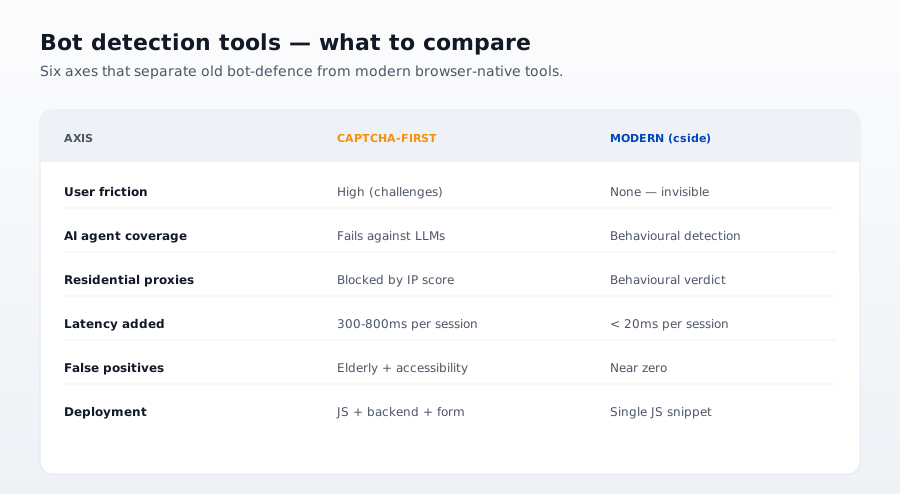
Each layer answers a different question. Edge asks "is this request abusive at volume?" Device intelligence asks "have I seen this actor before?" Browser-layer asks "is this session actually a human in a real browser, and what is it doing on the page?"
| Layer | What it can see | Evidence it produces | Where it goes blind |
|---|---|---|---|
| Edge bot management | IP reputation, ASN, rate, TLS/TLS handshake fingerprint fingerprint, user-agent, known-bot ranges | Request logs, challenge outcomes, block reasons | A clean residential IP with a standard Chrome fingerprint at human speed |
| Device intelligence | Device fingerprint, device/account reuse, network context, velocity across sessions | Device graph, reuse links, risk score per identity | A fresh fingerprint per session and anti-detect browsers that rotate identity |
| Browser-layer agent detection | Runtime browser properties, automation signals, interaction timing, real device/IP, page actions | Session traces, agent classification, runtime payload visibility | Pure server-to-server traffic that never loads the page |
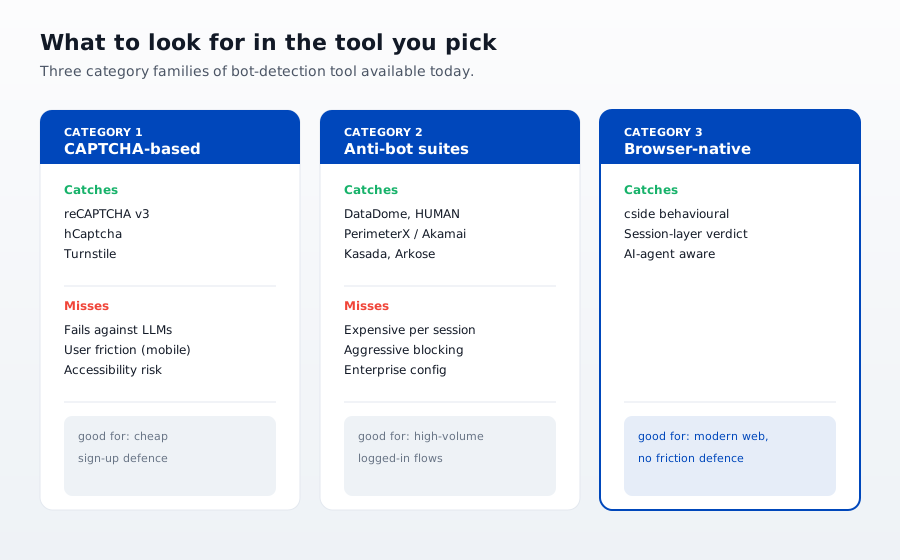
No row is "best." The right answer is the layer that covers your live blind spot, and usually a stack that closes more than one.
Layer 1: Edge bot management
Edge bot management lives at the CDN, WAF, or reverse proxy. It evaluates a request before it reaches your application, which makes it fast, cheap to deploy, and strong against the bulk of automated abuse: volumetric scraping, credential-stuffing floods, and bots that self-identify or reuse dirty infrastructure.
It is the right first layer for known bots. It is the wrong only layer for AI agents. An agent arriving from a clean residential proxy, presenting a real Chrome TLS fingerprint, and pacing itself at human speed is indistinguishable from a customer at the edge. The signals the edge depends on, reputation, rate, and fingerprint mismatch, are exactly the signals stealth automation is built to launder.
Evidence to keep: IP and ASN, reputation score, rate and burst patterns, challenge pass/fail, and the rule that fired. When you escalate a fraud case, this is your "how did it get in" trail.
Layer 2: Device intelligence
Device intelligence answers a question the edge cannot: is this the same actor I have seen before? It builds a fingerprint from browser and device attributes, then links sessions, accounts, and payment attempts to spot reuse: one device opening forty accounts, or one fingerprint behind a wave of chargebacks.
This layer is strong for account abuse, multi-accounting, and payment fraud where the tell is repetition rather than any single suspicious request. It feeds fraud and risk workflows well because its output is an identity-level risk signal, not just a per-request verdict.
Its blind spot is identity freshness. Anti-detect and stealth browsers exist specifically to present a new, internally consistent fingerprint every session. When every attempt looks like a brand-new device, a reuse graph has nothing to link. Device intelligence also leans on values reported by the browser, and an automated agent can shape what it reports.
Evidence to keep: the fingerprint, the device-and-account reuse graph, network context, and velocity across the identity. In a dispute, the reuse link is what turns "one suspicious order" into "a documented pattern."
Layer 3: Browser-layer agent detection
The browser layer runs inside the page, so it sees what the edge and the device graph cannot: what the session actually is and what it does after the request is allowed. This is where AI agents leave traces they cannot hide, because they have to drive a real browser to do their job.
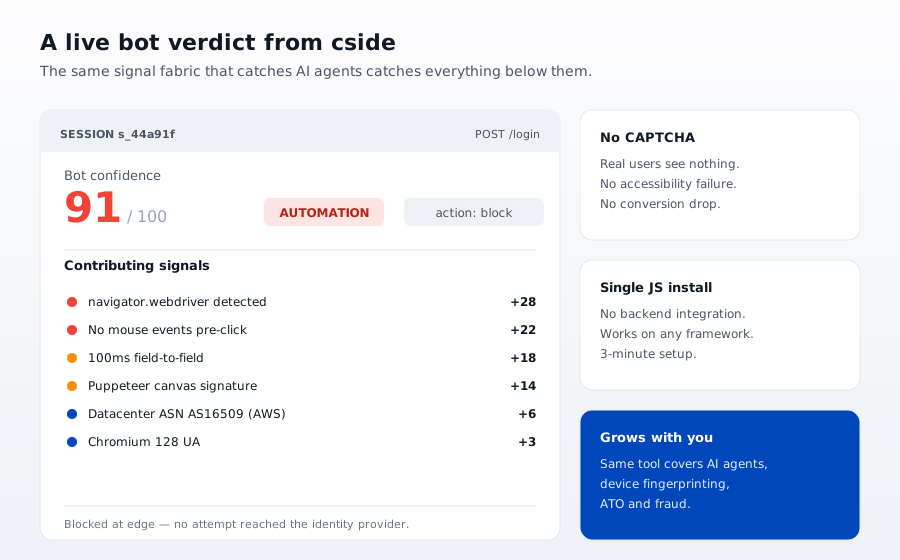
Concrete signals live here. navigator.webdriver and other automation flags. Chrome DevTools Protocol artifacts and Runtime leaks from frameworks driving the browser. Fingerprint drift between what a session claims and how it behaves. Interaction timing that reflects machine reasoning rather than human hesitation. VPN and proxy behavior visible only at the session level. Stealth tooling is rising fast here: cside's 2026 web security research reports that playwright-stealth installs jumped roughly 10x over the course of 2025, a direct proxy for how fast browser-driving automation went mainstream. cside 2026 research
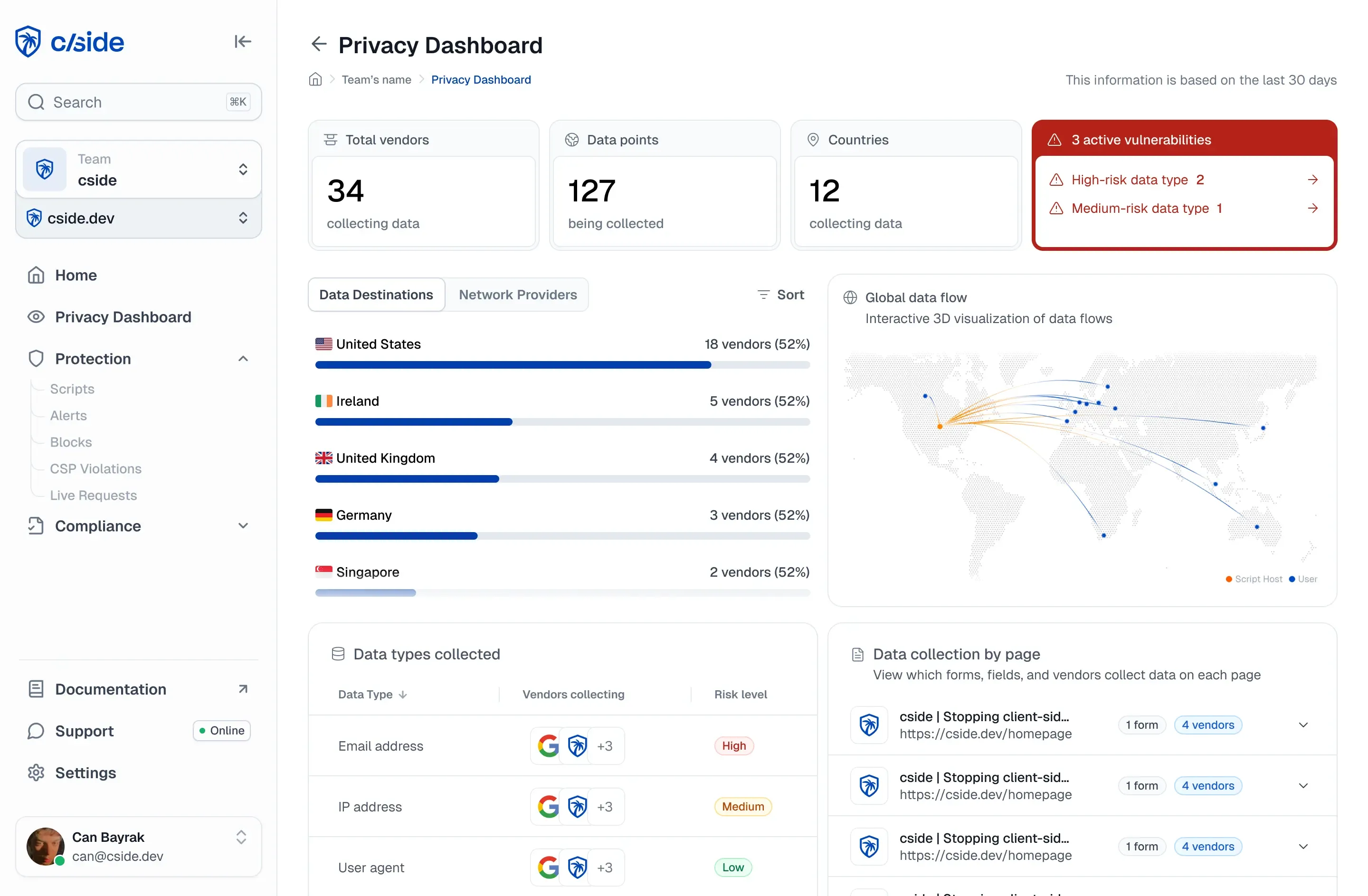
This is the layer cside is built for. On every session it reads a baseline of 250+ browser, device, and network signals and binds them into a persistent device fingerprint, so the same device stays recognizable across IP rotations and user-agent changes. It captures runtime browser behavior, real device and real IP behind a proxy, VPN/proxy behavioral detection, and the actual page actions of a flagged session, then exposes that as classification and raw signals over an API so it feeds the same fraud and security workflows your other layers do. It complements edge and device tools; it does not replace them. Its own blind spot is clear: a pure server-to-server bot that never renders the page leaves no browser-layer trace, which is exactly what the edge is for.
Evidence to keep: the session trace, the runtime properties that triggered the flag, the agent classification, and the on-page actions taken. This is the evidence that survives an incident review and supports a real-time allow, block, or step-up decision.
Map the layer to the threat
Pick the layer by the abuse that is actually landing, then add layers to close the gaps it leaves.
- Volumetric scraping or credential-stuffing floods: start at the edge; it is built for scale and known bots.
- Multi-accounting, promo abuse, repeat chargebacks: add device intelligence to link the actor across sessions.
- Card testing, account creation, or scraping by AI agents in real browsers: add browser-layer detection; this is the blind spot of the other two.
- Legitimate shopping agents you do not want to block: you need session-level classification, which is a browser-layer capability.
- Pure API or server-to-server bots that never render: keep the edge in the stack; the browser layer will not see them.
How to run the evaluation
Tool marketing collapses under one test: run a proof against your real flows with both known bots and a stealth browser, and demand the raw signal behind every verdict.
- Name your top three automation risks and the pages where they land.
- Reproduce them: known bots for the edge, anti-detect/stealth browsers for the browser layer.
- For each tool, capture not just the verdict but the underlying evidence (reputation trail, reuse graph, or runtime trace).
- Check false positives against your legitimate automation and good agents.
- Confirm every layer exports signals into your fraud and security workflow, not just a dashboard.
A verdict you cannot trace is a verdict you cannot tune or defend. Buy the layer that shows its work on your traffic.
Further reading on cside
- Best account takeover prevention solutions compared in 2026
- 4 tools to detect AI agents on your website
- Best bot and agent trust management platforms compared
- How to choose an AI agent detection solution
- AI agent detection software: which tools are worth it
- cside AI Agent Detection