
TL;DR: chargeback fraud prevention
- The 2026 play: In 2026 this is device evidence plus Visa CE 3.0. Merchants capturing a stable fingerprint at checkout win 40-60% of eligible disputes.
- Why disputes are lost: Most disputes are not lost on fraud. They are lost because the merchant cannot prove the customer used the same device on prior purchases.
- Cost of doing nothing: $15-25 per chargeback fee, lost merchandise, $10k VAMP fines, and eventually card-brand acceptance.
Short on time? See cside's chargeback-evidence tooling. It covers everything below in one deployment.
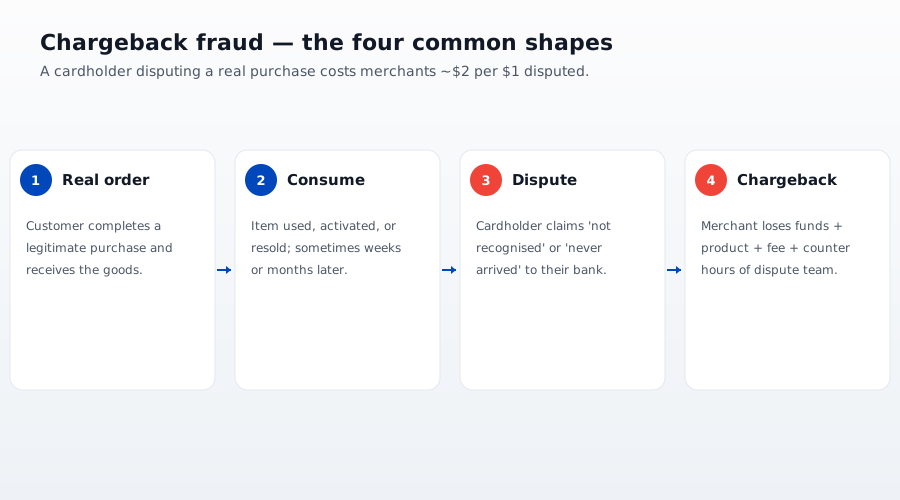
Chargeback fraud prevention in 2026 means capturing device evidence at checkout, before the dispute exists. The proof Visa CE 3.0 accepts (device fingerprint, session timestamps, browser environment) can only be recorded at transaction time, so the choice is straightforward: hold that record when the chargeback fires, or lose the dispute by default. Under VAMP, whose Merchant Excessive threshold dropped from 2.2% to 1.5% on 2026-04-01, the cost of that default loss is now $8 per disputed transaction with no warning tier.
Why do merchants lose chargeback disputes?
Issuing banks resolve card-not-present disputes in the cardholder's favor by default when the merchant cannot present device-level evidence linking a specific device to the transaction. Without a device fingerprint captured at checkout, you have no proof that the account holder initiated the session. That is the standard outcome for a card-not-present charge.
There is no physical signature in an online purchase. There is no PIN entry, no card tap, no in-person verification. What exists is a session: a device that connected to your checkout, entered credentials, and submitted a payment. If you cannot describe that device, you cannot prove the account holder was there.
Merchants submit order confirmation emails, IP address logs, and shipping confirmations. Those documents are useful context, but they do not confirm identity. A fraudster using stolen credentials has the same order confirmation email as a legitimate buyer. The dispute process was never designed to be won on those documents alone.
How does Visa VAMP change chargeback economics in 2026?
The Visa Acquirer Monitoring Program (VAMP) sets the chargeback and fraud ratio every merchant has to stay under. Exceed it and you move into enforcement: per-transaction fines, acquirer pressure, and in the worst cases loss of card acceptance.
On 1 April 2026 Visa tightened the merchant Excessive threshold from 2.2% to 1.5%, and replaced the old phased fee schedule with a flat $8 per disputed or fraudulent transaction and no warning tier. VAMP combines TC40 fraud reports and TC15 chargebacks into a single ratio against settled card-not-present transactions, so one weak category now drags your whole ratio up.
| Visa VAMP merchant threshold | Before 1 April 2026 | From 1 April 2026 |
|---|---|---|
| Merchant Excessive ratio | 2.2% | 1.5% |
| Fee at Excessive | Phased | $8 per disputed or fraudulent transaction |
| Monitoring floor (per month) | 1,000 | 1,500 |
A merchant sitting just under 1.5% is one bad month away from enforcement. The answer is not to fight chargebacks harder after they arrive. It is to hold the evidence that wins them, and to remove qualifying TC40 fraud from the ratio through Compelling Evidence 3.0, before the pattern forms. The VAMP 2026 merchant playbook walks through the full ratio math.
How device fingerprinting creates pre-chargeback evidence
A device fingerprint is a stable identifier built from the signals a browser emits: canvas and WebGL rendering output, installed font lists, screen and hardware parameters, and dozens of other attributes. It does not depend on cookies and does not reset when a shopper clears their cache.
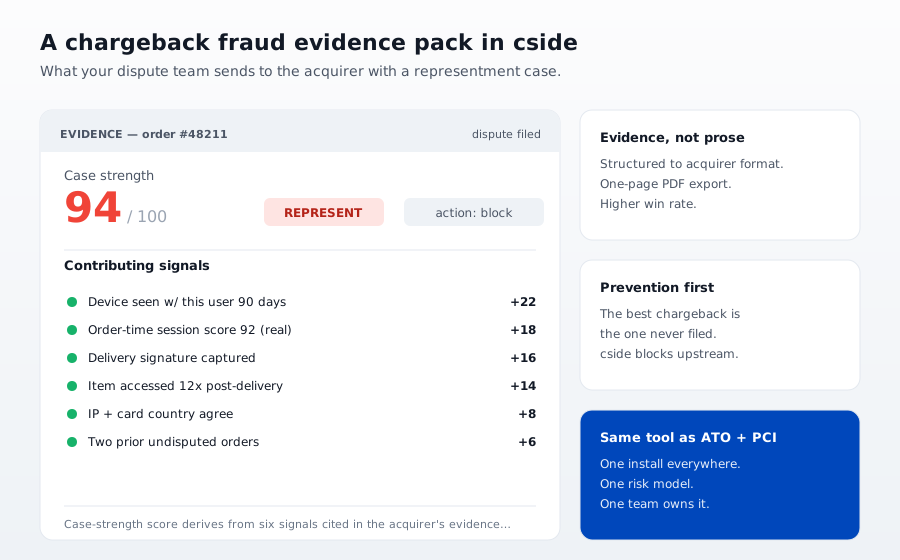
When cside captures a device fingerprint at checkout, it writes a timestamped record of the device that initiated the session and stores it against the transaction reference. cside builds this evidence from a baseline of 250+ browser, device, and network signals captured during checkout, tying each transaction to the device behind it. When a chargeback is filed weeks later, that record still exists.
Visa CE 3.0 recognizes device fingerprint data captured at transaction time as qualifying evidence in dispute resolution. A fingerprint recorded at the moment of purchase and presented during the dispute meets that evidentiary standard. The only window to capture it is the checkout session itself. Once the transaction settles, the browser session is gone and cannot be reconstructed.
What cside chargeback evidence captures and how it exports
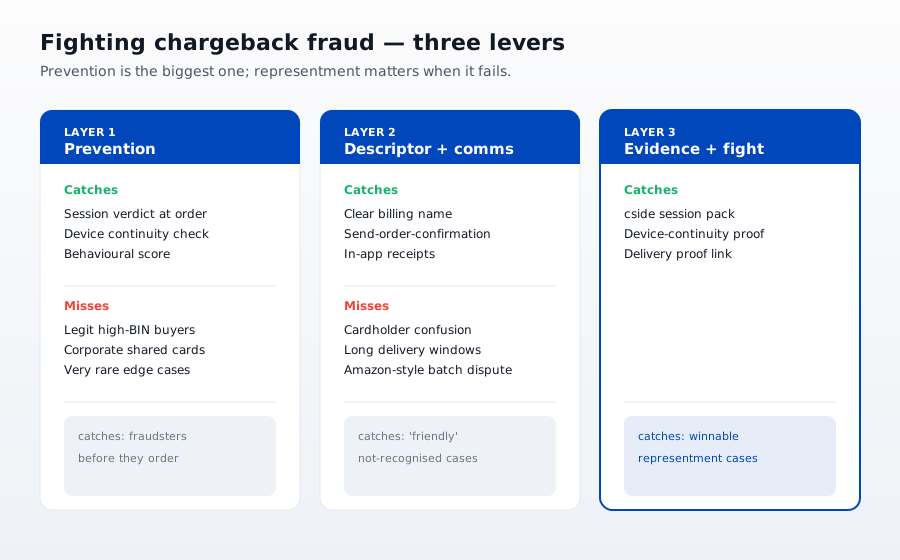
cside captures the device fingerprint at checkout through a lightweight script tag. The fingerprint is generated passively, so the shopper sees no extra step, no pop-up, and no added friction.
Each fingerprint is linked to the session and the transaction reference. When a dispute arrives, cside chargeback evidence exports a structured report in seconds. The report carries the device fingerprint ID, session timestamps, geolocation inferred from device signals, and browser environment data, formatted for submission to your payment processor. The export lines up with Visa CE 3.0 qualifying-evidence requirements, so your dispute team does not have to reformat the output by hand.
How does cside work with Chargebacks911?
cside integrates with Chargebacks911, a dispute-management platform. The device evidence cside captures at checkout can feed the Chargebacks911 dispute workflow, so your team is not exporting and reformatting a packet for every case. The two tools do different jobs: cside produces the CE 3.0 evidence packet, and Chargebacks911 files and manages the representment.
Merchants who back a dispute-management platform with device-level session evidence win materially more disputes than those submitting order confirmations and IP logs alone. Issuers increasingly expect device evidence, and when it is present the balance of proof shifts toward the cardholder who is disputing the charge. The pattern holds for both true fraud and first-party misuse (sometimes called friendly fraud): the device fingerprint confirms which device completed the session regardless of the claimed fraud type.
Start capturing evidence before the next dispute
Chargeback fraud prevention is won at checkout, not in the dispute queue. Capture a device fingerprint on every card-not-present transaction and you keep the CE 3.0-grade proof that turns a default cardholder win into a defensible representment.
You can start on the free plan (1,000 API calls per month, no credit card required) and watch the evidence packet cside records on your own checkout flow.
Further reading: