
TL;DR: CE 3.0 packet export in seconds
- The gap: Most merchants lose disputes they should win because the checkout browser session was never recorded, and 30 to 90 days later there's nothing left to reconstruct.
- What cside does: cside captures device fingerprint, AI-agent verdict, VPN status via TLS handshake fingerprint, and cursor timing at checkout, then exports a Visa CE 3.0 evidence packet in seconds instead of a manual assembly job.
- When to use it: If you already run Chargebacks911 with no session capture behind it, add the pre-transaction layer. If you only care about post-transaction workflow, cside is not what you need.
Short on time? See cside's chargeback-evidence tooling. It covers everything below in one deployment.
The best chargeback evidence software records what happened during the checkout session, not after the dispute lands. It captures the buyer's device fingerprint, VPN and proxy status, whether an AI agent drove the session, and how the person behaved on the page, so a merchant can prove who made a purchase weeks later when a chargeback arrives.
Chargeback evidence software falls into two categories. Pre-transaction tools capture session evidence at checkout (device fingerprint, session behavior, network signals) that proves what happened during a purchase. Post-transaction dispute-management platforms help merchants organize and submit that evidence to the card networks. Most merchants have the second and not the first. A dispute-management platform can only work with the evidence it has, so if nothing captured the checkout session, the dispute starts with no usable proof.
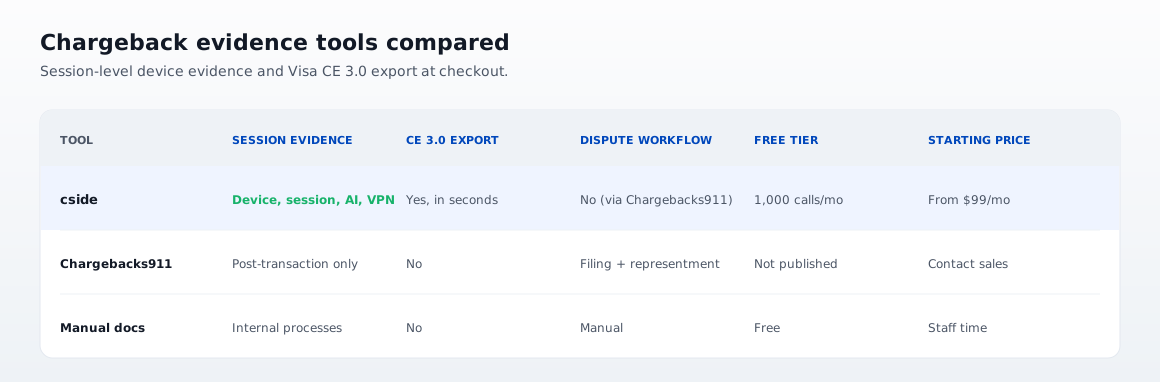
| Tool | Captures session evidence at checkout | CE 3.0 export | Dispute management workflow | Free tier | Starting price |
|---|---|---|---|---|---|
| cside | Yes: device fingerprint, session behavior, AI-agent verdict, VPN status | Yes, in seconds | No (integrates with Chargebacks911) | Yes: 1,000 API calls/mo | From $99/mo |
| Chargebacks911 | No (post-transaction platform) | No | Yes: dispute filing and representment | Not published | Contact sales |
| Manual documentation | Depends on internal processes | No | Manual | Free | Staff time |
The evidence gap: why most merchants lose disputes they should win
A chargeback dispute arrives 30 to 90 days after the transaction. By then the browser session in which the purchase was made is long gone. The device fingerprint of the buyer's machine, whether they were on a VPN, whether the session was run by an AI agent or a human, and how they navigated the checkout form all existed only in the browser during those few minutes. If nothing captured it, it cannot be reconstructed.
So merchants regularly lose disputes not because the transaction was fraudulent, but because they cannot produce evidence that proves what happened. For friendly fraud, where a legitimate cardholder disputes a purchase they actually made, the merchant often has no way to demonstrate that the cardholder's own device was present at checkout, that the session showed human behavior, and that the purchase was completed without coercion or error.
Closing that evidence gap is what chargeback evidence software is for.
cside: session evidence capture and CE 3.0 export
cside chargeback evidence runs as a client-side script on the checkout page, built to satisfy PCI DSS 4.0.1 requirements 6.4.3 and 11.6.1. During each transaction it captures the device fingerprint of the purchasing device, a record of the session behavior on screen, a real-time verdict that flags AI-agent and automated sessions, VPN and proxy detection via TLS handshake fingerprint TLS fingerprinting, and a session behavior score based on cursor movement and timing patterns. Beneath that device fingerprint is a baseline of 250+ browser, device, and network signals cside collects during the session, and it is that breadth of signal that ties each purchase to the specific device behind it.
This evidence is stored against the transaction ID and is exportable in Visa Compelling Evidence 3.0 format. CE 3.0 defines device fingerprint data and session evidence as accepted forms of proof in Visa chargeback disputes. A CE 3.0 evidence packet from cside includes the device identifier, session behavior, timestamp, and behavioral signals, which are the specific data points the CE 3.0 framework was designed to accept.
Merchants who pair cside with a dispute-management platform like Chargebacks911 report winning more disputes, because the CE 3.0 packet gives the representment a device-level proof it did not have before. The export runs in seconds per dispute, replacing a process that previously required manual evidence assembly.
Chargebacks911
Chargebacks911 is a dispute-management platform that handles evidence submission, chargeback representment, and dispute workflow on behalf of merchants. It is a strong operational tool for managing the dispute process.
Chargebacks911 does not capture session evidence at checkout. It works with whatever evidence the merchant can provide when a dispute arrives. For merchants who have session evidence from cside, Chargebacks911 can use that CE 3.0 evidence packet in dispute submissions. For merchants who do not, Chargebacks911 is working with the transaction record alone. The two are complementary: cside provides the evidence, Chargebacks911 manages the process.
What CE 3.0 evidence actually requires
Visa's Compelling Evidence 3.0 framework, introduced in 2023, accepts the following in chargeback disputes: a stable device identifier associated with the transaction, session evidence showing the cardholder's interaction with the checkout, and a timestamp connecting the evidence to the specific transaction. The framework specifically accommodates device fingerprint data, which gives merchants a defined pathway for the browser-layer evidence that cside captures.
For friendly fraud claims, where the cardholder asserts they did not make the purchase, a device fingerprint showing the cardholder's known device was present at checkout, combined with a record of session behavior showing human interaction, is the most directly refuting form of evidence. For genuinely fraudulent transactions, VPN flags and AI-agent detection establish facts about the session that support the merchant's account of what happened.