
PCI DSS compliance costs between roughly $5,000 a year for a small Level 4 merchant and $75,000-500,000+ for a Level 1 merchant, spread across four buckets: QSA audit fees, tooling, remediation engineering, and ongoing evidence collection. Where you land depends on transaction volume, scope, and how much of the evidence work is automated.
TL;DR: PCI DSS compliance cost in 2026
- Four cost buckets: Four buckets: QSA audit fees, tooling, remediation engineering, ongoing evidence collection.
- Cost by level: Level 4 runs roughly $5-25k a year all-in. Level 1 runs $75-500k for the full ROC and tooling stack.
- New 4.0.1 line item: New line item in 4.0.1: script inventory and tamper detection tooling. Free tiers cover it for eligible merchants.
Short on time? See cside PCI Shield. It covers everything below in one deployment.
Two of the line items above have their own explainers: ASV scanning and the scope-defining cardholder data environment.
The main cost components of PCI DSS compliance
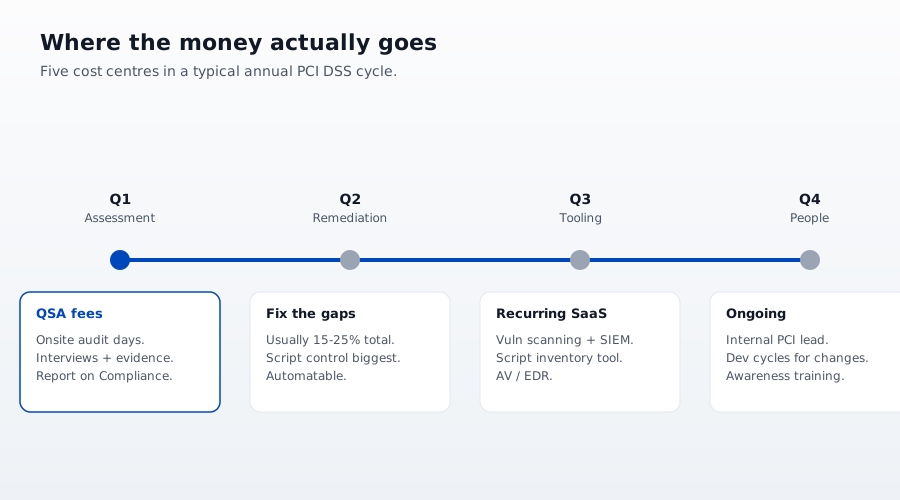
PCI DSS compliance costs span five categories: QSA audit fees, tooling, internal engineering time, remediation cycles, and ongoing monitoring. Each component scales with your merchant level and the complexity of your payment environment.
QSA fees. A Qualified Security Assessor conducts your formal audit. For Level 1 merchants (those processing over 6 million card transactions per year), QSA fees range from $15,000 to $200,000 depending on scope and assessor. Smaller merchants may qualify for a Self-Assessment Questionnaire, which reduces but does not eliminate assessment costs.
Tooling. Network scanners, vulnerability management platforms, logging systems, and now script monitoring software all contribute to the tooling budget. Tooling costs range from $5,000 per year for a small merchant using lightweight solutions to over $100,000 for enterprise deployments covering multiple environments.
Engineering time. The hidden cost in most compliance programs is internal labour. Script inventories, remediation sprints after QSA findings, documentation updates, and ongoing monitoring all consume engineering hours. A mid-market merchant will typically spend 20 to 40 engineering days per year on compliance-related work.
Remediation cycles. When a QSA finds a gap, fixing it and re-evidencing compliance adds both time and cost. Each remediation cycle typically adds one to four weeks of delay and corresponding labour costs.
Ongoing monitoring. Between annual audits, someone has to keep watching payment pages, headers, and third-party scripts. Whether that runs on custom scripts or dedicated software, it is a standing line item rather than a one-off.
Where Requirements 6.4.3 and 11.6.1 add specific cost
Before March 2025, many merchants treated client-side script management as an informal hygiene practice rather than a documented control. Requirements 6.4.3 and 11.6.1 changed that.
Requirement 6.4.3 requires an authorisation process, an inventory, and integrity verification for every script on your payment pages. Without automation, this means a manual audit at every deployment cycle, a spreadsheet-based approval workflow, and a hash-comparison process that quickly becomes unmanageable as third-party scripts multiply.
Requirement 11.6.1 requires a mechanism to detect and alert on changes to HTTP headers and payment page content. A weekly scheduled scan falls short of what the requirement expects, because the mechanism has to run continuously. Implementing that without dedicated software means engineering time to build and maintain a custom solution.
Merchants who try to meet both requirements manually typically spend 15 to 30 additional engineering days per year on script-related compliance tasks alone.
Manual vs automated: the time cost comparison
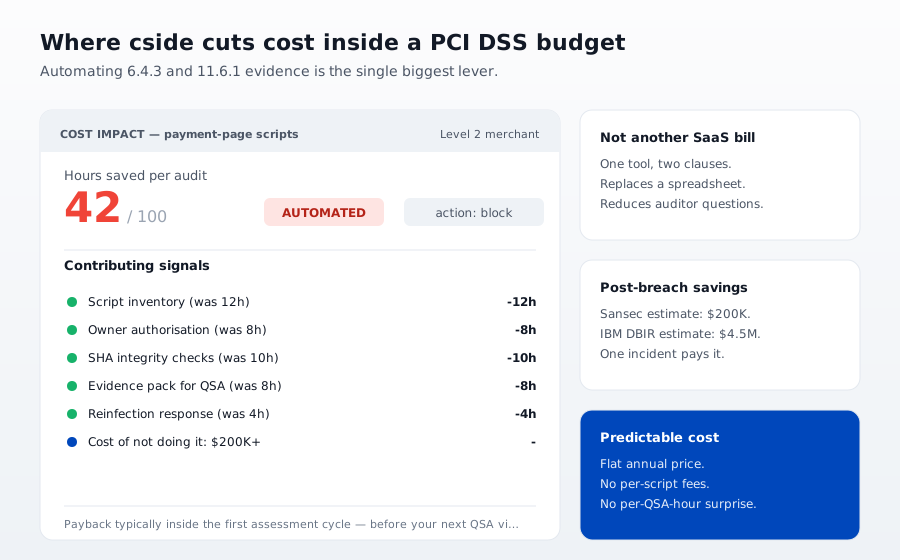
Automating PCI DSS Requirements 6.4.3 and 11.6.1 reduces annual engineering time from 15 to 30 days down to 1 to 2 days for a mid-market merchant with 20 to 50 third-party scripts on payment pages. The table below compares task-by-task time costs.
| Task | Manual approach | Automated with cside |
|---|---|---|
| Script inventory (per deploy) | 4-8 hours | 0 hours (continuous) |
| Authorisation sign-off | 2-4 hours per cycle | Auto-flagged for review |
| Hash/integrity verification | 3-6 hours per cycle | Real-time, per session |
| Change alert response | Detected at next scan (hours to days) | Alert within 60 seconds |
| QSA report generation | 4-16 hours | 2 seconds |
| Annual engineering days (6.4.3 + 11.6.1) | 15-30 days | 1-2 days |
The table uses conservative estimates for a mid-market merchant with 20 to 50 third-party scripts on payment pages. Larger deployments compound these figures.
PCI DSS compliance cost by merchant level
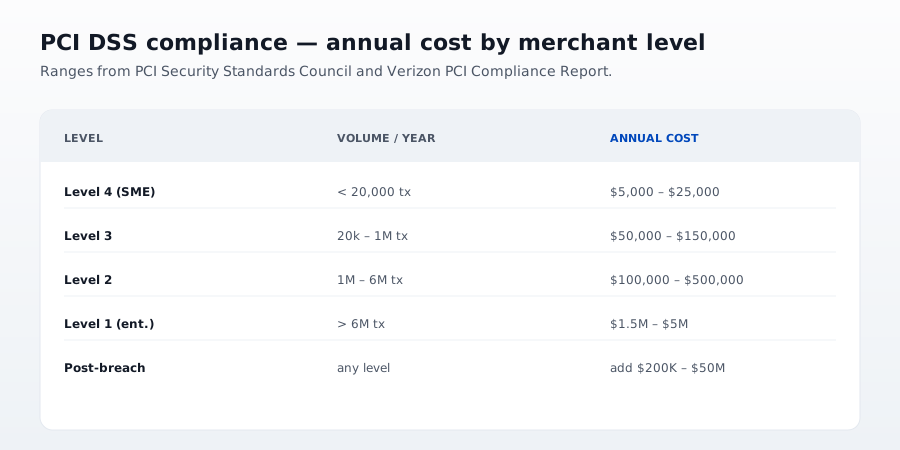
Annual compliance cost varies widely by merchant level. The table below shows the full-program ranges published by industry benchmarks.
| Merchant level | Annual compliance cost |
|---|---|
| Level 4 (SME) | $5K-$25K |
| Level 3 | $50K-$150K |
| Level 2 | $100K-$500K |
| Level 1 (enterprise) | $1.5M-$5M |
These ranges come from PCI Security Standards Council and Verizon PCI Compliance Report benchmarks, and they cover the full compliance program. The tooling component, including 6.4.3 and 11.6.1 script monitoring, is typically 15 to 25% of the total annual cost. It is also the component most amenable to cost reduction through automation.
How cside PCI Shield reduces remediation costs
The biggest cost in a compliance cycle usually lands after the audit. When a QSA finds gaps in your script management or change-detection evidence, the remediation sprint that follows is where the hours and dollars pile up.
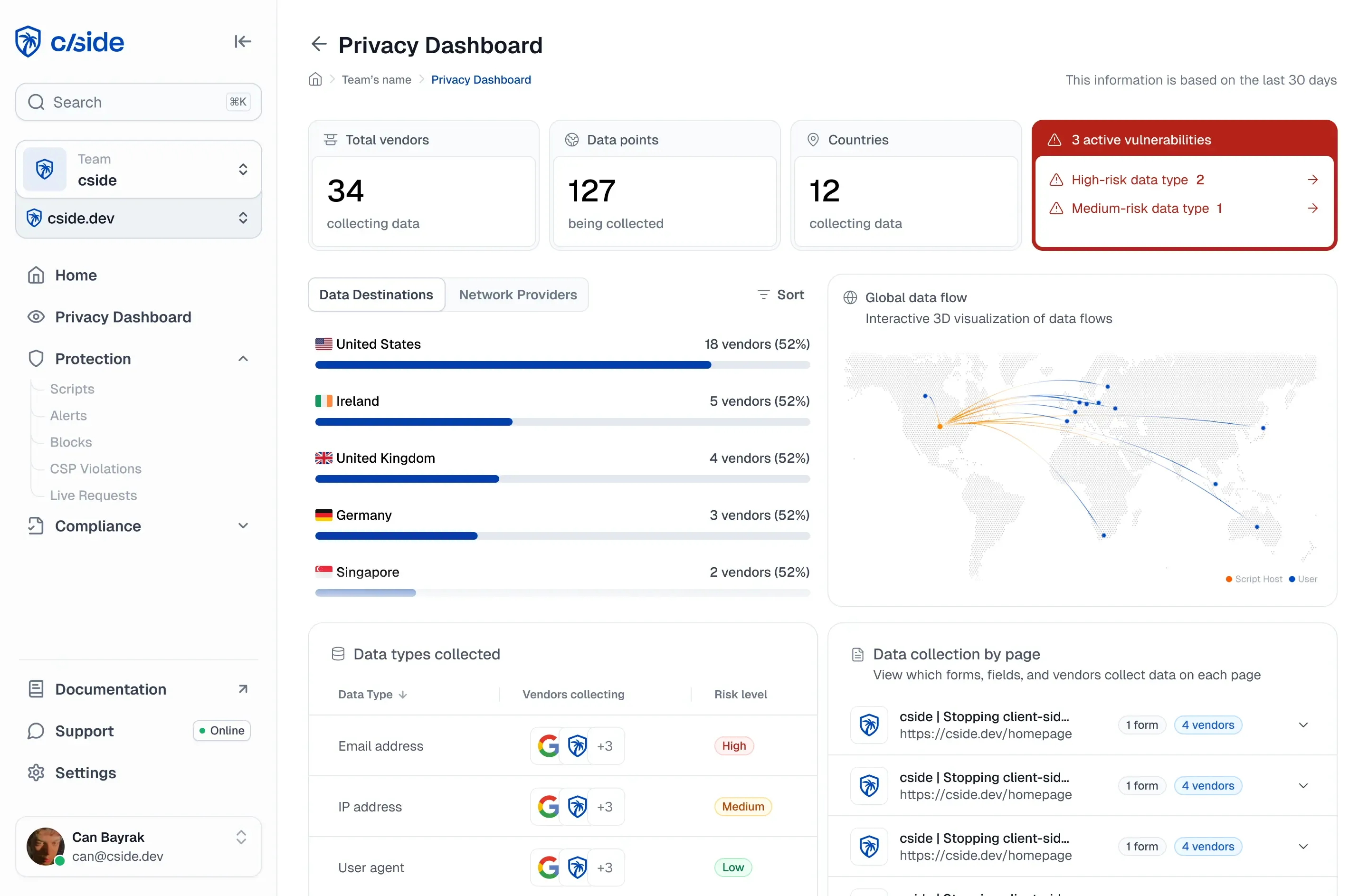
You can automate 6.4.3 and 11.6.1 with cside PCI Shield and reduce the number of remediation cycles your team faces. The tool monitors scripts in real browser sessions, not crawls, which means QSAs see evidence of the kind of monitoring they expect. The methodology has been validated by VikingCloud, and QSAs have accepted cside's evidence in customer audits to date.
The fingerprint system combines 250+ browser signals to tell real sessions apart from bots and scanners, and it holds up with high accuracy across incognito, VPN, and cookie-clearing scenarios.
cside pricing in context
For a Level 4 merchant, the total annual compliance cost sits between $5,000 and $25,000. Adding a $99/month ($1,188/year) script monitoring tool to automate the two most labour-intensive requirements is a straightforward cost-benefit decision.
For a Level 2 merchant spending $100,000 to $500,000 per year on compliance, replacing manual script management with automated monitoring typically saves 15 to 30 engineering days and at least one remediation cycle. At a conservative $1,000 per engineering day, that is $15,000 to $30,000 in saved labour against a $1,188/year tool cost.
The comparison with enterprise tooling is equally clear. Custom-built script monitoring solutions typically cost $50,000 to $100,000 to build and $10,000 to $30,000 per year to maintain. cside PCI Shield replaces that investment with a script tag and a two-second report export. Enterprise plans move to custom pricing when you need broader coverage, but the free tier (2,000 pageviews per month, no credit card) is enough to generate a first baseline report.
Further reading
- cside PCI Shield to check your 6.4.3 and 11.6.1 compliance status
- Comply with PCI DSS 6.4.3 and 11.6.1 for free