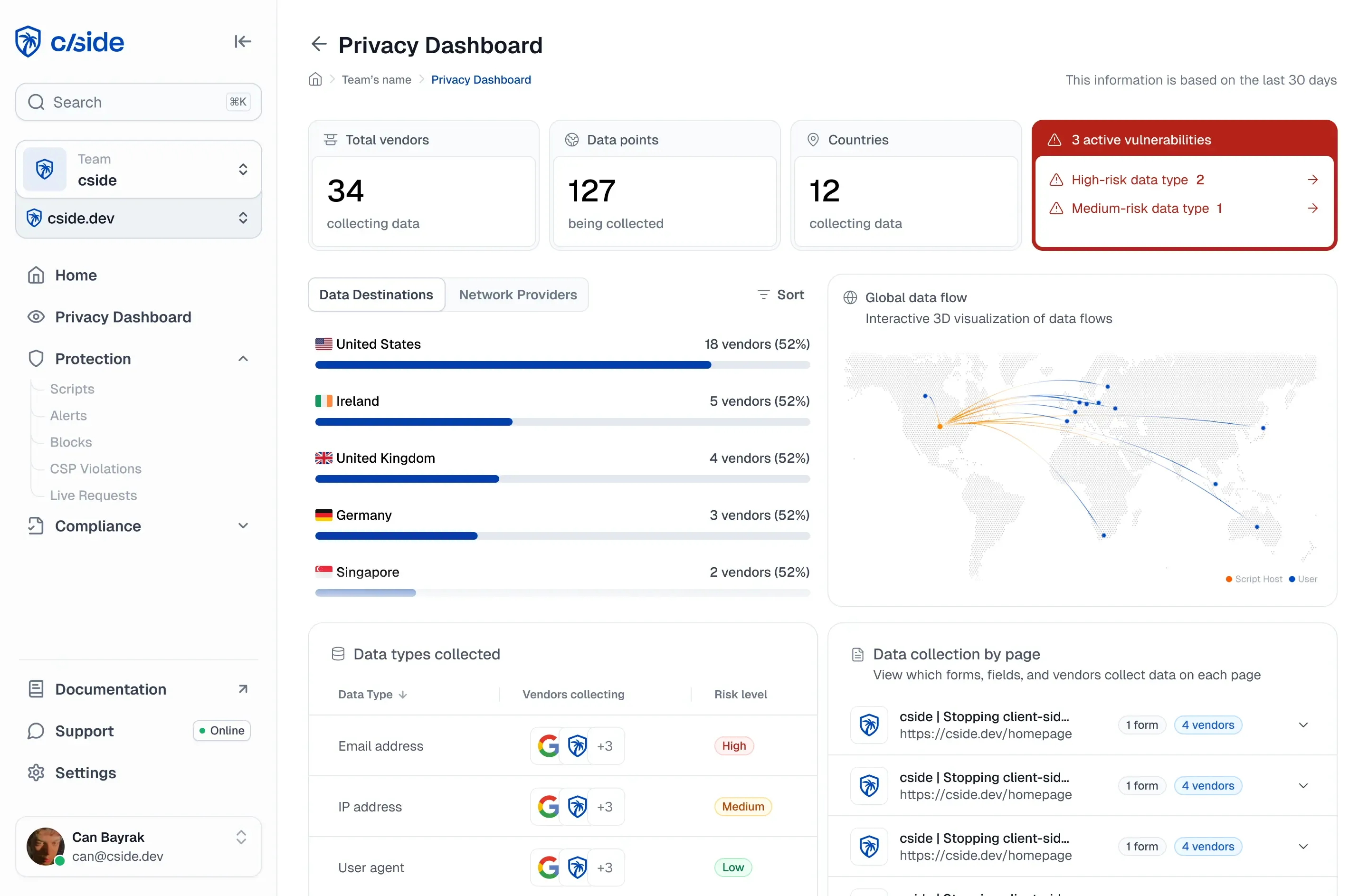

Card-not-present fraud and AI-agent automation are driving record chargeback rates in 2026. Ecommerce fraud prevention software detects and blocks fraudulent sessions, orders, and accounts before losses reach your backend. Modern stacks cover four layers: a browser-signal source that sees what executed in the visitor's device, a risk-scoring or decisioning platform, a chargeback guarantee or dispute service, and post-transaction remediation. No single vendor covers all four, so most merchants combine at least two products.
TL;DR: ecommerce fraud prevention software
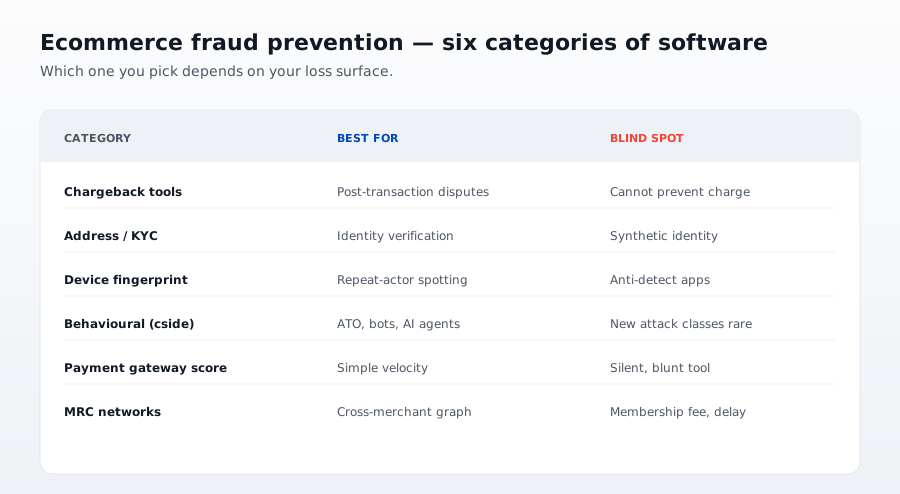
- Four sub-categories: pre-checkout (bot and agent detection), transaction risk scoring, chargeback disputing, post-transaction remediation.
- No single vendor: Every leading platform optimizes for a different layer. No single vendor covers all four end to end.
- Match to loss profile: Match vendor strengths to your actual loss profile, then validate with a 30-day back-test on real transactions.
Short on time? See cside's device intelligence. It covers everything below in one deployment.
How I ranked these vendors
The ranking weighs three things buyers get burned on in month six: false-positive economics, whether the evidence a vendor produces is usable in a chargeback dispute, and whether the tool sees what actually executed in the visitor's browser (not just the payload that arrived at your server). Vendors get downgraded when they refuse to discuss false-positive rates under NDA, or when their "AI" is a black box you cannot tune the moment it starts blocking your best customers. In 2026, AI-agent ordering tools (OpenAI's computer-use agents, Claude for Chrome, browser automation frameworks) that place orders programmatically added a fourth signal: browser-layer automation detection before the cart is reached.
Full disclosure before the list: cside is our platform, and it sits at #1. We ranked the other nine as honestly as we would in a pilot call: Signifyd, Riskified, Sift, and Kount are what most mid-market and enterprise merchants end up buying, and any of them can absolutely be your primary decisioning platform. cside is the browser-layer signal source that makes each of them measurably more accurate. If you are comparing pure scoring platforms, skip to #2. If you want the missing browser-layer input, stay at #1.
Everything below assumes a merchant doing $10M+ GMV. Under that, most enterprise vendors will not take your call, skip to sections 7-9.
The 10 best ecommerce fraud prevention software platforms in 2026
1. cside: best browser-layer signal source to catch fraud before it reaches your gateway
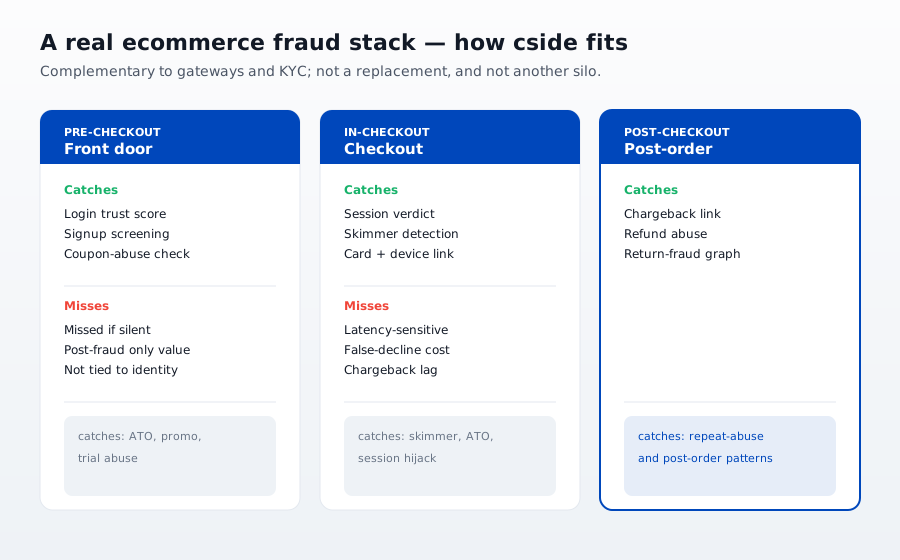
Every other vendor on this list scores what has already arrived at your backend. cside is the only vendor here that sees what actually executed in the visitor's browser first: AI-agent presence (Playwright, Puppeteer, Selenium, OpenAI's computer-use agents, Claude for Chrome), the real IP behind a VPN via TLS handshake fingerprinting, a stable device fingerprint built from 250+ browser signals that survives incognito + cookie-clear + VPN, cross-account device correlation, and unauthorized script activity on your checkout page.
That signal set is what every platform in #2-#10 is missing today. One JSON API call returns all of it, before the transaction fires, so your rules engine or scoring platform consumes it alongside transaction data. cside is also the only vendor on this list that covers PCI DSS 4.0.1 requirements 6.4.3 and 11.6.1 (script inventory and change monitoring), which have been mandatory since 2025-03-31 and are audited on the merchant's page (a PSP does not cover you).
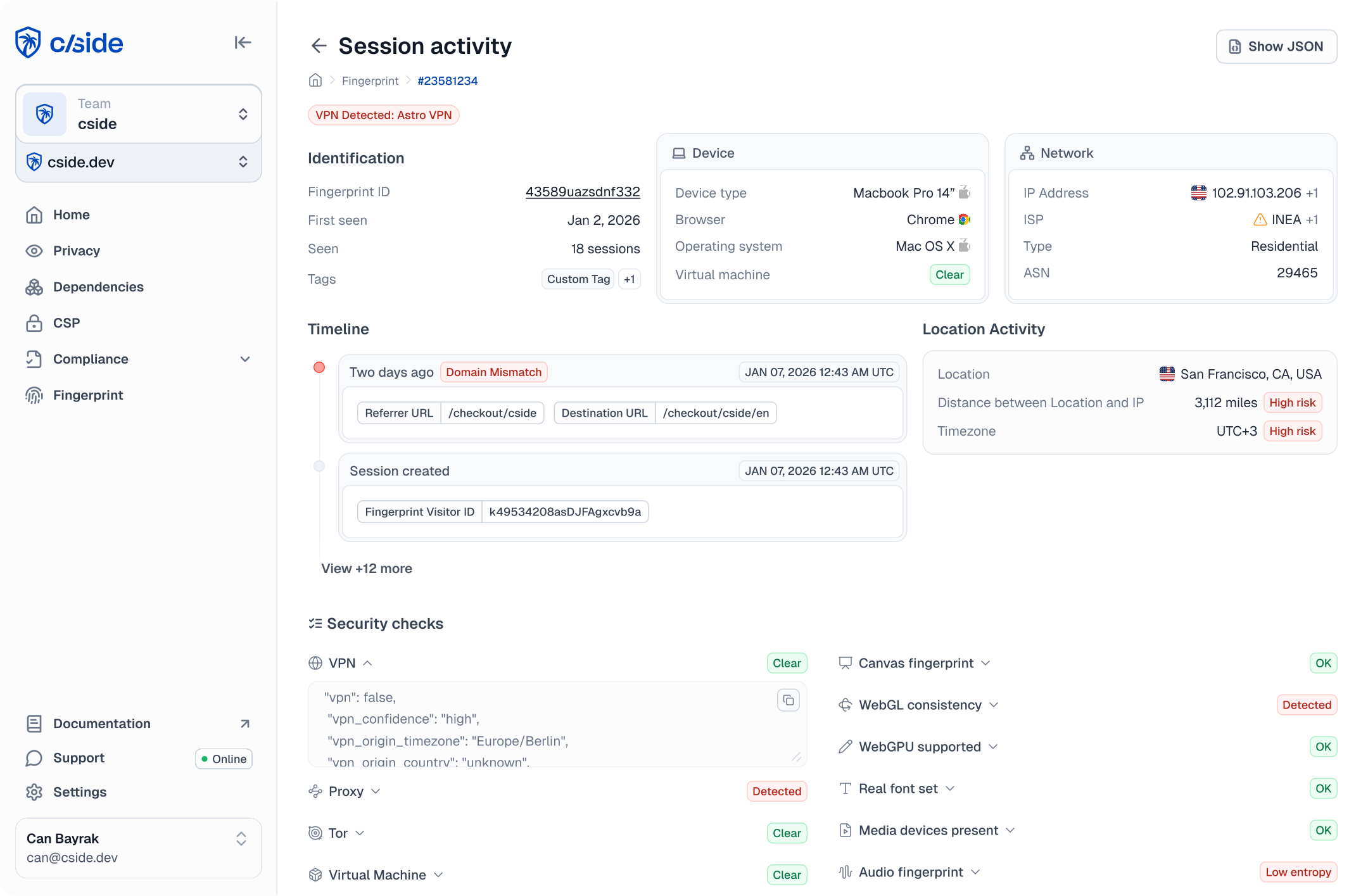
Best for: Any merchant already running one of #2-#10 who wants browser-layer signals to feed in. Also merchants who need PCI script-monitoring evidence for their QSA. Watch out for: cside is a signal layer, not a decisioning platform. If you have no rules engine or fraud platform to consume the signals, start with #4 (Kount) or #7 (NoFraud) first, then layer cside underneath. Pricing model: Free tier of 1,000 API calls/month, paid plans from $99/month, custom enterprise. See cside pricing.
2. Signifyd: best for merchants who want the chargeback to be someone else's problem
Signifyd's entire pitch is chargeback guarantee. You approve, they eat the loss. If you are bleeding on disputes and want a single throat to choke, this is the shortest path.
Best for: Mid-market to enterprise DTC ($50M+ GMV) that would rather pay a percentage than staff a fraud team. Watch out for: The guarantee only covers what Signifyd approves. Their approval rate is not published, get it in writing during the pilot. Pricing model: Percentage of protected orders (typically 0.6-1.5% depending on category).
3. Riskified: Signifyd's cross-border twin
Same guarantee model, historically stronger in international expansion. The enterprise sales motion is heavier, which is a feature if you sit on Salesforce Commerce Cloud and a bug if you are a lean team who wants to ship in a week.
Best for: Enterprise merchants selling into three or more regions. Watch out for: 24-month contracts and less flexibility to leave than Signifyd.
4. Sift: best for large marketplaces with their own data
Sift is a machine-learning platform, not a guarantee product. You bring the volume, it builds custom models on your history. Excellent when you have millions of monthly transactions to train on, painful when you do not.
Best for: Marketplaces, platforms, and brands with 500K+ monthly transactions. Watch out for: Explainability. Ask for a live walkthrough of one flagged session during the pilot. If the answer is "the model decided," you cannot operate it.
5. Kount (Equifax): the legacy default already bundled in your PSP
Kount ships bundled with many payment processors, so a lot of merchants already run it without realizing. It works. It is also 15 years old, and its browser-layer coverage lags what modern tools do.
Best for: Merchants who want "good enough" fraud coverage without a separate procurement cycle. Watch out for: Confirm you are not double-paying by buying Kount standalone when you already receive it through your processor.
6. Forter: best for enterprise retail obsessed with approval rate
Forter inverts the usual pitch. Their edge is approval optimization: approve more of your good customers, not block more fraud. That inversion pays off for retailers whose false-decline cost dwarfs their fraud losses.
Best for: Enterprise retail ($100M+ GMV) where false declines are the biggest line-item cost. Watch out for: Enterprise-only sales and pricing. Not the right pick under $50M GMV.
7. SEON: best modern challenger for growth-stage teams
SEON does not share consortium data. That is deliberate: your session data does not feed a global map your competitors also buy. Signal quality is high, browser fingerprinting is solid, and pricing is transparent (rare in this category).
Best for: Growth-stage merchants ($5M-$50M GMV) that want modern signals without enterprise contracts. Watch out for: US bench is smaller than the European team. Ask about coverage in Pacific hours.
8. NoFraud: best for Shopify merchants under $10M GMV
If you are on Shopify and under $10M, most vendors above will either ignore your inbound or price you out. NoFraud is the pragmatic pick: guaranteed approvals, ~30-minute install, Shopify-native.
Best for: Shopify merchants doing $500K-$10M GMV. Watch out for: Not the right pick once you outgrow Shopify or need custom rules.
9. Sardine: best for fintech and crypto-adjacent commerce
Sardine grew up in crypto and fintech. Their differentiator is behavioral biometrics (how someone types, moves, and holds their phone) layered on device fingerprinting. Belongs on the shortlist for high-risk categories.
Best for: Fintech merchants, crypto exchanges, high-risk verticals. Watch out for: Overkill for straightforward physical-goods ecommerce.
10. Ravelin: best for marketplaces and European operators
Ravelin's marketplace product (multi-seller, C2C) is genuinely differentiated. They understand the buyer/seller relationship better than the pure-DTC vendors on this list. Strong on Europe.
Best for: Marketplaces, gig economy, and European-first operators. Watch out for: Lower US brand recognition sometimes creates procurement friction with US-based buyers.
Side-by-side comparison of the 10 vendors
| Vendor | Model | Best fit | Chargeback guarantee | Browser-layer evidence | PCI 6.4.3 / 11.6.1 |
|---|---|---|---|---|---|
| cside | Browser signal layer | Feeds any of the below | N/A | Yes | Yes |
| Signifyd | Guarantee | Mid-market DTC | Yes | Limited | No |
| Riskified | Guarantee | Enterprise cross-border | Yes | Limited | No |
| Sift | ML platform | Marketplaces | No | Partial | No |
| Kount | Bundled + rules | PSP customers | Rules-based | Partial | No |
| Forter | Approvals-first | Enterprise retail | Approval only | Partial | No |
| SEON | Modern platform | Growth-stage | No | Yes | No |
| NoFraud | Guarantee | Shopify SMB | Yes | Limited | No |
| Sardine | Behavioral + fintech | Crypto/fintech | No | Yes | No |
| Ravelin | Modern platform | Marketplaces / EU | No | Partial | No |
How to shortlist without wasting three months
Skip the RFP theater. Do this instead:
- Book 30-minute demos with your three best-fit candidates from the ranking above. Ask each vendor to walk through one live flagged session and name the signals that fired. "The model decided" is a disqualifier.
- Request false-positive rate under NDA for a cohort that matches yours. A vendor unwilling to share numbers on legitimate shopping agents, mobile users, and non-evading VPN traffic is telling you their numbers are bad.
- Run a 30-day back-test on real transactions. No opinions, just numbers.
- Layer, do not replace. If you already have a platform working, adding cside as the browser-layer input beats a rip-and-replace every single time.
Ecommerce fraud detection vs prevention
The terms ecommerce fraud detection and fraud prevention are often used interchangeably, but they describe different moments. Detection is identifying a fraudulent session or order, usually through device, behavioral, and transaction signals. Prevention is acting on that detection early enough to stop the loss, whether that is blocking a fake account at signup, holding a suspicious order before fulfilment, or capturing device evidence before a chargeback is filed. The platforms above vary in where they sit on that line. A complete ecommerce fraud detection setup pairs a browser-layer signal source that sees the shopper's device with a decisioning layer that can act on the verdict.