Kort samengevat: AI-tools voor AVG-gegevensprivacy
- AI-tools voor websiteprivacy-compliance in 2026 vallen onder drie categorieën: beheer van toestemmingsbanners, cookieontdekking en -classificatie, en (het nieuwste) client-side scriptmonitoring voor de minimalisatievereisten van AVG-artikel 5.
- Traditionele tools voor toestemmingsbeheer missen het third-party-scriptprobleem. Zodra een gebruiker toestemming geeft, kunnen tag manager-regels elk script laden dat de leverancier bijwerkt, zonder dat je privacyteam het weet.
- cside voegt continue scriptinventarisatie en PII-toegangsmeldingen toe aan de bestaande toestemmingscontroles. Dat dicht de kloof tussen wat de banner belooft en wat de browser van je bezoeker daadwerkelijk doet.
Weinig tijd? Bekijk cside Privacy Watch. Dit dekt alles hieronder in één deployment.
<thead>
<tr>
<th>Compliancegebied</th>
<th>Traditionele compliance</th>
<th>AI-ondersteunde compliance</th>
</tr>
</thead>
<tbody>
<tr>
<td><strong>Zichtbaarheid van third-party scripts (client-side)</strong></td>
<td>
Periodieke websitescans en handmatige lijsten van externe leveranciers; beperkt inzicht in wat
scripts daadwerkelijk doen in de browser
</td>
<td>
Continu overzicht van scripts, welke gegevens ze aanraken en waarheen ze die sturen;
automatische koppeling aan rechtmatige grondslag
</td>
</tr>
<tr>
<td><strong>Client-side gegevensstromen & risicodetectie (client-side)</strong></td>
<td>
Veronderstelde compliance op basis van toestemmingsbanners en beleidsdocumenten; problemen worden pas ontdekt na
audits of incidenten
</td>
<td>
Permanente analyse van client-side gegevensstromen met directe meldingen bij onverwachte gegevenstoegang
door scripts, omzeiling van toestemming of riskant scriptgedrag
</td>
</tr>
<tr>
<td><strong>Privacy-audits & bewijsverzameling</strong></td>
<td>
Momentopname-reviews, screenshots, spreadsheets en handmatige bewijsverzameling
</td>
<td>
Automatische bewijsverzameling met AI-gegenereerde, auditklare documentatie gekoppeld aan
vereisten
</td>
</tr>
<tr>
<td><strong>Toestemmings- & beleidsbeheer</strong></td>
<td>
Statische beleidsdocumenten die handmatig worden bijgewerkt; groot risico op afwijking naarmate leveranciers en doeleinden veranderen
</td>
<td>
AI-ondersteunde updates van privacyverklaringen, toestemmingslogica en registers wanneer het websitegedrag
of leveranciers wijzigen
</td>
</tr>
</tbody>
</table>
Je website ziet er misschien compliant uit, maar de harde waarheid is dat de meeste teams niet weten hoe third-party scripts gegevens verwerken op hun website. Ongeautoriseerde datatrackers negeren toestemming, kwaadaardige code steelt informatie, en dataverzamelpunten (zoals formulieren) worden over het hoofd gezien. Het is vrijwel onmogelijk om dit allemaal handmatig bij te houden en het bewijs vervolgens op te maken in wat aanvoelt als tientallen verschillende formats.
Gelukkig voegen privacy-compliancetools universeel AI toe om taken te automatiseren die geen enkel mens redelijkerwijs kan bijhouden. Je kunt wijzigingen in third-party scripts identificeren, toestemmingssignalen monitoren en onverwachte gegevensstromen direct markeren: periodieke privacy-audits worden zo vervangen door continue bewaking.
In dit artikel laten we zien hoe AI wordt ingezet in verschillende privacy-compliancetools en welke het meest geschikt zijn voor AVG-, CCPA- en HIPAA-compliance.
Voor een bredere kopersblik per categorie gebruik je onze vergelijkingsgids voor AVG-compliance tools om tools voor client-side monitoring, toestemming, DSAR, beveiliging en data mapping per taak te plaatsen.
| Privacytoolcategorie | Beste AI-gebruiksscenario |
|---|---|
| Client-side monitoring | Scriptgedrag, verborgen trackers en onverwachte gegevensstromen detecteren |
| Toestemmingsbeheer | Toestemmingslogica, leveranciersinformatie en cookieregisters actueel houden |
| Privacyoperaties | Bewijs genereren, verzoeken routeren en repetitief compliancewerk verminderen |
Samenvatting
- Websiteprivacy-compliance wordt steeds moeilijker. Elk jaar komen er meer regelgevingen bij (waaronder Amerikaanse staatswetten in 2026) en bestaande kaders worden strenger (zoals de CPRA). Tussen third-party scripts, het respecteren van consumentenverzoeken en het opmaken van bewijs voor steeds veranderende regelgeving worstelen GRC-teams om bij te blijven.
- "Automatisering" is altijd al een kenmerk geweest van privacy-managementtools, maar uitgebreide handmatige bewijsverzameling was historisch gezien altijd nodig.
- AI wordt snel omarmd in compliancetools omdat het met context en activiteitsgeschiedenis kan werken om repetitief werk veel verder te automatiseren dan voorheen mogelijk was.
- Toezichthouders verwachten dat teams begrijpen hoe elke verwerker op hun website gegevens verzamelt, waar die naartoe worden gestuurd en of ze handelen binnen het beoogde doel. Traditionele compliancetools missen dit inzicht. Nieuwe platforms zoals cside gebruiken AI om dit risicooppervlak te monitoren en client-side privacyschendingen te voorkomen voor AVG, CCPA, Amerikaanse staatswetten en HIPAA.
AI wordt standaard in alle AVG-websitecompliancetools
Elk softwaretool is plotseling "agentisch" of "AI-native" geworden. Maar op het gebied van websiteprivacy-compliance lost AI echt repetitief werk op. Je website scannen, verwerkers beoordelen, bewijs opmaken voor toezichthouders, en dat vervolgens telkens opnieuw doen wanneer er iets verandert. Dit is precies het soort handmatig werk dat AI van je bord kan nemen.
Websites veranderen voortdurend, en daarom verwachten toezichthouders continue maatregelen en bewijs dat privacymaatregelen te allen tijde actief waren.
En als je het nog niet had opgemerkt: client-side vereisten breiden zich uit. AVG is niet langer het enige kader. Amerikaanse staatsprivacywetten en universele opt-outsignalen vereisen nu dat teams echt begrijpen hoe websites gegevens verzamelen en delen, wat compliancetools duwt richting continue en geautomatiseerde AI-gestuurde monitoring.
Dat is waarom 59% van de bedrijven met de hoogste omzet AI-tools gebruikt voor compliance-onderzoek.
AI-tools voor client-side monitoring (websiteprivacy-compliance)
Client-side monitoring richt zich op wat er daadwerkelijk in de browser van de gebruiker draait, iets wat de meeste webcompliance- en beveiligingstools missen. AI-tools vullen deze leemte op, volgen third-party scripts, gegevensstromen en uitvoeringsgedrag om privacyrisico's bloot te leggen.
Repetitief werk dat teams willen automatiseren
- Een actuele lijst bijhouden van datacollectors op je website (chatbots, formulieren, analysetools, marketingtools, enz.)
- Codewijzigingen van third-party scripts monitoren die invloed hebben op gegevensverwerking
- Third-party scripts beoordelen op beveiligingsrisico's (technische waarborgen aantonen)
- Bewijs van client-side maatregelen opmaken in verschillende formats voor toezichthouders (AVG artikel 25, 28, 32, 15) (CCPA-beveiligingswaarborgen)
- Begrijpen waar third-party verwerkers gegevens naartoe sturen (grensoverschrijdende gegevensoverdrachten)
Je kunt niet verwachten dat je team dit allemaal handmatig doet terwijl het ook alle andere privacyvereisten afhandelt (zoals het beheren van DSAR's en interne gegevenstoegang).
AI-gestuurde functies die client-side compliance automatiseren
AI verzorgt de constante monitoring en analyse die je team niet kan bijhouden, en zet uren aan repetitieve controles om in realtime inzicht. Veelvoorkomende AI-gestuurde functies voor client-side beveiliging zijn:
- Continue scanning op misconfiguraties in je third-party scripts, cookies en trackers die kunnen leiden tot privacyschendingen
- Directe meldingen bij beveiligingsrisico's die persoonsgegevens kunnen blootstellen en een client-side inbreuk kunnen veroorzaken
- Geautomatiseerde websiteanalyse om gedrag te markeren dat in strijd is met interne privacynormen, CCPA en AVG-websitevereisten
- Compliancedocumentatie opgemaakt voor meerdere regelgevingsvereisten
- Websitetrackers en gegevensstromen in kaart brengen, zodat je teams nauwkeurige Verwerkingsregisters kunnen bijhouden
Welke AI-tools kan ik gebruiken voor websiteprivacy-compliance?
cside Privacy Watch
Zelfs de kleinste bedreiging kan compliancerisico's veroorzaken. Bovendien zijn toestemmingsbanners niet voldoende. Zelfs als een gebruiker op de knop "weigeren" klikt, kunnen verkeerd geconfigureerde scripts nog steeds toegang krijgen tot hun gegevens, waardoor PII-blinde vlekken (persoonlijk identificeerbare informatie) ontstaan waarop toezichthouders (of aanvallers) zullen inspringen.
Voor een diepgaandere blik op hoe monitoring in de browser de kloof sluit tussen wat een CMP registreert en wat trackers werkelijk doen, zie onze gids voor toestemmingsbeheer monitoring.
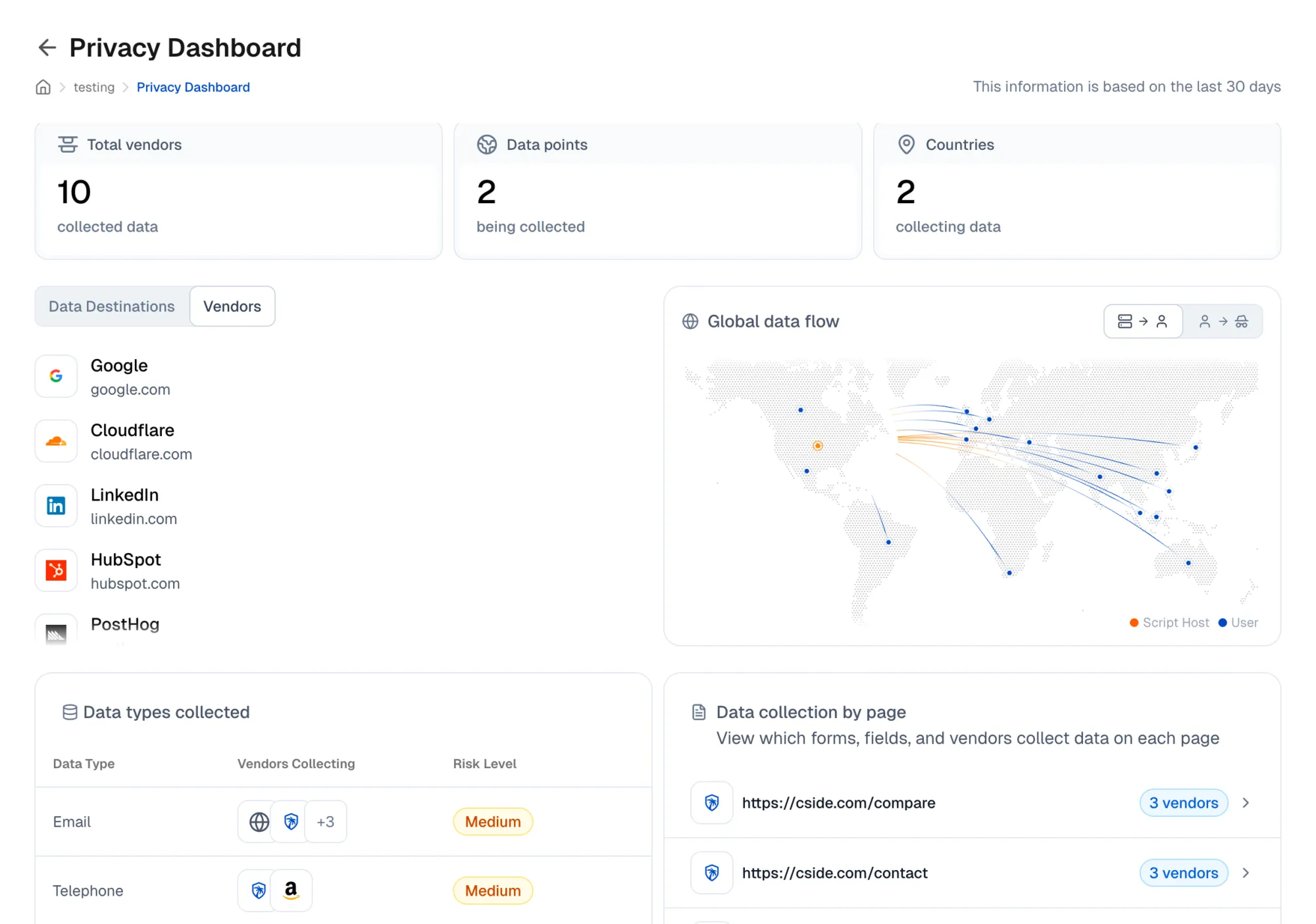
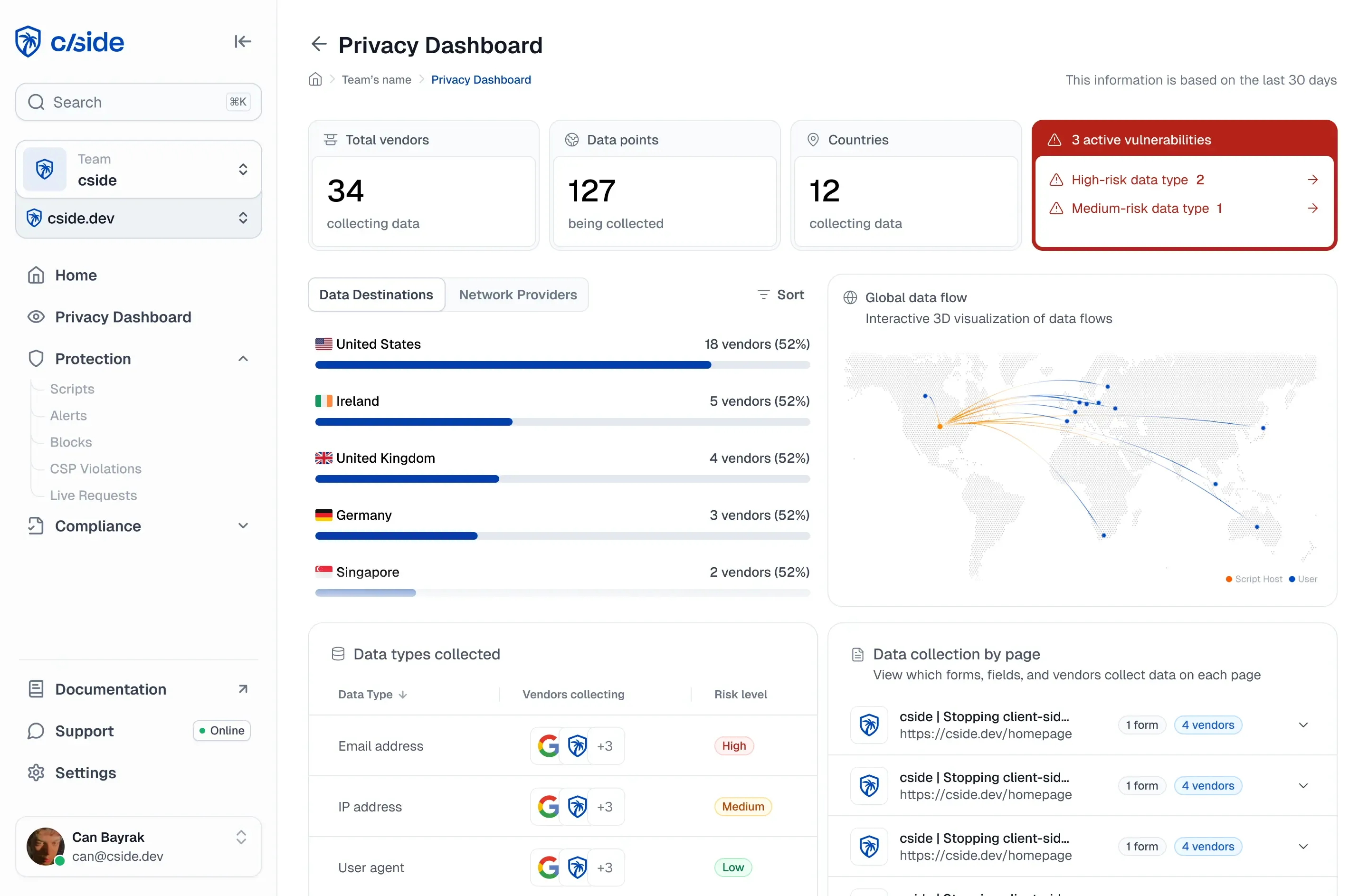
cside Privacy Watch houdt elk script in de gaten, markeert realtime blinde vlekken en risico's, en helpt je ongewenste gegevensstromen te blokkeren met AI-gestuurde functies.
De meeste compliancetools kijken niet in de browser. Maar cside:
- Volgt welke gegevens elk script benadert en waar die gegevens naartoe gaan
- Biedt overzichtelijke dashboards en directe controle over gegevensstromen op browserniveau om te voldoen aan AVG, HIPAA, CCPA/CPRA, TDPSA en andere privacyregels
- Vervangt trage handmatige audits door geautomatiseerde cookie- en scriptinventarissen
- Voorkomt kwaadaardige JavaScript-injecties die persoonsgegevens stelen
Verwante lectuur: onze vergelijking van AVG-compliance tools voor 2026 · de meest voorkomende AVG-compliancefouten en hoe je ze voorkomt
AI-tools voor websitetoestemmingsbeheer
CCPA- en AVG-toestemmingshandhaving gaat verder dan het tonen van een cookiebanner. Je websites moeten toestemmingskeuzes in realtime bijhouden, openbaarmakingen bijwerken wanneer leveranciers en verzameldoeleinden veranderen, en elk verzoek van betrokkenen accommoderen voor AVG-compliance op de website.
Repetitief werk dat teams willen automatiseren
Het beheren van toestemming en privacydocumentatie is een constante, detailrijke taak. Teams moeten gebruikerskeuzes bijhouden, openbaarmakingen actueel houden en reageren op verzoeken van betrokkenen, terwijl ze ook verschillende regionale regelgevingen moeten naleven.
Een stap missen kan leiden tot HIPAA-, CCPA- en AVG-boetes en sancties, zelfs als je website er aan de oppervlakte compliant uitziet.
Hier zijn enkele toestemmingsbeheertaken die je teams kunnen automatiseren met AI-privacycompliancetools:
- Beheer van cookietoestemming en voorkeurslogica voor meerdere regio's en regelgevingskaders
- Updates van privacyopenbaarmakingen wanneer er wijzigingen zijn in leveranciers en verwerkingsdoeleinden
- Verwerking van verzoeken van betrokkenen met toegang, verwijdering en correctie
- Nauwkeurige verwerkingsregisters en andere privacydocumentatie
Veelgebruikte AI-gestuurde functies
Wat kan AI-compliancesoftware precies doen voor toestemmingsbeheer?
- AI-ondersteunde aanmaak van Verwerkingsregisters
- Workflowautomatisering voor intake, routering en afhandeling van verzoeken om toegang van betrokkenen
- AI-ondersteund opstellen of valideren van privacyverklaringen, openbaarmakingen en toestemmingsberichten
Welke AI-tools kan ik gebruiken voor websitetoestemmingsbeheer?
OneTrust
Deze AI-gestuurde toestemmingssoftware stelt je in staat om:
- Intuïtieve bedieningselementen toe te passen zodat gebruikers eenvoudig en met vertrouwen hun voorkeuren kunnen beheren
- Banners en voorkeurscentra aan te passen aan je merk met geolocatiebewuste, meertalige sjablonen
- Ervaringen automatisch aan te passen per regio en apparaat om te voldoen aan lokale gegevensprivacywetten
- A/B-tests uit te voeren op banneropmaak en berichtgeving om opt-inpercentages in de loop van de tijd te optimaliseren
Ketch
Je kunt Ketch gebruiken om:
- Aanpasbare beleidssjablonen voor contentbanners te raadplegen
- De toestemmings-UI automatisch bij te werken wanneer een nieuwe compliancewet wordt aangenomen
- Snelle laadtijden te behouden met lichtgewicht bannercode
- De opt-outvoorkeuren van elke gebruiker te koppelen aan je cookies en websitetags
Transcend
Met deze compliancetool kun je gebruikerstoestemmingskeuzes van client-side UI's toepassen op backend opt-outs. Je kunt ook toestemmingsrapportage gebruiken om compliancedocumentatie bij te houden.
AI-tools voor infrastructuur en interne privacycompliance
Het monitoren van interne systemen op privacycompliance betekent dat je toegangscontroles, configuratiewijzigingen en beveiligingsbeleid bijhoudt in cloud- en on-premises omgevingen. AI-compliancetools verzamelen dit bewijs continu en markeren hiaten in realtime.
Repetitief werk dat teams willen automatiseren
54% van de teams besteedt meer dan vijf uur per week aan handmatige compliancetaken. Dat is waarom 62% aangeeft dat hun proces voor het verzamelen van auditbewijs af en toe foutgevoelig is.
Je complianceteam kan dit vermijden en infrastructuur- en interne privacycompliancetaken automatiseren, zoals:
- Continu compliancebewijs verzamelen uit cloudinfrastructuur, interne systemen en beveiligingstools
- Bijgewerkt bewijs van maatregelen bijhouden
- Wijzigingen in toegangscontroles, systeemconfiguraties en beveiligingsbeleid volgen
- Terugkerende compliancevragenlijsten beantwoorden van klanten, partners en auditors
Veelgebruikte AI-gestuurde functies
AI helpt teams interne compliance voortdurend in de gaten te houden, handmatig werk te verminderen en het risico op gemiste maatregelen te minimaliseren. Het verzamelt gegevens, analyseert hiaten en produceert rapporten sneller dan elk handmatig proces. Je krijgt:
- Geautomatiseerde compliancebewijsverzameling uit cloudplatforms, identiteitsbeheersystemen en beveiligingstools
- Continue monitoring van maatregelwijzigingen, ter vervanging van momentopname-beoordelingen
- AI-ondersteunde hiatenanalyse ten opzichte van normen zoals SOC 2, ISO 27001 en AVG-verantwoordingsvereisten
- Automatische en auditklare rapporten en compliancesamenvatingen
Welke AI-tools kan ik gebruiken voor privacy-infrastructuur en -operaties?
Vanta
Vanta richt zich op continue compliance over infrastructuur, beveiligingsmaatregelen en interne systemen. Je krijgt:
- Geautomatiseerde bewijsverzameling uit cloudproviders, identiteitssystemen en beveiligingstools
- Continue tracking van maatregelwijzigingen over kaders zoals SOC 2, ISO 27001 en AVG
Drata
Deze compliancetool is ontworpen om je voortdurende auditgereedheid te handhaven door:
- Interne maatregelen in realtime te monitoren
- Geautomatiseerde bewijsverzameling gekoppeld aan compliancekaders
- Gecentraliseerde auditworkflows en realtime compliancerapportage
Sprinto
Je krijgt realtime inzicht in de interne compliancehouding. De software bevat AI-functies:
- Bouwt een live Trust Center dat je beveiligingshouding transparant en verdedigbaar houdt, met inhoud die automatisch wordt gevuld vanuit publieke bronnen
- Onderhoudt een realtime risicoregister over interne systemen en leveranciers
Gratis AI-tools voor AVG-websitecompliance
Er zijn genoeg gratis of goedkope AI-tools om je websiteprivacyprojecten te ondersteunen. Deze tools werken het best voor vroege ontdekking en het valideren van zorgen. Volledige compliance kan eigenlijk niet worden bereikt door gratis tools aan elkaar te knopen. Ze kunnen je helpen je complianceroadmap op gang te brengen of je blootstelling te begrijpen.
Gratis website- en scriptscantools
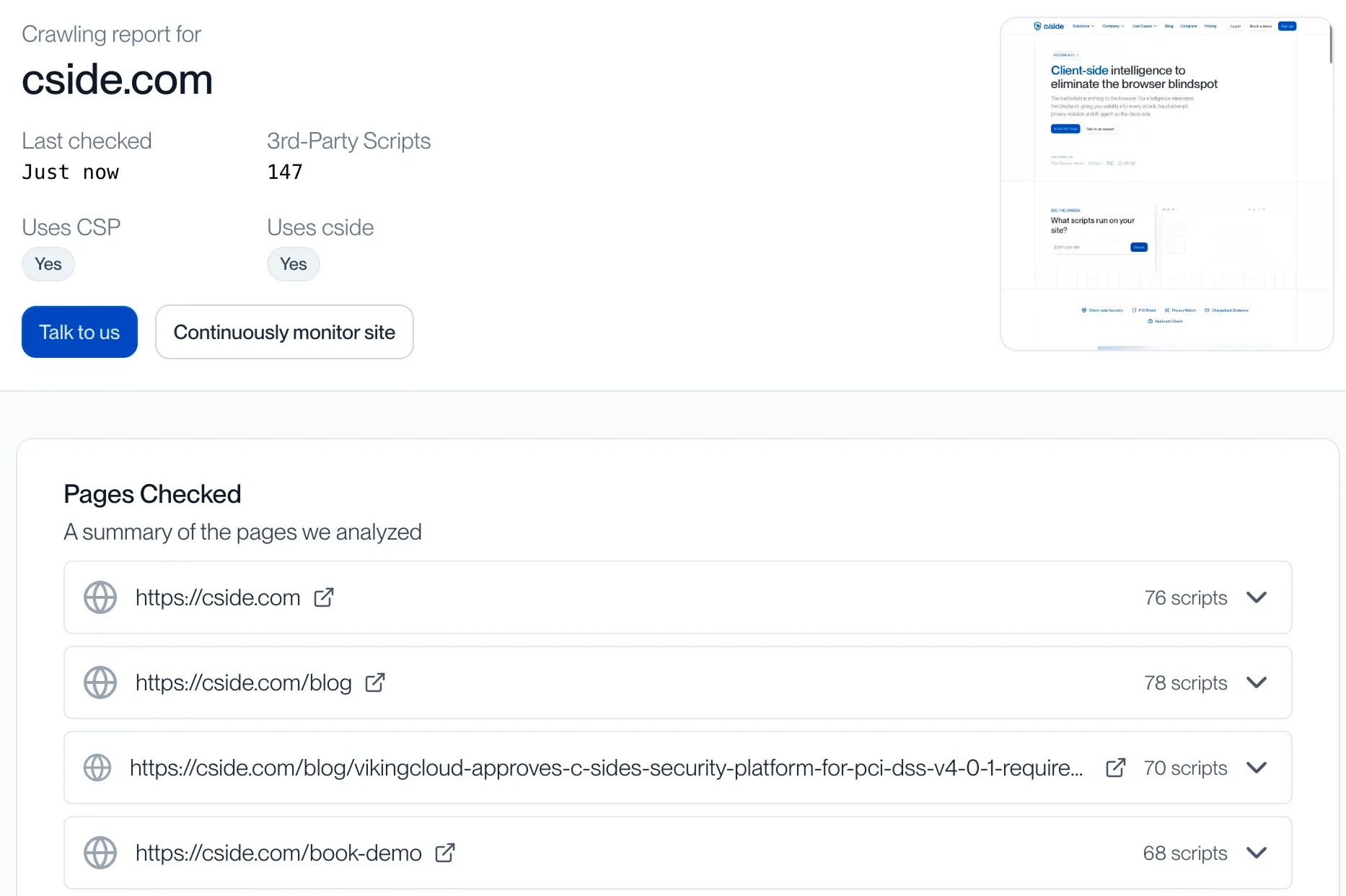
cside biedt een gratis websitescan die je laat zien welke trackers en leveranciers gegevens verzamelen op je site. De scan helpt je een momentopname samen te stellen van websiteprivacyrisico's en gegevensstromen in de browser. De scan:
- Markeert potentiële privacy- en beveiligingsrisico's die verband houden met die scripts
- Identificeert cookies, ingesloten diensten en trackers
Je kunt de scan instellen via cside's gratis forever-plan. Voeg gewoon je domein toe en begin client-side gegevens te bekijken voor AVG, CCPA, PCI DSS en andere kaders. Upgrade op elk moment voor volledige compliance, doorlopende monitoring en beveiligingsfuncties.
Gratis cookiebanner- en toestemmingstools
Gratis cookiebanners zijn belangrijk voor kleine bedrijven die lichte AVG-compliance nodig hebben (zoals Amerikaanse bedrijven die voorzichtig willen zijn). Ze tonen toestemmingsbanners, verzamelen gebruikersvoorkeuren en registreren basistoestemmingskeuzes. Deze tools ondersteunen basale AVG- en ePrivacy-vereisten door opt-in- of opt-outlogica op oppervlakteniveau af te dwingen.
Hier zijn enkele gratis tools die je kunt gebruiken:
- Silktide: Het beste voor het gratis aanmaken van eenvoudige en lichtgewicht cookiebanners
- Ketch: Naast het monitoren van toestemmingsbeheer kun je met Ketch ook gratis cookiebanners genereren.
Gratis of goedkope tools zijn beperkt wat betreft toestemmingshandhaving en zullen waarschijnlijk niet voldoende zijn voor volledige compliance met de AVG of Amerikaanse staatswetten. Zelfs "no-code" cookiebanners moeten worden geïntegreerd met Google Tag Manager en andere website-elementen om goed te werken.
Door ChatGPT of LLM gegenereerde privacysjablonen
Het schrijven van privacydocumentatie loopt vaak vast omdat je niet weet waar je moet beginnen. AI-tools met sjablonen helpen je over die eerste drempel heen. Je kunt bruikbare concepten produceren van privacyverklaringen, cookiebeleid en openbaarmakingen.
Gebruik ze om een eerste versie van compliancedocumenten te maken en pas vervolgens de details aan op basis van gegevenspraktijken, leveranciers en juridische beoordeling.
ChatGPT kan AVG-privacydocumentatie versnellen. Schrijf een gedetailleerde prompt waarin je beschrijft welke persoonsgegevens je website verzamelt, waarom je ze verzamelt en welke derde partijen ze ontvangen. Of voer gegevens in van een gratis websiteprivacyscan om een nauwkeurigere privacyopenbaarmaking te krijgen.
Voeg die vervolgens toe als basis en vraag ChatGPT: "genereer een concept privacyverklaring conform de AVG-compliancevereisten. Zorg ervoor dat je de informatie haalt uit de officiële AVG-tekst op EUR-Lex."
Zodra je het concept hebt, beoordeel en valideer het dan met juridische begeleiding en de client-side gegevensverzamelingspraktijken van je bedrijf.
Je kunt Termly gebruiken om een CCPA-, AVG- en CalOPPA-conform privacybeleidsdocument te genereren. AI lawyer biedt ook privacybeleidssjablonen met een AI-generator. De privacybeleidssjablonen van GenialAI zijn eveneens nuttig.
Opmerking: We suggereren * niet * dat een door een LLM gegenereerde privacyverklaring volledig compliant zal zijn met of geaccepteerd zal worden door privacytoezichthouders. Het zijn goede startpunten voor kleine bedrijven (minder dan 10 medewerkers).
Framework-specifieke AI-tools voor privacy
Privacyvereisten voelen overweldigend aan als je elke wet afzonderlijk bekijkt. AVG, CCPA en andere kaders hebben allemaal verschillende regels, maar ze draaien om vergelijkbare thema's: websitecontrole, toestemmingsbeheer en het afhandelen van interne processen.
Dit gedeelte legt uit hoe AI-functies passen binnen elk kader, zodat je begrijpt welk deel van je privacyoperaties elke tool kan ondersteunen.
AI-tools voor AVG-compliance
Je kunt AI-websitemonitoringtools voor de AVG (zoals cside) gebruiken voor:
- Continue realtime monitoring van alle third-party scripts die in de browser draaien om ongeautoriseerde en onverwachte gegevenstoegang te detecteren
- Client-side dataminimalisatie door overcollectie of ongeautoriseerde collectie op je website te voorkomen (AVG art. 5)
- Inzicht in welke persoonsgegevens elk script aanraakt en waar het die gegevens naartoe stuurt, inclusief grensoverschrijdende gegevensoverdrachten (AVG art. 44-46)
- Directe meldingen bij verdachte wijzigingen in third-party scripts die proberen persoonsgegevens te extraheren, met een versiegeschiedenis om terug te keren naar veilige versies
- Auditklare compliancerapportage met gedetailleerde logboeken en bewijs ter ondersteuning van AVG-transparantie- en verantwoordingsvereisten
Je kunt AI-toestemmingsbeheerstools voor de AVG (zoals OneTrust, Ketch) gebruiken voor:
- Gecentraliseerd toestemmingsbeheer over web, apps en systemen met AVG-conforme logica
- Geautomatiseerde intake, routering en afhandeling van verzoeken van betrokkenen
- Automatisch opstellen en bijwerken van privacyverklaringen, cookiebanners en openbaarmakingen
En AI-ondersteunde AVG-privacyoperatietools (bijv. Sprinto):
- Geautomatiseerde koppeling van gegevens, beleid en maatregelen aan AVG-vereisten, waardoor handmatige interpretatie en dekkingshiaten worden verminderd
- Monitoring van maatregelen en configuraties, waarbij afwijkingen en compliancedeviaties in realtime worden gedetecteerd
- Geautomatiseerde bewijsverzameling die technische controles koppelt aan AVG-waarborgen
AI-tools voor CCPA- en Amerikaanse staatswetcompliance
Je kunt de AI-functies van cside gebruiken voor CCPA-websitemonitoringautomatisering:
- Opt-outvoorkeuren zoals Global Privacy Control (GPC) afdwingen voordat scripts worden uitgevoerd, om privacyschendingen te voorkomen
- Forensische logboeken bijhouden ter ondersteuning van onderzoeken en beoordelingen
- Grensoverschrijdende gegevensoverdrachten over landen bijhouden
- Technische waarborgen aantonen tegen client-side aanvallen
Er zijn toestemmingsbeheerstools met AI-functies zoals OneTrust:
- Workflows voor consumentenrechtenverzoeken inclusief intake, identiteitsverificatie, gegevensontdekking, verwijdering en veilige reacties
- Ingebouwde "Do Not Sell My Personal Information"-links en UI's die opt-outkeuzes communiceren aan gebruikers
- Gegevenskoppeling met CCPA-specifieke labels
En Sprinto biedt AI-gestuurde privacyoperatiefuncties die werken met CCPA:
- Vooraf geconfigureerde compliancemaatregelen voor CCPA-vereisten
- Configuratietracking en beveiligingsinstellingen om complianceafwijkingen te markeren
AI-tools voor privacycompliance en privacycompliancesoftware kiezen
Niet alle AI-privacycompliancetools zijn gebouwd voor hetzelfde probleem. Sommige categoriseren persoonsgegevens in rust, andere monitoren toestemmingsstromen in realtime, en een derde groep bekijkt wat browserscripts daadwerkelijk doen met gebruikersgegevens tijdens runtime. Kies bij het selecteren van privacycompliancesoftware een tool die aansluit bij het compliance-oppervlak dat je moet dekken.
- Gegevensinventaristools (OneTrust, DataGrail, Osano) catalogiseren persoonsgegevens in je systemen ten behoeve van DSR-afhandeling en bewijs voor verwerkingsregisters.
- Platforms voor toestemmingsbeheer (Cookiebot, Termly, Usercentrics) beheren cookiebanners en de vastlegging van toestemming.
- Runtime-privacymonitoring: cside's Privacy Watch houdt in de gaten wat third-party scripts daadwerkelijk doen met gebruikersgegevens in de browser, en signaleert toestemmingsschendingen, PII-exfiltratie en ongeautoriseerde tracking die toestemmingsbanners op zichzelf niet kunnen detecteren.
Voor teams die onder de AVG, CCPA of CPA vallen, combineert de sterkste privacycompliancesoftware-stack alle drie de categorieën.