Enfoques comunes de seguridad del lado del cliente
1. Políticas de seguridad de contenido (CSP)
Los CSP son herramientas nativas del navegador que definen qué dominios de terceros pueden ejecutar scripts. Si bien son útiles en teoría, los CSP tienen graves limitaciones:
- No analizan el comportamiento del script, sólo la URL de origen.
- No detectan scripts dinámicos que cambian según el contexto del usuario.
- Las infracciones de CSP provocan errores en la consola, lo que frustra a los desarrolladores y reduce la adopción.
Como se ve en el ataque Polyfill hace apenas 6 meses, confiar únicamente en una URL de origen puede resultar devastador.
2. Enfoques basados en rastreadores o "escáneres"
Las herramientas basadas en rastreadores escanean sitios web periódicamente para detectar scripts maliciosos. Sin embargo, este enfoque es reactivo y fácil de evadir:
- Los atacantes detectan y entregan fácilmente scripts limpios a los rastreadores, evitando la detección.
- Las herramientas de rastreo a menudo toman muestras del tráfico, lo que significa que los ataques dirigidos a un pequeño porcentaje de usuarios a menudo pasan desapercibidos.
- No pueden monitorear sesiones específicas de usuarios ni capturar el script real que se ve en el navegador.
3. Detección del lado del cliente basada en JS
Las soluciones basadas en JS monitorean los scripts dentro del navegador, pero adolecen de fallas importantes:
- Funcionan esencialmente como trampas, pero las trampas son visibles para que los malos actores puedan eludir la detección.
- Este enfoque carece de visibilidad histórica, lo que significa que no pueden rastrear la evolución del guión a lo largo del tiempo ni proporcionar análisis forenses.
Con regulaciones como PCI DSS que requieren firmemente controles del lado del cliente, estas técnicas se utilizan para marcar rápidamente la casilla de auditoría. Pero no brindan una verdadera protección. Dejan a las empresas expuestas a ataques sofisticados que evolucionan más rápido de lo que estas herramientas pueden responder.
Lea una guía detallada de comparación y selección aquí. Para una evaluación técnica más profunda de qué enfoque proporciona la cobertura más completa, consulte qué plataforma ofrece el monitoreo de scripts del lado del cliente más completo.
Qué buscar en una herramienta de seguridad del lado del cliente
En cside, hemos redefinido la seguridad del lado del cliente abordando las debilidades de los enfoques tradicionales. Nuestro enfoque combinado de Método Script y Método Scan permite:
- Análisis del comportamiento del guión:
A diferencia de las herramientas que toman muestras del tráfico o dependen de fuentes de amenazas, cside observa el comportamiento y el flujo de datos de todos los scripts de terceros. Esto significa:- cside ve a qué datos acceden los scripts y dónde los envían
- cside observa manipulaciones DOM, detectores de eventos de JavaScript y más.
- La capacidad de bloquear scripts
cside le permite establecer políticas que pueden bloquear ciertos scripts según comportamientos o dominios de origen. Los escáneres no pueden bloquear scripts. CSP puede bloquear scripts pero basándose en datos limitados. Un verdadero lado del cliente seguridad La herramienta le permite bloquear amenazas antes de que se conviertan en infracciones importantes. - Análisis de guiones impulsado por IA
Nuestra plataforma aprovecha modelos avanzados de IA para analizar scripts de forma inteligente y autónoma. A diferencia de las fuentes de amenazas estáticas, cside detecta patrones que las herramientas tradicionales pasan por alto, incluidos:- Inyecciones de scripts dinámicos.
- Cargas útiles evasivas adaptadas a geografías, direcciones IP o sesiones de usuario específicas.
- Impacto en el rendimiento
La seguridad no debería ir en detrimento de la experiencia del usuario. Verifique la arquitectura de implementación de la solución de seguridad del lado del cliente que está evaluando y pregunte a los proveedores qué latencia agrega su herramienta a su sitio web. - Paneles de cumplimiento
Cumplir con los requisitos de PCI DSS 4.0.1 significa que necesita evidencia formateada según las expectativas del auditor. GDPR, CCPA y otros marcos requieren controles del lado del cliente para la protección de datos. Su herramienta de seguridad del lado del cliente debería dar forma automáticamente a los datos recopilados en formatos específicos del marco. cside ofrece esto a través de paneles, informes y registros de evidencia prediseñados que están formateados según los requisitos reglamentarios. - Experiencia de usuario intuitiva
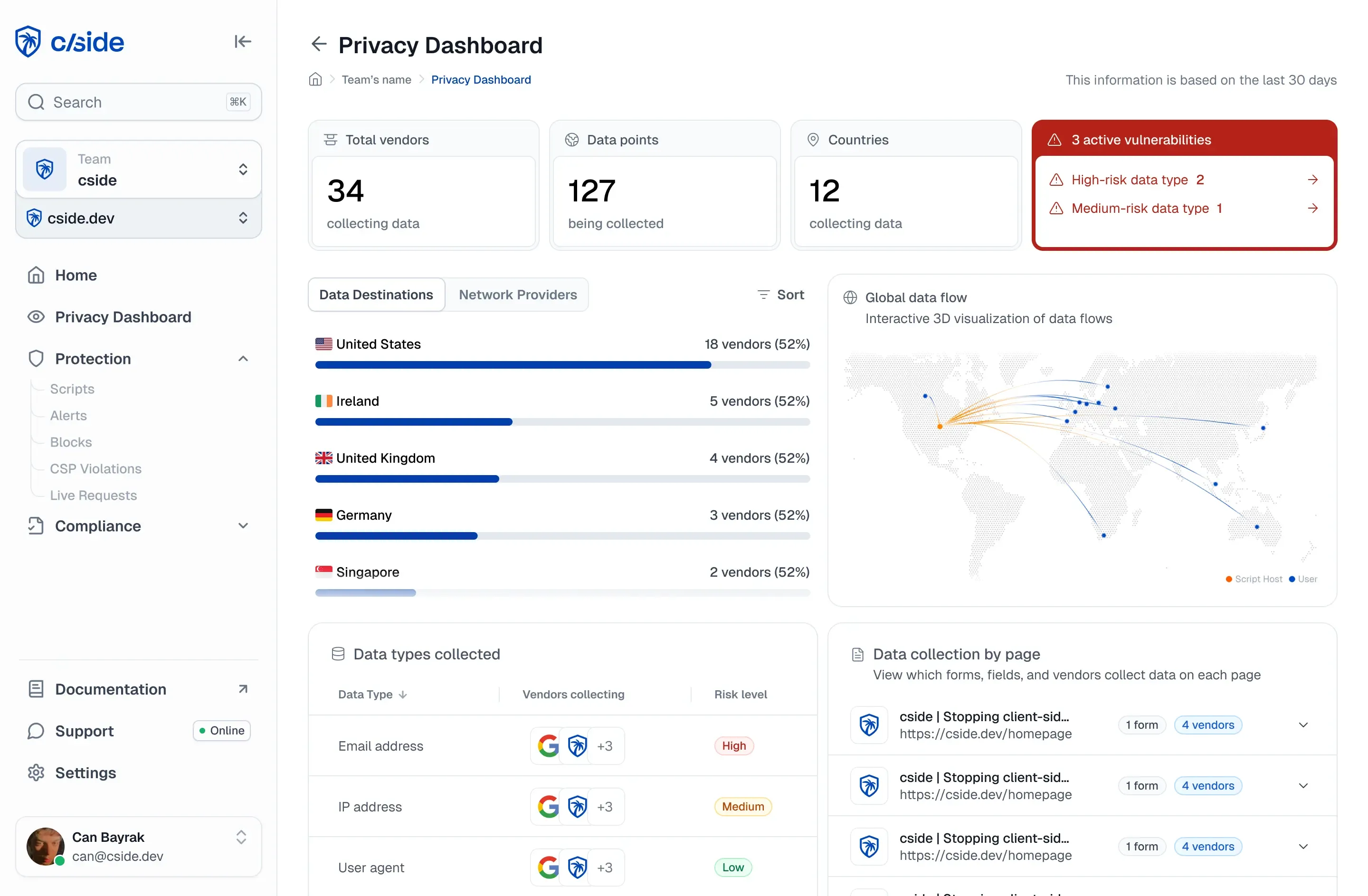
Algunos paneles de control de ciberseguridad todavía parecen creados en 2005. No se trata de verse bonitos, sino de que su equipo acceda fácilmente a la información que necesita. La mayoría de los equipos hacen malabarismos con múltiples marcos de cumplimiento y superficies de seguridad. Descifrar un tablero abrumador solo trae más sobrecarga mental. El tablero de cside fue diseñado para ser intuitivo. Contamos cuántos clics se necesitan para llegar a información clave. Sus equipos de seguridad y cumplimiento reciben notificaciones rápidas e información útil.
Por qué es importante para tu negocio
Si su empresa depende de scripts de terceros, maneja datos confidenciales o procesa pagos en línea, los riesgos son alarmantes. El aumento de los ataques "Magecart" ha demostrado que las vulnerabilidades del lado del cliente pueden costar millones en multas y pérdida de ingresos.
Esto es lo que está en juego:
- Cumplimiento: PCI DSS 4.0.1 exige una supervisión continua de los scripts en las páginas de pago.
- Pérdidas financieras: Las infracciones pueden paralizar una empresa con multas directas y pérdida de clientes.
- Reputación: El 91% de los clientes no volverán a un negocio después de una filtración de datos.
Conclusión
Si su empresa maneja scripts de terceros, procesa pagos o valora la confianza, la elección es clara: cside protege a sus clientes, asegura su negocio y lo mantiene a la vanguardia de las amenazas en evolución.
Regístrate para un plan gratuito o habla con nosotros para obtener una recomendación personalizada para su estrategia de seguridad del lado del cliente.