TL;DR: affiliate pixel payload deobfuscation on every request
- The pixel problem: Everyone treats the affiliate pixel like plumbing, but a 1x1 tracking image is a full JavaScript execution context that can rewrite pages, capture keystrokes, and steal cards without ever touching your server.
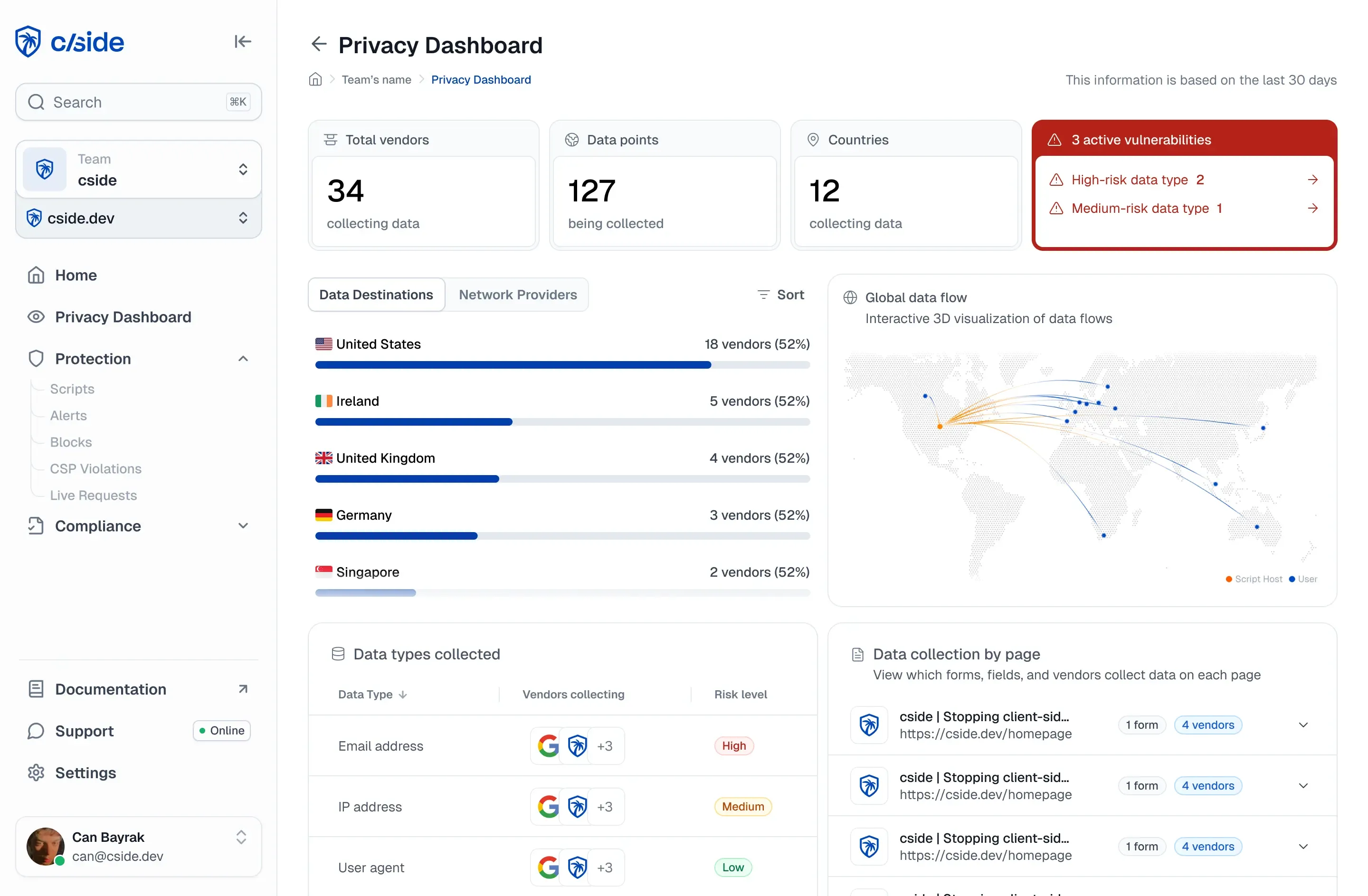
- What cside does: cside sees the payload of every affiliate pixel request, deobfuscates it, runs AI analysis on what the code actually does, and blocks only the malicious payloads while keeping the rest of the script live, which is what PCI DSS v4.0.1 requirements 6.4.3 and 11.6.1 actually ask for.
- Why it matters: If a Facebook or TikTok pixel firing on the wrong page is the difference between attribution and a HIPAA suit, then trusting a partner without payload-level verification turns that partnership into a liability line item.
Short on time? See cside's chargeback-evidence tooling. It covers everything below in one deployment.
Affiliate tracking is the backbone of any successful affiliate marketing program. Affiliate tracking ensures that every click, lead, or purchase is accurately traced back to the affiliate who made it happen. This is achieved through tools like cookies, unique affiliate links, and tracking pixels.
While an absolute must, specifically these pixels include some security concerns.
The purpose of this
A tracking pixel is simply a 1x1 pixel image or snippet of code embedded in web pages or emails. It gathers information such as the user's IP address, device type, browser, engagement metrics, … and more
But 3rd party services are tricky to handle. From a regulatory and a security standpoint.
Security
Malicious actors often exploit tracking pixels to inject harmful scripts on otherwise normal websites. A pixel (a JavaScript) can do virtually anything on a webpage. Attackers usually use the tampered script to steal personal use information or intercept credit card details.
And they're nearly invisible, if not properly monitored. The breach could've happened on your tracking partner's front, or on yours. A nightmare to spot and figure out later.
Misconfiguration and privacy
Misconfiguration of these pixels also lead to a whole world of problems. Security is one, but breaches in compliance are usually the result. As simple as a Facebook or TikTok pixel that's active on the wrong page and you're open to liability suits. Recently Kaiser Permanente faced this exact issue, a HIPAA violation to be exact.
DPR, PCI DSS, DORA CCPA, … are all kinds of regulatory bodies which require the proper settings. Breaching these rules can be a costly and reputation breaking mistake.
Bad user experience
Tracking pixels, especially if implemented poorly or excessively, can slow down your website or app. Every pixel adds a request to an external server, increasing page load times (especially when installed normally). Since conversion rate is tied together with website loading speed, any delay literally hurts your revenue.
Accuracy
An affiliate drives significant sales traffic, but due to a misconfigured or blocked pixel, their contributions aren't tracked. This creates tension in partnerships and disrupts payout calculations.
cside also blocks scripts if deemed malicious. This does not mean the script in its entirety is blocked. Since we see the payload of the code on every request, we can block only those worrisome ones. JavaScript is highly dynamic and can serve different code based on various parameters. Having a solid monitoring system that checks the actual payload is the best possible way to spot and block attacks without sacrificing accuracy.
The web supply chain and the client-side
All these issues tie into one thing: the web supply chain.
From the original code to the server and to the browser, 3rd party affiliate tracking happens at the very end of the supply chain, called the client-side. Meaning that any code that executes there, is extremely powerful.
As mentioned above, JavaScript can do virtually anything in the browser of users. From redirecting, injecting, keystroke capture, … even mining crypto on their machine. And if you don't monitor those scripts, all the issues above will rise up at some point.
Client-side security is on the rise, exactly for these issues. The affiliate partner industry sees more attacks year or year, and are adopting new security tools fast.
We developed cside to stop these problems. cside monitors the payload of every script request to ensure we spot and block anything malicious. You have full access and control over those scripts, and our PCI dashboard makes you v4.0.1 (req. 6.4.3 and 11.6.1) compliant.
With deobfuscation and AI analysis, you see exactly what those scripts are doing and if you want to have them on certain pages or not.
Finally we optimize those scripts to speed up the delivery and mitigate any possible latency issues.
Get started or contact us today.