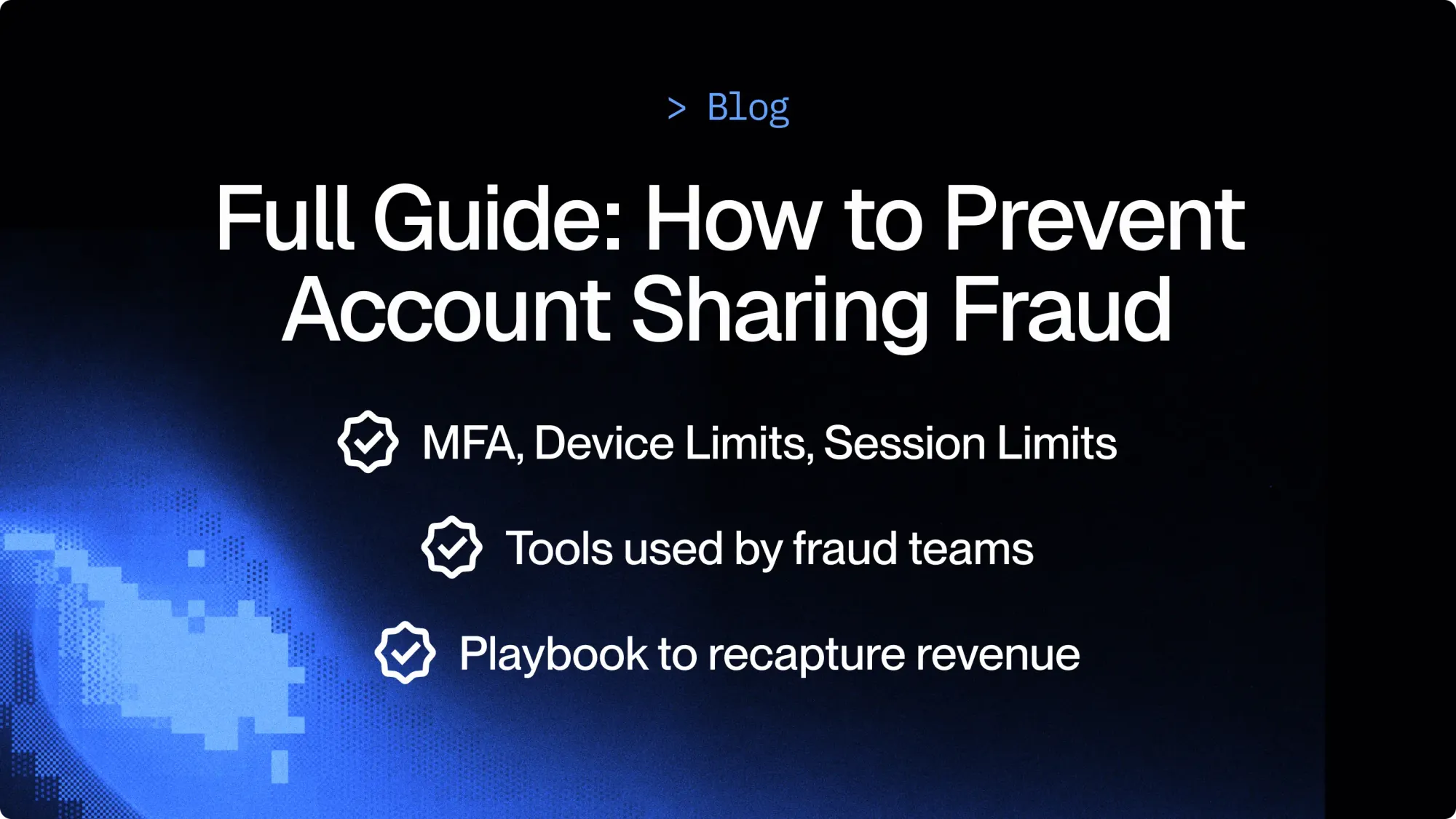
Resumo: guia de prevenção da partilha de contas
- O problema do IP: A maioria dos guias de prevenção da partilha de contas apoia-se na deteção baseada em IP, mas as VPNs, as redes de trabalho e as viagens tornam os IPs pouco fiáveis, e o MFA mal atrasa quem partilha ao reencaminhar o código ou aprovar o push no login de outra pessoa.
- Como a cside deteta: A cside recolhe mais de 250 sinais de navegador e de dispositivo, incluindo o renderizador de GPU, os tipos de letra instalados, a impressão digital de áudio, os dispositivos multimédia e atributos ao nível do sistema operativo, resolvendo-os num ID de visitante persistente que se mantém estável entre navegadores, sessões, IPs e cookies.
- A oportunidade: A Netflix estimou que 100 milhões de agregados familiares partilhavam palavras-passe antes da sua aplicação de restrições em 2023, por isso decida se a sua plataforma integra monitorização de sessões simultâneas e limites de dispositivos numa aplicação em camadas ou permanece exposta à mesma oportunidade de recuperação de receita.
Sem tempo a perder? Veja a deteção sem fricção de partilha de contas da cside. Cobre tudo o que se segue numa única implementação.
O que é a partilha de conta

A partilha de conta ocorre quando várias pessoas usam uma única conta paga, normalmente partilhando as credenciais de login. É diferente da apropriação de conta, em que o acesso é roubado sem o conhecimento do titular. Na partilha de conta, o titular está ciente, e a intenção é muitas vezes poupar dinheiro com uma subscrição ou serviço partilhado.
A partilha de conta assume diversas formas, desde inofensivas até organizadas:
- Partilha doméstica: Família, parceiros, colegas de casa. A forma mais generalizada. A Netflix estimou que 100 milhões de agregados familiares partilhavam palavras-passe antes de aplicar restrições em 2023.
- Partilha no local de trabalho: Equipas que dividem um único login de SaaS entre várias pessoas para evitar custos por lugar. A palavra-passe fica num canal do Slack ou num documento partilhado. Muitas vezes não é intencional, mas viola os termos de licenciamento e custa às empresas receita perdida.
- Marketplaces de partilha de contas: Um vetor comercial crescente. Sites como o Sharesub e o Spliiit permitem que os titulares de contas partilhem o acesso às suas contas em troca de ganho monetário num marketplace. Embora a intenção da maioria dos utilizadores seja poupar alguns dólares no orçamento, isto abre a porta à apropriação fraudulenta de credenciais e à partilha abusiva de contas.
Métodos comprovados para prevenir a partilha de contas
| Método | Como Funciona | Principal Limitação |
|---|---|---|
| MFA | Adiciona um segundo passo de verificação no login (SMS, aplicação de autenticação, e-mail). | Não impede a partilha em dispositivos já autenticados. |
| Monitorização de sessões simultâneas | Monitoriza sessões ativas simultâneas por conta. | Utilizadores legítimos em múltiplos dispositivos ou separadores podem gerar falsos alertas. |
| Limites de dispositivos | Limita o número de dispositivos reconhecidos por conta numa janela móvel (ex.: 30 dias). | Uma pessoa com vários dispositivos pode atingir o limite. |
| Fingerprinting ou ID de Visitante | Recolhe dezenas de sinais de navegador, dispositivo e comportamento para criar um ID de visitante persistente. | Navegadores focados em privacidade e ferramentas anti-deteção podem interferir na recolha de sinais. |
| Restrições baseadas em IP | Sinaliza contas acedidas a partir de demasiados endereços IP distintos. | VPNs, IPs dinâmicos e roaming móvel tornam os sinais de IP ruidosos e pouco fiáveis. |
1. MFA (Autenticação Multifator)
- O MFA adiciona um segundo passo de verificação (código SMS, aplicação de autenticação, link por e-mail) no login. Dissuade naturalmente a partilha porque o titular da conta tem de estar envolvido sempre que alguém inicia sessão. Particularmente eficaz em ambientes empresariais/de trabalho, onde o SSO + MFA pode substituir por completo a necessidade de credenciais partilhadas.
- Limitações: Se o titular da conta concluir o MFA uma vez no dispositivo de um amigo, essa sessão pode persistir. O MFA excessivo também acrescenta fricção para o utilizador legítimo em cada novo login.
2. Monitorização de Sessões Simultâneas
- A monitorização de sessões simultâneas rastreia o número de sessões ativas em simultâneo na mesma conta. Demasiadas sessões ativas numa conta pode indicar partilha de conta. Pense em serviços de streaming como a Netflix e a Disney+ que limitam o acesso simultâneo com base no nível do plano.
- Como implementar a monitorização de sessões simultâneas: A maioria das equipas constrói isto internamente. Uma configuração típica: armazenar as sessões ativas do lado do servidor (ex.: Redis), indexadas pelo ID de utilizador. A cada novo login, o seu backend verifica quantas sessões estão ativas. Se a contagem exceder o limite, encerra a mais antiga ou aciona um desafio de MFA. Plataformas de autenticação como o Auth0 ou o Firebase oferecem algumas funcionalidades de gestão de sessões, mas a lógica de limiares e a resposta de UX costumam ser específicas o suficiente do produto para que o código personalizado acabe por prevalecer.
- A monitorização de sessões simultâneas é diferente dos limites de dispositivos. Rastreia quantas sessões estão ativas ao mesmo tempo, não quantos dispositivos têm acesso.
Uma nota prática sobre limiares: não defina o limite em um. Um único utilizador pode ter uma sessão aberta no portátil, no telemóvel e num separador de navegador esquecido. Detetar sessões simultâneas repetidamente, ou combinações com outros sinais como locais diferentes, é um indicador muito mais forte.
3. Limites de Dispositivos
- Rastreie IDs de dispositivo únicos por conta. Defina um número máximo de dispositivos reconhecidos por conta. Permita um número configurável (por exemplo, 3 dispositivos numa janela de 30 dias). Quando o limite for atingido, exija que o utilizador remova um dispositivo antes de adicionar um novo, ou acione um desafio de verificação.
- Como implementar limites de dispositivos: Vai precisar de uma ferramenta de fingerprinting que devolva um ID de dispositivo persistente. O seu backend armazena e rastreia esses IDs por conta, verificando a contagem em cada login. De seguida, integra esses sinais em mecanismos de resposta, como um desafio de verificação através da sua ferramenta de MFA ou um ecrã de "gerir os seus dispositivos" na sua aplicação.
4. Sinais de Fingerprinting
- O fingerprinting de navegador e de dispositivo recolhe dezenas de sinais (resolução de ecrã, sistema operativo, VPN/Proxy, tipos de letra, fuso horário, etc.) e resolve-os num ID de visitante persistente. Este ID mantém-se entre sessões, modo anónimo, armazenamento limpo e utilização de VPN.
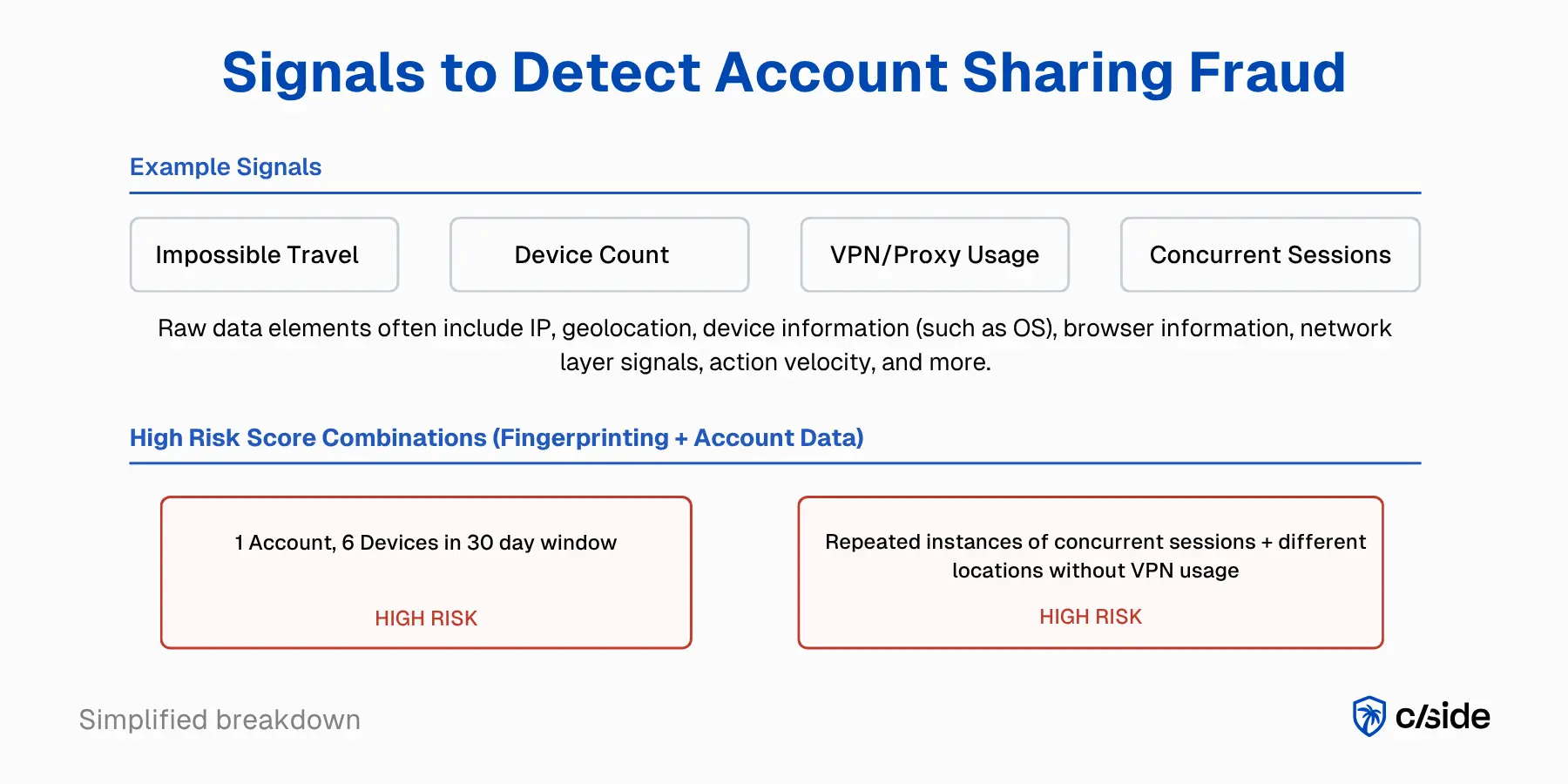
- Certas combinações destes sinais brutos indicam que está a ocorrer partilha de conta. Por exemplo: viagem impossível (a mesma conta em duas cidades a 3000 milhas de distância, numa hora, sem uso de VPN), anomalias de múltiplos dispositivos (este utilizador normalmente acede através de dois dispositivos de confiança e, de repente, adiciona 3 novos dispositivos numa semana), e sinais comportamentais.
- Quando são detetados padrões suspeitos, as equipas podem desafiar o login (verificação reforçada) ou bloquear a sessão por completo.
O fingerprinting é a base que torna os limites de dispositivos e as verificações de sessões simultâneas mais precisos. A maioria das empresas apoia-se no fingerprinting para combater a partilha abusiva de contas em paralelo com outros vetores de fraude, como a apropriação de conta, a multi-accounting e a atividade de bots.
A Restrição Baseada em IP Fica Aquém para a Partilha de Contas
A deteção baseada em IP (sinalizar contas acedidas a partir de demasiados endereços IP distintos) foi uma das primeiras abordagens para resolver este problema, mas tem fraquezas significativas.
- Agentes maliciosos e utilizadores legítimos iniciam sessão através de VPNs ou proxies que mascaram o seu IP e localização reais.
- Os utilizadores legítimos geram falsos positivos ao iniciar sessão a partir do trabalho, de casa, de redes móveis e durante viagens.
São necessários sinais mais avançados. A deteção mais eficaz combina dados de IP com fingerprints de dispositivo, sinais comportamentais e geolocalização, uma vez que nenhum sinal isolado deve ser o único a tomar a decisão.
Como as equipas obtêm acesso aos sinais que detetam a partilha de contas
Existem dois caminhos bem estabelecidos aqui. O primeiro: comprar uma suite antifraude completa como a Sift ou a Forter. São abrangentes, mas caras, as configurações nem sempre são flexíveis, e acaba por pagar por muitas funcionalidades que nada têm a ver com a partilha de contas.
O segundo caminho: integrar sinais brutos de fingerprinting de uma ferramenta como a cside ou a Castle na sua stack antifraude. IDs de dispositivo, geolocalização, deteção de VPN e dados comportamentais são entregues através de uma API ou webhook. A sua equipa liga esses sinais a ferramentas de MFA, gestão de sessões, fluxos de UX na aplicação, lógica de sessão, ou a qualquer pipeline que se ajuste ao seu objetivo. Este caminho oferece mais controlo e flexibilidade. Os fornecedores de fingerprinting têm frequentemente combinações organizadas que alertam instantaneamente para suspeitas de partilha de contas, prontas a usar.
Partilha de Conta vs. Apropriação de Conta
A partilha de conta e a apropriação de conta dependem de sinais de deteção semelhantes, mas são problemas fundamentalmente diferentes.
- Partilha de conta = voluntária. O titular da conta dá as suas credenciais a outra pessoa e ambas as partes sabem o que está a acontecer.
- Apropriação de conta = não autorizada. Um atacante obtém acesso sem o conhecimento do titular, normalmente através de phishing, credential stuffing ou sequestro de sessão.
Esta distinção é importante para a deteção: muitos dos mesmos sinais (novo dispositivo, nova localização, padrões de sessão invulgares) aparecem em ambos os cenários. Mas a resposta deve ser completamente diferente. A partilha de conta pede uma sugestão de upgrade, enquanto a apropriação de conta (ATO) pede o encerramento da sessão, a redefinição de credenciais e um alerta de segurança.
A apropriação de conta custou aos consumidores 15,6 mil milhões de dólares em 2024. Para uma análise mais aprofundada sobre a prevenção de ATO especificamente, consulte o nosso guia para impedir a fraude de apropriação de conta. Relacionado: se o problema a montante forem contas novas falsas em vez de contas existentes partilhadas, o cside Signup Shield pontua cada registo em tempo real para impedir a criação de contas falsas, o abuso de testes gratuitos e a multi-accounting no momento do registo.
Ferramentas populares para a prevenção de partilha de contas
  <thead>
    <tr>
      <th>Categoria de Ferramenta de Prevenção de Partilha de Contas</th>
      <th>Exemplos</th>
      <th>O Que Faz</th>
      <th>Ligação aos Métodos de Prevenção</th>
    </tr>
  </thead>

  <tbody>
    <tr>
      <td>MFA / Fornecedores de identidade</td>
      <td>Okta, Auth0, Duo</td>
      <td>
        Camada de autenticação que exige verificação adicional via SMS,
        e-mail ou aplicações de autenticação.
      </td>
      <td>
        Potencia a aplicação de MFA: verificação reforçada, pedidos de segundo fator em
        novos dispositivos e controlos de políticas de SSO.
      </td>
    </tr>

    <tr>
      <td>Ferramentas de fingerprinting</td>
      <td>cside, Rupt, Castle</td>
      <td>
        Fornece sinais brutos como IDs de dispositivo, geolocalização, deteção de VPN/proxy
        e dados comportamentais via APIs ou webhooks.
      </td>
      <td>
        Alimenta dados que acionam mecanismos de defesa como limites de dispositivos, deteção de
        viagem impossível e aplicação com consciência de VPN.
      </td>
    </tr>

    <tr>
      <td>Suites antifraude completas</td>
      <td>Sift, Forter</td>
      <td>
        Plataformas prontas a usar que agrupam a deteção e a aplicação de restrições à
        partilha de contas juntamente com outros fluxos de trabalho antifraude.
      </td>
      <td>
        Combina múltiplos métodos de deteção com regras pré-configuradas. Abrangentes,
        mas frequentemente mais caras e menos flexíveis.
      </td>
    </tr>

    <tr>
      <td>Gestão de sessões / código interno</td>
      <td>Desenvolvido internamente</td>
      <td>
        Rastreia sessões ativas por conta, aplica limites e força
        reautenticação quando os limiares são excedidos.
      </td>
      <td>
        Implementa a monitorização de sessões simultâneas, a invalidação de sessões, sugestões
        de UX e fluxos de upgrade para recuperar receita.
      </td>
    </tr>
  </tbody>
</table>
Guias relacionados
Aprofunde-se neste conjunto de conteúdos:
A maioria das equipas usa uma combinação de ferramentas em vez de depender de uma única solução. A stack certa depende do seu orçamento e de quanto controlo deseja sobre a lógica de deteção.
Tipos de ferramentas de prevenção de partilha de contas
- MFA / Fornecedores de identidade → Okta, Auth0, Duo. Esta é a sua camada de autenticação. Não detetam a partilha de contas diretamente, mas acrescentam fricção que a dissuade. No contexto dos métodos discutidos acima, são estas ferramentas que potenciam a aplicação de MFA (verificação reforçada, políticas de SSO) quando acionadas por sinais que monitoriza.
- Plataformas de fingerprinting / inteligência de dispositivos → cside, Fingerprint, Rupt. Estas fornecem os sinais brutos: IDs de dispositivo, geolocalização, deteção de VPN/proxy, dados comportamentais. Os sinais são acessíveis através de uma API ou webhooks, para que possa alimentá-los nos seus fluxos de trabalho antifraude ou usar a deteção pré-configurada. Estas plataformas tornam possíveis os limites de dispositivos, a deteção de viagem impossível e a aplicação com consciência de VPN.
- Suites antifraude completas → Sift, Forter, Riskified. Combinam frequentemente múltiplos métodos de deteção (fingerprinting, análise de sessão, sinais comportamentais) numa única plataforma com regras pré-configuradas. Abrangentes, mas caras e menos flexíveis, o que torna mais difícil evitar falsos positivos através de ajustes informados pelo produto.
- Gestão de sessões / código interno → O rastreio de sessões simultâneas construído à medida é integrado na sua camada de autenticação. Muitas equipas constroem isto internamente porque a lógica é direta: rastrear sessões ativas por conta, aplicar limites, forçar a reautenticação quando excedidos.
Porque é que a partilha de contas é um problema para as empresas
Receita perdida que pode ser recuperada imediatamente
- A aplicação de restrições à partilha de contas é um caminho direto para receita nova líquida com custo de aquisição mínimo. Os utilizadores de contas partilhadas já estão no seu produto. Já fizeram o onboarding. A única coisa que falta é o pagamento.
- Para SaaS: mesmo taxas de conversão conservadoras (10 a 20% dos utilizadores partilhados a converterem-se em pagantes) representam uma recuperação significativa de ARR.
A maioria dos números públicos em torno da prevenção de partilha de contas provém de empresas de streaming de media. Um estudo de investigação da Cord Cutting estimou que as plataformas de streaming perderam 2,3 mil milhões de dólares em 2022 devido à partilha de palavras-passe.
A Netflix ficou famosa por restringir a partilha de contas em 2023. Embora a decisão tenha gerado críticas, resultou num aumento (milhões) de novos assinantes e num crescimento de receita que superou as expectativas dos analistas. A Disney+ e a Hulu seguiram-se pouco depois.
Risco de segurança da partilha de contas
- As credenciais partilhadas são inerentemente mais fracas: são escolhidas para serem fáceis de memorizar e são armazenadas em canais de baixa segurança (e-mails, mensagens de texto, Slack, documentos partilhados).
- As contas partilhadas destroem o registo de auditoria. Quando várias pessoas usam um único login, não é possível atribuir ações a utilizadores individuais. Isto torna-se um enorme problema de conformidade.
- O canal de partilha é também um canal de vulnerabilidade: se uma credencial vive num Google Doc partilhado entre cinco pessoas, quão longe está de ser exposta a alguém que não deveria tê-la e que pode revender as credenciais na dark web?
Como setores específicos sofrem com a partilha de contas
SaaS (Partilha de Lugares)
- O preço por lugar cria um incentivo direto para a partilha. As equipas partilham um único login para evitar pagar por lugares adicionais, especialmente para ferramentas caras onde nem toda a gente precisa de acesso diário.
Streaming (Partilha de Subscrição)
- O problema de partilha de contas de maior visibilidade. A Netflix estimou que mais de 100 milhões de agregados familiares partilhavam palavras-passe antes da sua restrição de 2023. A partilha está normalizada no streaming, com a maioria dos utilizadores a não a considerar uma violação.
Conteúdo com Paywall (Partilha de Conta)
- Sites de notícias, plataformas de investigação e editoras de conteúdo premium enfrentam uma partilha que mina diretamente o modelo de subscrição.
Sites de Membros (Partilha de Adesão)
- Comunidades online, redes profissionais e plataformas de adesão premium (especialmente as que têm custos de adesão elevados) perdem receita e visibilidade devido à partilha de contas. O acesso partilhado também distorce as métricas de envolvimento e os dados de audiência.
Software Educativo
- Os estudantes partilham frequentemente licenças de plataformas de aprendizagem, ferramentas de preparação para testes e acesso a cursos online, muitas vezes motivados pela sensibilidade ao custo. Na educação, a partilha de contas cria um problema para além da perda de receita: a fraude académica. Uma credencial partilhada pode dar a vários estudantes acesso a avaliações classificadas e materiais de preparação.
Porque é que o Fingerprinting Reduz a Partilha de Contas
O fingerprinting é a camada de deteção da qual dependem muitos métodos de prevenção de partilha de contas. Um script leve recolhe sinais de navegador, dispositivo e comportamento a cada carregamento de página e resolve-os num ID de visitante persistente, sem cookies nem fricção para o utilizador.
- Identifica visitantes únicos: combina dezenas de sinais (resolução de ecrã, sistema operativo, GPU, tipos de letra, fuso horário, dados de rede) num único ID que se mantém entre sessões, modo anónimo e utilização de VPN.
- Deteta padrões de partilha: sinaliza a viagem impossível, a acumulação rápida de dispositivos e o uso malicioso de VPN/proxy na mesma conta.
- Aciona mecanismos de defesa: alimenta sinais no seu motor de regras, ferramentas de MFA ou gestão de sessões para desafiar um login ou apresentar um ecrã de gestão de dispositivos quando há suspeita de partilha.
- Funciona de forma passiva: os sinais são recolhidos durante os carregamentos normais de página. Não são necessários pop-ups nem banners de consentimento de cookies. Os utilizadores legítimos nunca sabem que está lá.
Porque usar o Fingerprinting da cside para reduzir a partilha de contas
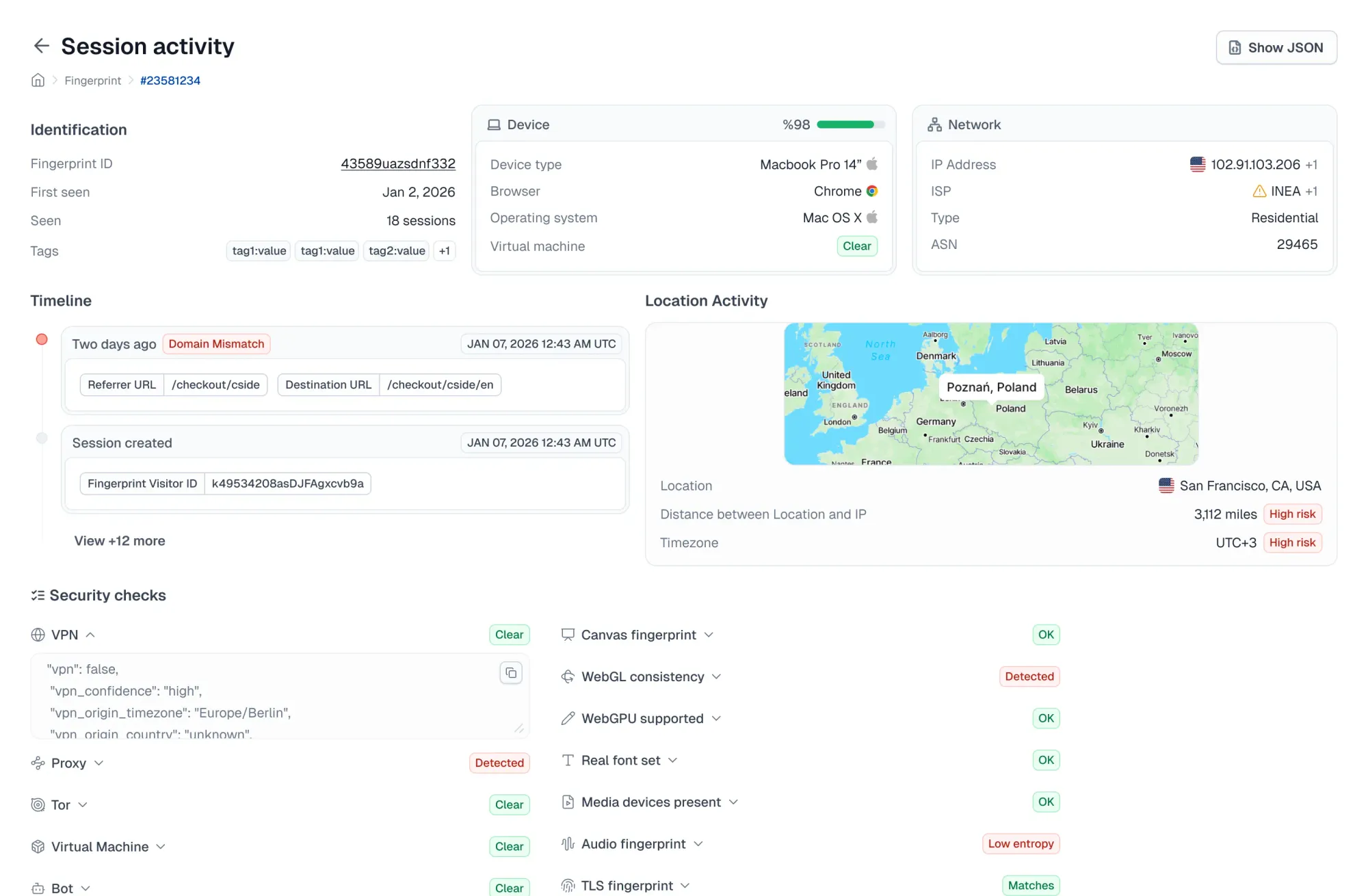
A cside recolhe mais de 250 sinais de navegador, dispositivo e comportamento através de um script leve. O resultado é um ID de visitante persistente que se mantém entre sessões, modo anónimo, armazenamento limpo e VPNs.
- Sinais brutos via API ou webhooks: alimente IDs de dispositivo, geolocalização, deteção de VPN/proxy, viagem impossível e dados de velocidade nas suas ferramentas de MFA ou na lógica de gestão de sessões para gerir suspeitas de partilha de contas.
- Cobre múltiplos vetores de fraude: o script da cside também ajuda a detetar a apropriação de conta, a multi-accounting, a fraude de chargeback por utilização abusiva de primeira parte e outros vetores de fraude, sem configuração adicional.
- Deteção de bots com IA: os navegadores headless furtivos tornaram a deteção por fingerprinting mais difícil. A cside usa sinais avançados para manter uma precisão elevada.
- Sem fricção de UX e respeitador da privacidade: a recolha é passiva. Não são necessários banners de consentimento nem pop-ups. O fingerprinting é válido ao abrigo do RGPD para segurança/prevenção de fraude.
- Amigável para programadores: a configuração pode ser feita num dia. O nível gratuito inclui 1000 chamadas de API por mês, com planos pagos a partir de 99 $/mês.
Guia de resposta perante suspeita de partilha de contas
A forma como responde a uma suspeita de partilha de conta determina se recupera receita ou perde um cliente. O objetivo é não fazer com que pareça uma punição. Comece de forma suave e aumente a fricção gradualmente.
1. Avisos Suaves e Sugestões de Upgrade
- Comece com uma oferta, não com um aviso. Quando for detetada atividade em múltiplos dispositivos, mostre ao utilizador: "Parece que esta conta está a ser usada em vários dispositivos. Adicione um membro da equipa por X $/mês."
2. Desafios de Verificação
- Quando for detetado um dispositivo novo ou suspeito, exija verificação por e-mail ou SMS antes de conceder acesso.
3. Limites de Sessão e Reautenticação Forçada
- Aplique limites de sessões simultâneas associados ao nível do plano. Quando o limite for excedido, force o encerramento da sessão mais antiga ou exija reautenticação.
4. Bloqueios Definitivos (Use com Moderação)
- Reserve os bloqueios definitivos para abusos claros, como a revenda comercial.
Enquadre a restrição como uma medida de segurança ao comunicar com os clientes. Pode ser uma mensagem semelhante a esta:
"Detetámos atividade invulgar na sua conta e restringimos temporariamente o acesso para proteger os seus dados. Contacte o suporte ou verifique novamente a sua identidade para recuperar o acesso."
Considerações estratégicas ao aplicar a prevenção de partilha de contas
Reduzir a Fricção de UX
- Determine o que é uma "partilha de conta excessiva": antes de aplicar qualquer restrição, defina os seus limiares. Quantos dispositivos são normais para o seu produto? Um serviço de streaming e uma ferramenta SaaS B2B têm bases de referência muito diferentes. Um CRM ou uma ferramenta de marketing pode permitir uma partilha de conta ligeira, uma vez que promove a colaboração entre equipas e abre a porta a futuros upsells.
- Comunique os limites antecipadamente: deixe claras as políticas de preços e de partilha antes de o cliente comprar. O local óbvio para isto é nas páginas de preços e faturação.
Fontes Comuns de Falsos Positivos na Partilha de Contas
Nem todo sinal de múltiplos dispositivos é partilha de conta. Os falsos positivos comuns incluem:
- Utilização legítima em múltiplos dispositivos (portátil de trabalho, telemóvel pessoal, tablet, smart TV: isto é uma pessoa em quatro dispositivos).
- Viagens a acionar sinalizações de localização invulgar.
- Uso de VPN por privacidade e não por evasão.
- Substituições de dispositivos a acionar a deteção de "novo dispositivo".
- A deteção baseada em IP irá gerar um número elevado de falsos positivos, uma vez que os utilizadores podem mudar de localização ou estar em redes domésticas onde os endereços IP são ruidosos.
A mitigação é simples: combine sinais em vez de agir com base num único. Um novo dispositivo isolado não é partilha. Um novo dispositivo mais uma nova localização mais uma sessão simultânea com um dispositivo existente é um sinal muito mais forte.
Exemplos Reais de Partilha de Contas
Exemplo público:
- A restrição da Netflix à partilha de palavras-passe é a maior aplicação de restrições à partilha de contas da história. Antes da restrição em maio de 2023, a Netflix estimou que mais de 100 milhões de agregados familiares usavam credenciais partilhadas. A reação inicial foi de contestação e ameaças de cancelamento. Os resultados reais: 50 milhões de novos assinantes até ao quarto trimestre de 2024 e um lucro líquido a aumentar 79%, para 2,3 mil milhões de dólares. A Disney+, a Hulu e a Max seguiram-se com as suas próprias restrições no ano seguinte.
Análise de caso de uso: plataforma de licenças B2B
Este exemplo analisa um cliente da cside que nos contactou para reduzir a partilha de contas na sua plataforma. Os nomes da empresa e do produto foram anonimizados.
- O desafio: uma ferramenta de base de dados de normas de política que vende licenças digitais em várias aplicações SaaS sabia que a partilha de contas estava a acontecer, mas não tinha uma forma fiável de a detetar. O reconhecimento de dispositivos integrado no seu fornecedor de SSO era inconsistente. O mesmo dispositivo era sinalizado como "novo" de forma imprevisível, tornando impossível aplicar limites de sessão.
- O plano de solução: implementar fingerprinting de dispositivos que gera IDs de visitante persistentes a partir de sinais de dispositivo, navegador e comportamento. Estes incluem IP, localização, características de hardware, características de navegador e mais.
- O resultado: o fingerprint integra-se no fluxo de autenticação no login. Quando o ID de dispositivo corresponde a um ID armazenado, o acesso é concedido. Se for detetada uma quantidade excessiva de novos dispositivos ou sessões simultâneas, o sistema sinaliza, desafia ou bloqueia o login.
Este projeto de prevenção de partilha de contas, liderado pelo VP de engenharia, foi inspirado no modelo de aplicação da Netflix: os utilizadores têm direito a duas sessões ativas permitidas e a dois dispositivos permitidos. Um terceiro significa que um dos outros é desligado.
Como detetar a partilha de palavras-passe em contextos B2B e empresariais
A partilha de palavras-passe num contexto B2B ou empresarial é o padrão no local de trabalho em que uma conta licenciada (um lugar de SaaS, um login de portal empresarial, uma credencial de ferramenta interna) é usada em simultâneo ou sequencialmente por várias pessoas que deveriam ter, cada uma, o seu próprio lugar. Difere da partilha de palavras-passe de consumo em três aspetos: o comprador é o empregador, e não o titular da conta; o impacto na receita é medido em expansão de lugares, e não em perdas por pirataria; e o impacto na conformidade pode incluir a integridade do registo de auditoria para cargas de trabalho regulamentadas em que as ações têm de ser atribuíveis a um utilizador nomeado.
A deteção da partilha de palavras-passe em B2B assenta nos mesmos sinais de navegador e de dispositivo que a deteção de partilha de contas em contextos de consumo, mas com uma calibração diferente. Os sinais fundamentais são a diversidade de dispositivos por conta (um único lugar a autenticar-se a partir de mais dispositivos do que o esperado numa janela móvel), o comportamento de sessões simultâneas (dois logins a partir de fingerprints de dispositivo diferentes na mesma janela temporal) e a viagem impossível entre sessões.
A cside captura esses sinais na página de login sem acrescentar fricção à experiência do utilizador legítimo: o IP real do cliente (contornando VPNs de consumo), o fingerprint de dispositivo e a cadência de sessão fluem para o fornecedor de identidade da empresa ou para a camada de aplicação na aplicação, como sinais brutos. Os clientes B2B podem aplicar a expansão de lugares, forçar autenticação reforçada em logins com suspeita de partilha, ou encaminhar a conta para acompanhamento do gestor de conta, consoante o caminho de aplicação que se ajuste à relação comercial.
Previna a partilha de contas com a cside
A cside dá à sua equipa os sinais de fingerprinting necessários para detetar e agir sobre a partilha de contas. Adicione um script leve ao seu site para começar a recolher dados imediatamente. Receba alertas instantâneos de suspeitas de partilha de contas com as nossas combinações de sinais de alto risco pré-configuradas.
Para começar a usar a cside, registe-se ou marque uma demonstração.