Agentic commerce is hier. Laten we het samen beveiligen.

McKinsey predicts agentic commerce will bring $3 trillion+ in new revenue (yes, trillion). You can be damn sure that executives will jump without looking twice to get a piece of that pie. Priority #1 will be to optimize for millions of new website "shoppers". Defending against millions of new website attackers will be left for security teams as an after-thought.

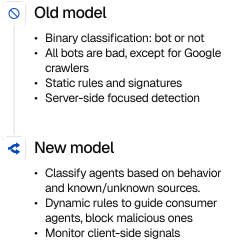
The technical instruments to deal with this do not exist yet. The era of detecting "are you a human" is over. The era of detecting "are you acting on behalf of a human" is here. And that means catching whether those agents act on behalf of a human with good intentions (to purchase) or bad intentions (scrape content, find vulns., test stolen credit cards).

We're a small startup of security engineers. After building in the client-side space (monitoring what happens in the browser) for years, we're taking on this "agentic trust" challenge. And we want every code commit to be grounded in community insight from practitioners like you.


Simon Wijckmans
Simon Wijckmans, Oprichter, cside
januari 2026

Krijg vroege toegang op uitnodiging

Deelnemers aan de besloten test krijgen onze MVP gratis te proberen. Jouw feedback bepaalt wat we uitbrengen.

Formulier laden…

cside wordt gesteund door vooraanstaande durfkapitaalfondsen

Uncork Capital
Mantis VC
Scribble Ventures
See What We've Built ↓

Agents are already on your website.

Good "consumer" agents need guidance on your website. For example, on a checkout page, how should an agent handle selecting upsells?

Proper optimization leads to more revenue. Poor optimization leads to angry calls to the bank saying "your website tricked my AI agent into buying more than I asked for".

Morgan Stanley predicts 20% of digital commerce will be agentic by 2030
In 2025, VISA & Mastercard launched tools to accept agentic payments
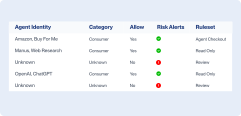
AI agent detection graphic

We tested bot detection tools.
None of them worked for AI agents.

8/10 times they failed to detect our malicious AI agents. And we were barely trying. In fact we intentionally tried to get caught and still slipped through most times.

This made it clear to us that "bot detection" tools are not ready for:

Pirates: Scraping premium content at scale (video streaming, music, art)
Hackers: Brute force scanning for vulnerabilities, creating false accounts
Payment Fraudsters: Credit card testing, chargeback abuse

Our vision for client-side security & governance of AI agents:

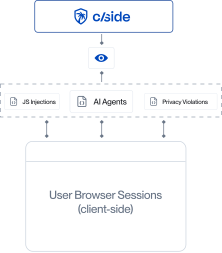
Agents will interface with APIs and MCPs, but most activity is happening on the client-side. That is, agents are accessing your website via a "browser" in (mostly) the same way a human user would.

Network-level monitoring (most web security tools) does not see what happens in the browser. We're building a client-side AI agent governance layer that can be added onto your stack without ripping out current infra.

cside client-side vision architecture

Over cside

We zijn een volledig gefinancierde, ontwikkelaarsgerichte startup die de volgende generatie webbeveiliging bouwt. Gevestigde leveranciers nemen client-side beveiliging niet serieus, dus vullen wij dat gat op.

Leden van ons team hebben bijgedragen aan: Bootstrap, Tailwind CSS, Servo, W3C

We sponsoren regelmatig ontwikkelaarsevenementen zoals CSIDES, BSIDES en EMF Camp.

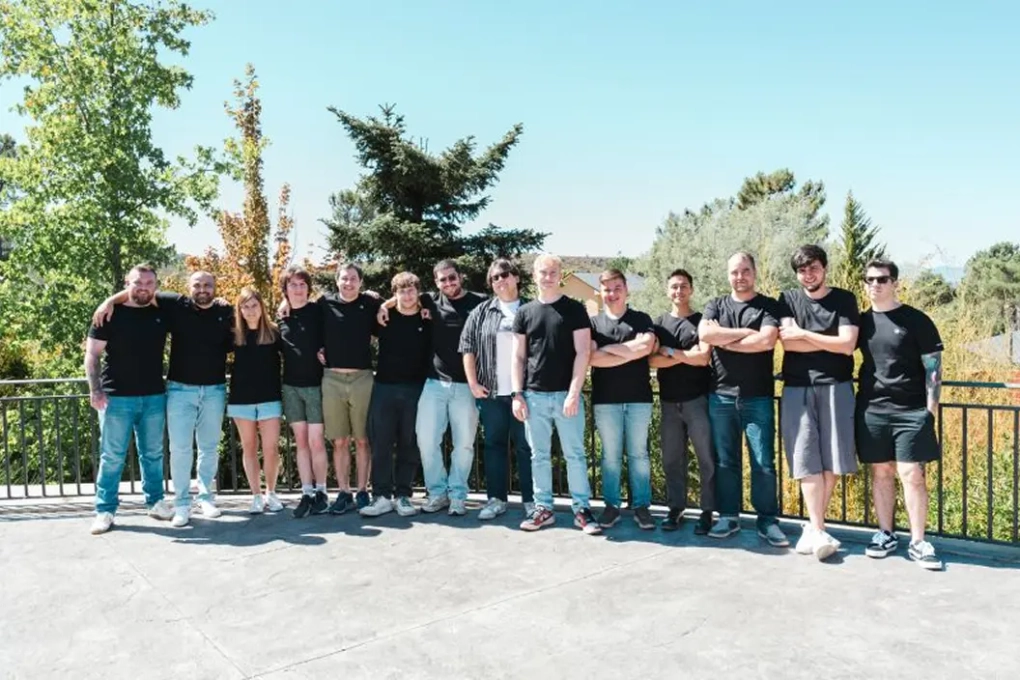
cside team

cside in het nieuws:

Krijg besloten toegang tot AI-botdetectie

Deelnemers aan de besloten test krijgen onze MVP gratis te proberen. Jouw feedback bepaalt wat we uitbrengen.

Formulier laden…