Your User's Browser Is Where Funds Are Lost
- 01
Wallet drainers target the browser
Interception of wallet connections, modification of transaction parameters, or theft of private keys directly from the browser are some of the things that malicious scripts can do. Oftentimes, when users start noticing suspicious activities, their funds are already gone.
- 02
3rd party scripts are everywhere
Modern websites use numerous third-party scripts for analytics, price feeds, widgets, and marketing tools. One thing they all share in common is the fact that they execute JavaScript in your users' browsers. Bad actors only need to compromise one dependency to wreak havoc on your entire platform.
- 03
Supply chain attacks are sophisticated
Some attacks are designed to evade traditional security tools to target high-value transactions. Think of attacks on npm packages, CDNs, and even wallet SDKs to inject malicious code.
- 04
Users hold you accountable
Regardless if the attack came from a third-party script, you will still find yourself being blamed for a security breach on your platform, especially if users lose funds. Both your reputation and user trust are at stake.
- Block wallet drainers and transaction manipulation
- Monitor every script for malicious behavior
- Get real-time alerts when scripts access wallet APIs
- Protect users from supply chain attacks
- Maintain detailed forensic logs for incident response
- Build trust with verifiable security
How cside Protects Crypto & DeFi Platforms
cside's architecture provides full client-side protection specifically designed for the unique threats facing crypto and DeFi platforms.
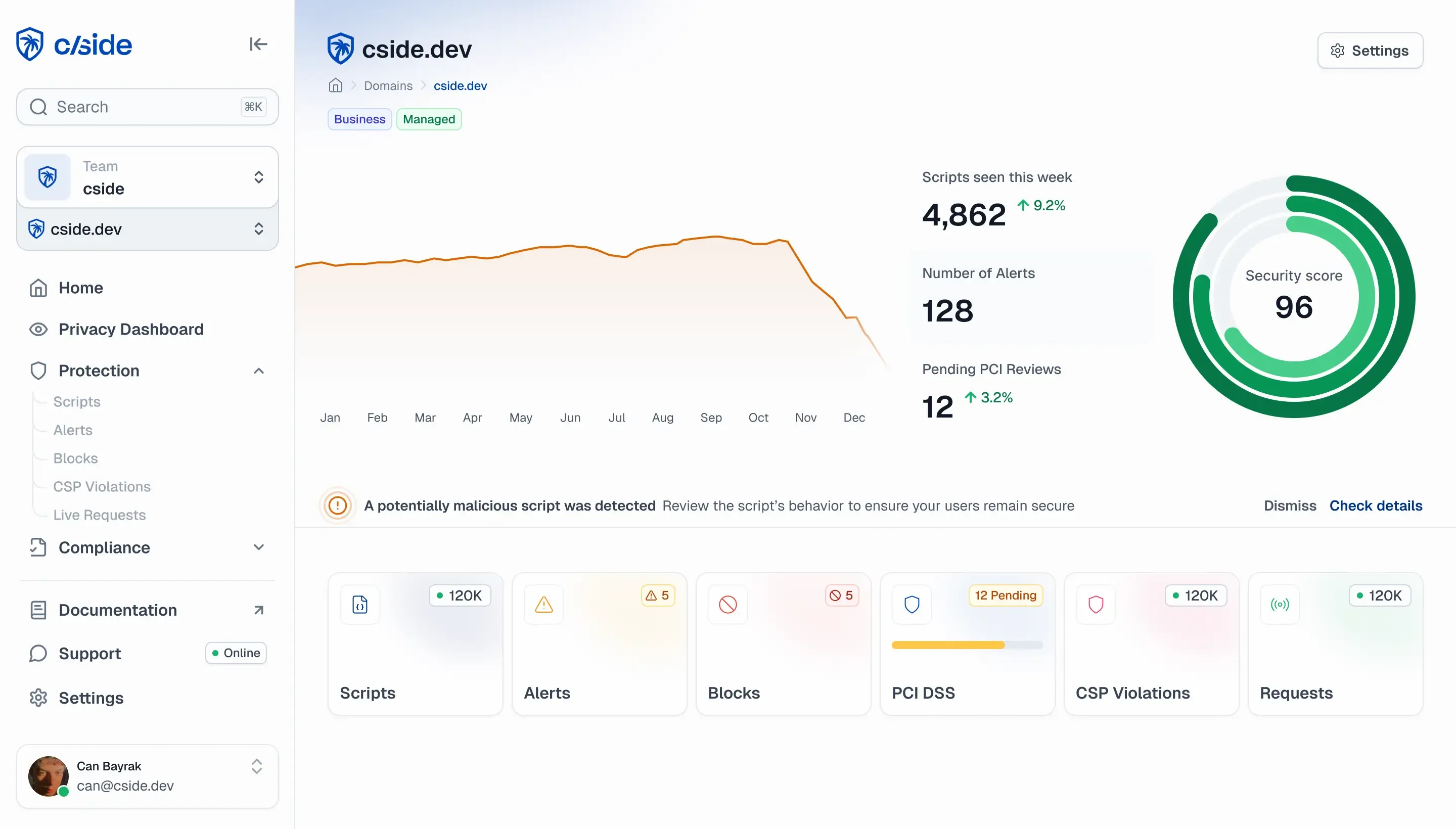
How cside Protects Crypto & DeFi Platforms
Client-Side Intelligence
cside monitors the activity of every script, blocking malicious code from reaching users on your platform.
Account Takeover Prevention
Stop attackers from hijacking user accounts with client-side behavioral analysis, device fingerprinting, and real-time session monitoring.
Fingerprinting
Detect fraudulent sessions with 102+ browser, device, and behavioral signals to protect logins and payment pages from abuse.
AI Agent Detection
Detect agentic traffic and enforce guardrails. Block malicious AI bots while guiding trusted AI shoppers through safe purchase flows.
VPN Detection
Identify VPN and proxy traffic in real time to comply with location-specific laws, enforce content restrictions, and prevent geo-bypasses.
Privacy Monitoring
Identify what personal data each third-party script has access to and where it's sent. Stay compliant with GDPR and prevent PII leaks.
Common Client-Side Attacks on Crypto Platforms
Wallet Drainers
These are scripts that can intercept wallet connections and drain funds. They can do this by either modifying transaction parameters or stealing private keys.
Transaction Manipulation
There are malicious code that can change recipient addresses, amounts, or smart contract interactions in real-time.
Software Supply Chain
Malicious codes are injected into your dApp through compromised npm packages, wallet SDKs, or Web3 libraries.
Clipboard Hijacking
Your copied wallet addresses can be replaced with attacker-controlled addresses if a malicious code is set to monitor your clipboard.
Session Hijacking
Unauthorized access to user accounts and trading capabilities can happen when attackers steal your session tokens.
Phishing Injections
Injected fake wallet connection prompts or approval requests on your page can trick users into signing malicious transactions.
Why Attackers Target Crypto Platforms:
High value transactions make every compromised browser session a lucrative target
Registration flows KYC and personal data that can be harvested
Third party services (trading widgets, analytics, integrations) expand the attack surface
Client-side scripts often touch wallet IDs, private keys, and addresses
How cside Outperforms Alternatives
cside delivers advantages traditional tools can't match.
| vs. Crawler-Based Solutions | vs. Content-Security Policy (CSP) | vs. Client-Side Agents |
|---|---|---|
| Sees real user behavior, not sanitized crawler views | Monitors script payloads, not just sources | Undetectable monitoring attackers can't bypass |
| Catches attacks aimed at specific segments | Detects breaches at trusted third-party providers | Complete historical script behavior tracking |
| Detects threats between periodic scans | Handles dynamic scripts CSPs can't control | Future-proof against evolving techniques |
Don't Wait for Users to Lose Funds
"cside tells me everything I need to know about a script, and makes sure they are safe to show to the user. It's really made me realize how big of a problem 3rd party script security is, and there are no other solutions I've tried that dive as deep as cside."
Our experts can conduct a client-side vulnerability assessment and show you how to protect your crypto platform from client-side attacks.
Questions, answered
01 How does cside prevent wallet drainer attacks?
We monitor all JavaScript execution in real-time and detect any attempt to access wallet APIs or modify transaction parameters. Malicious patterns are identified using our behavioral analysis, preventing funds from being stolen.
02 Can cside protect against supply chain attacks on Web3 libraries?
The answer is yes. We track every script loaded on your platform. This includes npm packages and Web3 SDKs. We can immediately detect a compromised dependency as malicious behavior and block it before it reaches users.
03 Does cside work with all wallet providers?
We work with all major wallet providers. This includes MetaMask, WalletConnect, Coinbase, and others. Browser-level interactions are monitored, regardless of which wallet your users choose.
Didn't find what you were looking for?
Talk to an expertReady to secure crypto & defi
Talk to a security expert. Or set up your free plan in minutes.