cside Named SourceForge Spring 2026 Top Performer for Client-Side Security
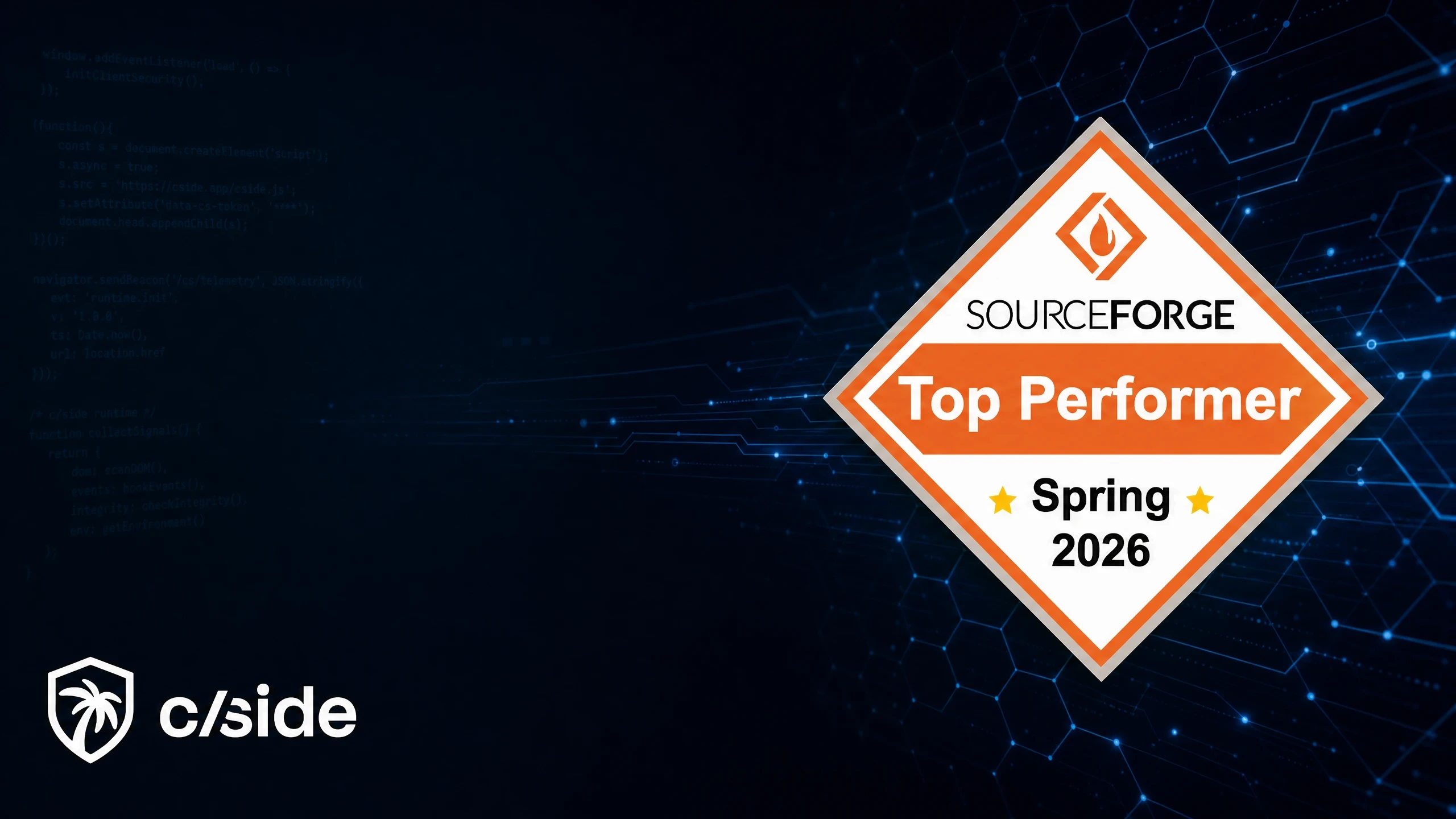
cside has been named a SourceForge Spring 2026 Top Performer for client-side security.
That matters because client-side security is no longer a niche browser problem. Security, compliance, and engineering teams now need proof that every third-party script on production pages is known, monitored, and controlled. They also need tools that teams can deploy, operate, and defend during audits.
SourceForge recognition is useful because it comes from the same place buyers go when they compare software: public product listings, user reviews, ratings, and category research.
What the SourceForge Top Performer award means
SourceForge describes its Top Performer award as recognition for companies and products that receive enough outstanding user reviews to place in the top tenth percentile of highly reviewed products on SourceForge.
SourceForge also says vendors can earn Leader or Top Performer recognition when they collect enough positive user reviews, with award badges appearing on their SourceForge listing and in approved marketing materials.
In practical terms, this award reflects customer validation. It says buyers who evaluated or used the product took time to review it, and that those reviews were strong enough to qualify cside for seasonal recognition.
As of 2026-05-13, cside's public SourceForge profile listed a 4.9 out of 5 star rating with 25 reviews and ratings. Public review counts and ratings can change after publication.
Why user-reviewed client-side security matters
Client-side security sits at an awkward layer. The risk happens inside the user's browser, but ownership is split across security, engineering, marketing operations, privacy, payments, and compliance.
That creates a buyer problem. A team cannot evaluate a client-side security platform only by reading a feature grid. They need to know whether the product handles the operational work:
- Does it show the scripts real users receive?
- Does it preserve forensic evidence when a script changes?
- Does it help with PCI DSS 4.0.1 requirements 6.4.3 and 11.6.1?
- Does it reduce manual review work instead of creating a new queue?
- Does support understand browser security, third-party tags, and audit pressure?
User reviews are not a replacement for technical due diligence. They are a useful signal that the product has survived real implementation work.
What customers are validating
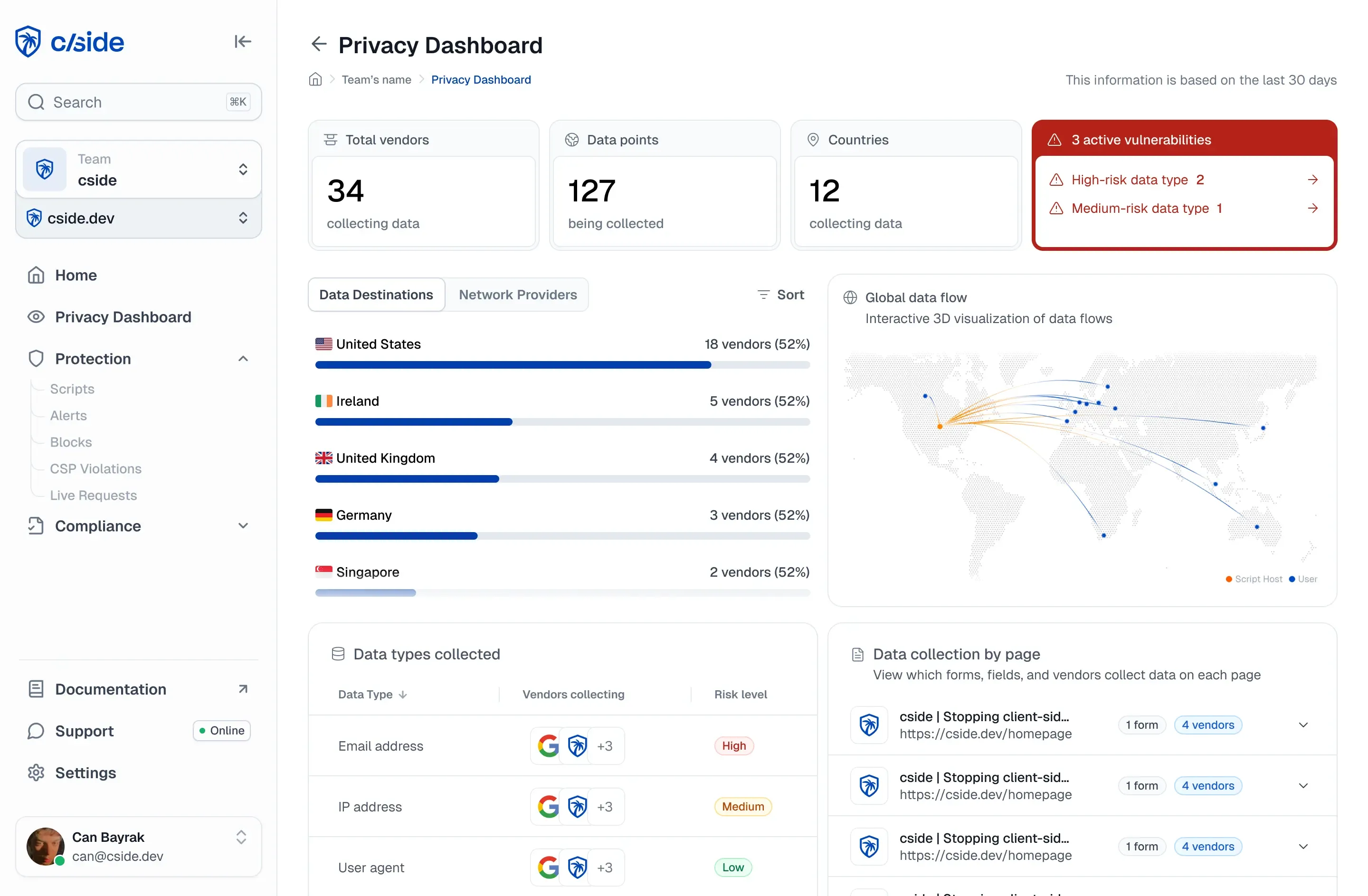
cside protects the browser layer where third-party scripts execute. That includes scripts loaded through tag managers, payment flows, analytics tools, chat widgets, ad tech, and other external dependencies.
For buyers, the practical value is visibility and control:
| Buyer question | What cside helps answer |
|---|---|
| What scripts are running on production pages? | A live inventory of third-party scripts and changes |
| What did the user actually receive? | Runtime script visibility and historical payload evidence |
| Can we support PCI DSS 4.0.1 evidence? | Script monitoring, review trails, and audit-ready reporting |
| Can we respond before users are exposed? | Inline inspection and blocking options for risky scripts |
| Can teams operate it without constant tuning? | Dashboard workflows, explanations, integrations, and support |
That is the context behind this SourceForge recognition. Client-side security is judged by how well it works in production, not by how well it describes the problem.
How cside fits into a modern browser security program
Modern websites depend on third-party scripts. Payment providers, analytics vendors, consent platforms, personalization tools, support widgets, and tag managers all run in the browser. Those scripts can change outside your release cycle.
Traditional controls miss that layer. A WAF protects the server edge. A vulnerability scanner reviews known application surfaces. A CSP can restrict where scripts load from, but it does not inspect what approved scripts actually do after they load.
cside is built for that gap. It monitors client-side scripts, captures what changed, helps teams understand behavior, and gives security and compliance teams evidence they can act on.
For teams working on PCI DSS, start with PCI Shield. For teams focused on third-party script privacy and data leakage, see Privacy Watch. For a broader tool comparison, read our guide to PCI DSS 6.4.3 and 11.6.1 client-side security solutions.
Thank you to our users
Thank you to every customer and user who took the time to review cside, challenge the product, and tell us where browser security work is still too hard.
Awards are useful only when they point back to real operational trust. This one does. It reflects people using cside to monitor scripts, protect sensitive browser flows, prepare for PCI audits, and make client-side security a normal part of their security program.
We will keep building for that bar.
Further reading on cside
- Comparing tools for PCI DSS 6.4.3 and 11.6.1
- cside co-chairs W3C anti-fraud browser security
- Meet PCI DSS 6.4.3 requirements with ease
This article reflects public SourceForge profile and award information as of 2026-05-13. SourceForge ratings, review counts, category pages, and award badge displays can change after publication.
About the author
Simon Wijckmans is the founder and CEO of cside. He writes about client-side security, browser-layer threats, PCI DSS 4.0.1, third-party scripts, and the standards work needed to make the web safer.