Browser-layer intelligence for fraud operations
Ofereça às equipes de risco os sinais de navegador, dispositivo, rede e comportamento de que precisam para investigar sessões suspeitas, enriquecer regras e tomar melhores decisões sobre fraude antes que as perdas se concretizem, capturados ao vivo da sessão enquanto ela é executada, e não reconstruídos após o ocorrido.
Fraud teams are missing the browser layer
Server logs, payment events, and case notes show what happened after a request arrives. They often miss the browser evidence that explains who made the request, what environment they used, and whether the session looked manipulated.
Slower reviews
Analysts lose time stitching together IPs, device clues, session history, and third-party tool outputs before they can decide.
Weak rule inputs
Rules built only on server-side events miss browser fingerprints, VPN indicators, automation traces, and device changes.
Opaque decisions
Risk scores without raw evidence are hard to explain to operations teams, auditors, customers, or chargeback partners.
Delayed mitigation
Fraud patterns often become obvious only after losses, disputes, or abuse spikes have already reached downstream systems.
Why fraud investigations need browser evidence
Fraudsters rotate IPs, hide behind residential proxies, spoof devices, automate browsers, and reuse account access before a payment or account event is recorded. The strongest clues often exist during the session itself.
Payment processors, auth logs, and backend fraud tools are useful, but they rarely capture what the browser looked like, what scripts ran, or whether the device environment changed mid-flow.
Fraud teams need signals they can inspect, export, and combine with internal history. cside gives them browser-layer context without forcing a rip-and-replace of existing fraud infrastructure.
How cside enriches investigations and rules
Collect investigation-grade signals
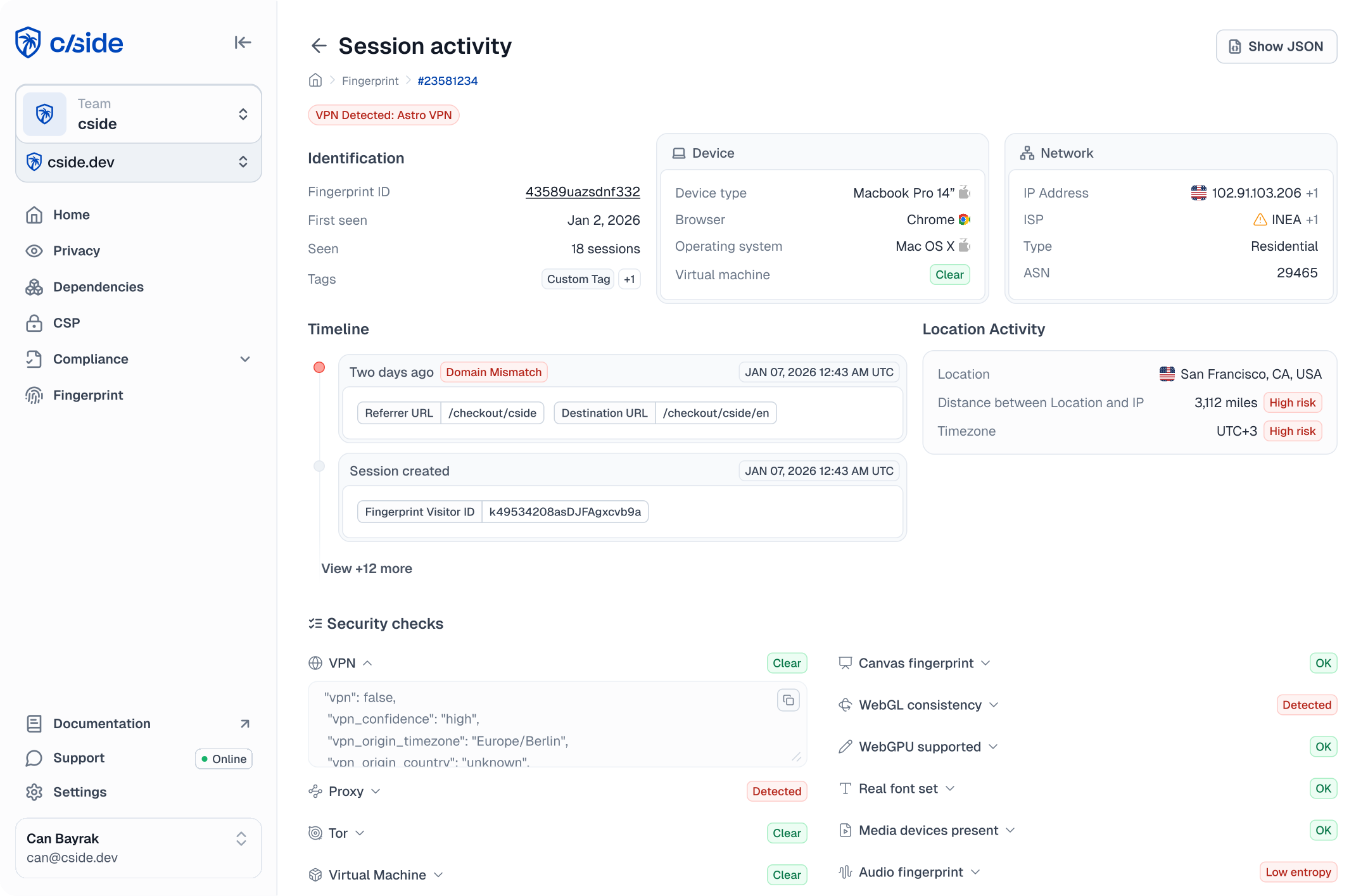
cside fingerprints high-risk browser sessions and captures device, network, automation, and behavior signals before suspicious activity becomes a downstream case.
- Monitor login, checkout, signup, application, refund, and account-management flows.
- Detect VPNs, proxies, TOR, virtual machines, headless browsers, AI agents, and fingerprint anomalies.
- Link repeat abuse across accounts, sessions, and changing IP addresses with persistent browser-layer identifiers.
Route evidence into decisions
Use cside as a signal layer for the fraud stack you already operate. Analysts and rules get raw evidence, not just a black-box verdict.
- Send real-time alerts and raw signals through API or webhooks into review queues, SIEMs, rules engines, or internal tools.
- Challenge, block, step up, or flag sessions based on combinations of device, network, automation, and velocity signals.
- Give fraud engineering and data teams cleaner features for rule tuning and model iteration.
Raw signals for fraud operations
Access browser-layer signals through a developer-friendly API or webhooks. Add evidence to investigations, rules, alerts, and models without replacing your existing fraud platform.
Built for teams fighting fraud in browser sessions
eCommerce Websites
Investigate card testing, coupon abuse, account takeover, refund abuse, and suspicious checkout sessions.
FinTech Websites
Add browser-layer evidence to onboarding, login, money movement, and account recovery decisions.
SaaS Platforms
Detect shared accounts, fake signups, AI-agent abuse, and high-risk access patterns before they spread.
Why cside adds evidence other fraud tools miss
cside complements the fraud stack by adding browser-layer visibility where server-side tools have limited context.
| vs. Server-Side Fraud Tools | vs. Generic AI Summaries | vs. Static IP or Device Checks |
|---|---|---|
| Captures browser, device, and runtime signals before backend events settle | Provides raw evidence analysts can inspect and export | Combines IP, device, network, and behavior signals instead of one brittle indicator |
| Links repeat abuse across sessions even when IPs rotate | Feeds rules and workflows instead of stopping at a narrative recap | Detects VPNs, proxies, automation, and environment manipulation in real time |
| Adds client-side context to auth, payment, application, and account flows | Keeps decisions explainable with deterministic signal trails | Supports graduated responses: allow, flag, step up, block, or investigate |
Add browser evidence to your fraud stack
Start collecting browser-layer fraud signals and route them into the systems your risk team already uses.
Trusted by enterprise security & fraud teams:

















“Evolving fraud tactics and shifts in consumer behavior are colliding for merchants. By joining forces with cside, we're delivering solutions that address real-world issues merchants struggle with daily, such as friendly fraud chargebacks.”
Monica Eaton, CEO of Chargebacks911.
Built for Risk Ops, fraud engineering, and data teams
Risk Ops investigations
Give analysts a single browser-layer view of device identity, network risk, automation traces, session behavior, and related sessions so they can close reviews with more confidence.
Fraud engineering and rules
Use cside signals as inputs for internal rules. Combine browser fingerprints, VPN indicators, AI-agent signals, and velocity patterns with your own user, order, and account history.
ML and data science
Export raw browser-layer signals for feature exploration and model iteration. cside provides evidence your data team can join with historical outcomes without depending on an opaque score alone.
FAQ
Perguntas Frequentes
No. cside is designed to add browser-layer intelligence to the tools you already use. Most teams feed cside signals into existing review queues, rules engines, SIEMs, case tools, or internal decisioning systems.
cside can surface device fingerprints built from 250+ browser, device, and network signals, alongside VPN and proxy indicators, geolocation, automation signals, AI-agent detection, velocity patterns, browser attributes, and suspicious environment changes. The goal is to give analysts raw evidence they can inspect and act on.
Yes. cside supports API and webhook workflows so your team can route raw signals and alerts into your own rules engine, SIEM, fraud platform, or internal tooling.
Better context helps teams avoid treating every risky-looking server event the same way. You can combine browser evidence with account history, order data, and user behavior to step up suspicious sessions while letting trusted users continue with less friction.
cside focuses on technical browser, device, network, and behavior signals rather than collecting unnecessary personal data. Teams can use the signals to make risk decisions while keeping user friction low.
Yes. cside can provide browser-layer features that fraud engineering and data teams can join with internal outcomes. That helps teams tune rules and explore model features without relying only on server-side logs or black-box scores.