Resumen: prevención de ATO en viajes
- Por qué es un objetivo: Las cuentas de sitios web de viajes son objetivos prioritarios de ATO, ya que contienen información de pago almacenada y programas de puntos de fidelización que son menos seguros que los flujos de cuenta principales. La LSA informó que $3.100 millones en puntos de fidelización canjeados son fraudulentos cada año.
- Lo que está en juego: El fraude ATO es costoso. Los contracargos pueden superar los $2.000 para las empresas de viajes. Empresas como Booking[.]com han sufrido ataques ATO de forma reiterada entre 2020 y 2025.
- Buenas prácticas: Las mejores prácticas de prevención incluyen MFA basado en riesgo (con reglas que contemplen los viajes internacionales como algo normal), reforzar los flujos de recuperación de cuentas de fidelización en lugar de centrarse solo en el login, y usar señales de fingerprinting para detectar intentos de ATO de forma temprana.
- El stack de herramientas: La mayoría de las empresas de viajes combinan tres tipos de herramientas: MFA y verificación de identidad (Duo, Ping Identity), fingerprinting de dispositivos y detección de bots (cside, HUMAN Security), y suites antifraude (Sift, Forter).
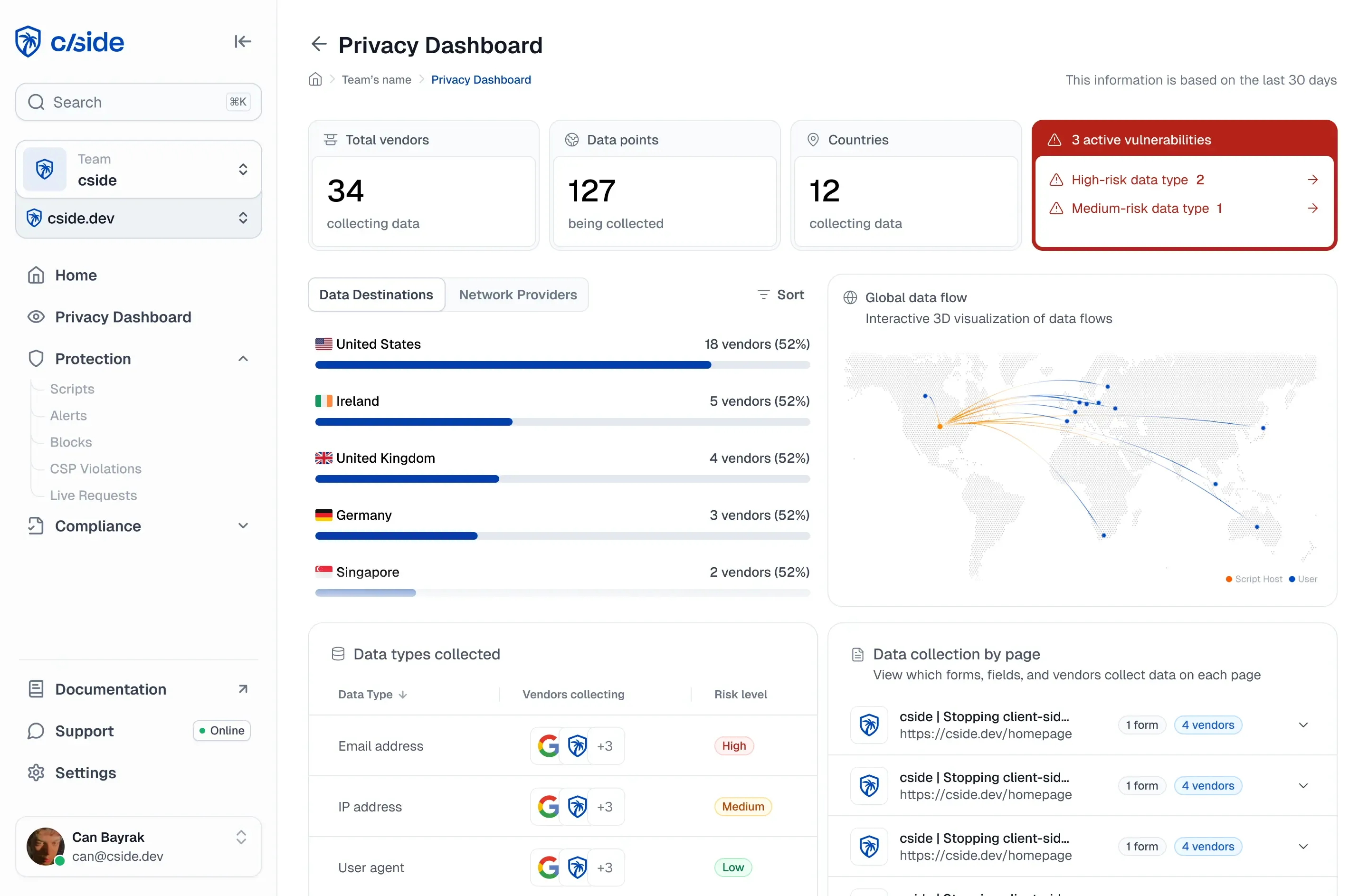
¿Poco tiempo? Consulta la detección de robo de cuentas de cside. Cubre todo lo de abajo en un solo despliegue.
¿Qué es el fraude de apropiación de cuentas en sitios web de viajes?
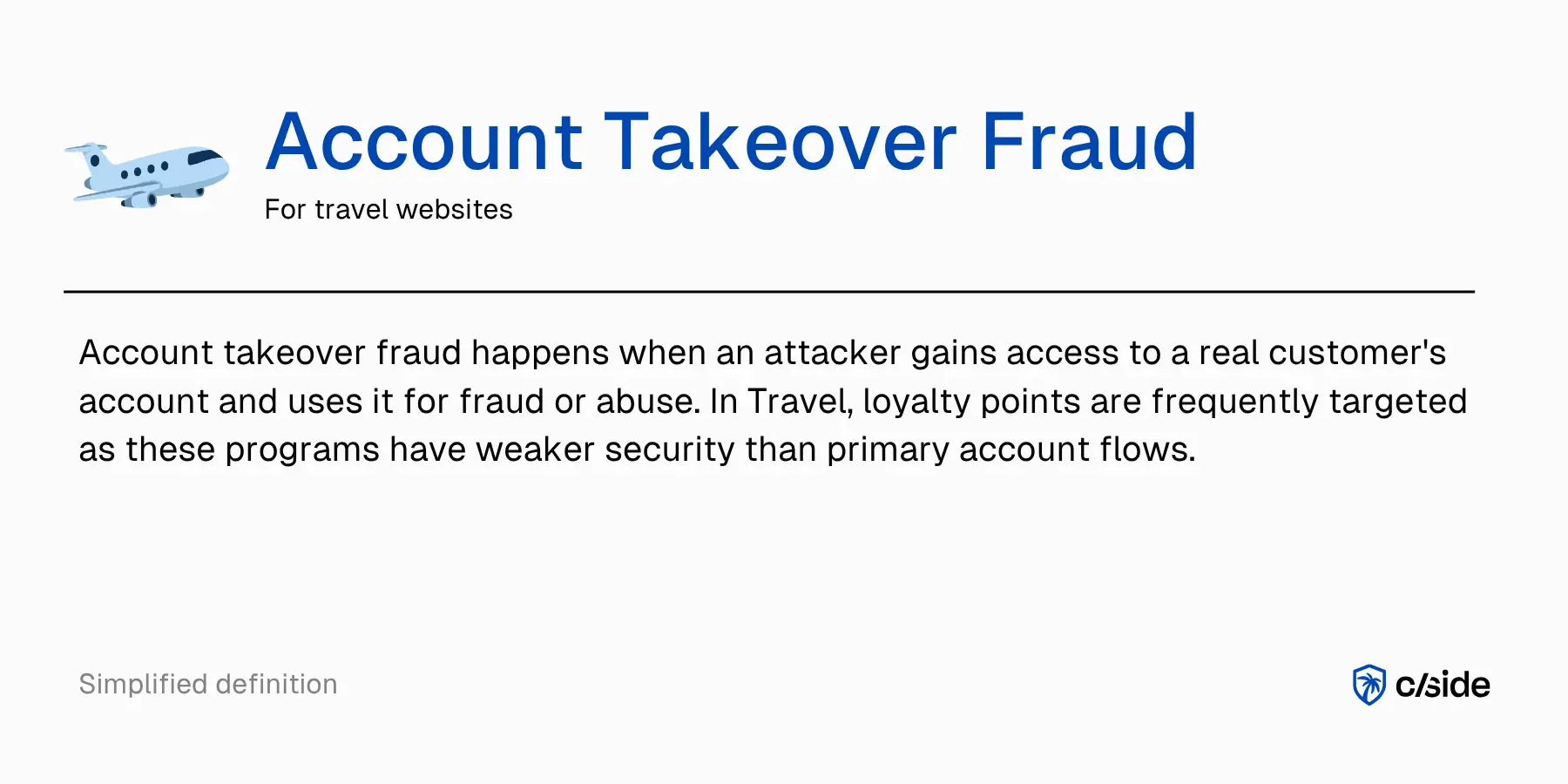
El fraude de apropiación de cuentas ocurre cuando un atacante obtiene acceso a la cuenta real de un cliente y la utiliza para cometer fraude o abuso. En el sector de viajes, esto suele comenzar por uno de varios puntos de entrada:
- Credential stuffing con contraseñas reutilizadas, phishing disfrazado de comunicaciones oficiales de empresas de viajes, o flujos débiles de recuperación de contraseña.
En la mayoría de los sectores, el ATO deriva en fraude de pago. En viajes, también incluye fraude de fidelización. Los atacantes vacían millas de viajero frecuente o transfieren puntos de hotel a cuentas desechables.
Tampoco es un problema marginal. El informe de EY señala que el valor global de los puntos de fidelización supera los $200.000 millones. El fraude relacionado con ATO puede tardar aproximadamente entre 150 y 180 días en investigarse.
Por qué las cuentas de sitios web de viajes son objetivo del ATO
Para un atacante, una cuenta de viajes comprometida es uno de los objetivos de mayor rentabilidad en línea. Esto es a lo que acceden en una sola brecha:
- Divisas de fidelización, métodos de pago almacenados habilitados para compras de alto valor, y datos personales ricos como números de pasaporte.
El comportamiento de los usuarios tampoco ayuda. La mayoría reutiliza contraseñas en distintas plataformas, y pocos tratan su login de hotel o aerolínea con la misma precaución que darían a una cuenta bancaria. Muchos usuarios solo crean una cuenta con prisa al final de una sesión de reserva cuando la plataforma se lo solicita. El checkout rápido, los métodos de pago guardados y las sesiones persistentes amplían la superficie de ataque.
Por eso los atacantes apuntan a sitios web de viajes (aerolíneas, cadenas hoteleras como Hilton y Marriott, y plataformas de reservas como Expedia y Booking[.]com).
Relacionado: la versión previa de este problema son las cuentas nuevas falsas creadas en el registro para abuso de pruebas y promociones o multicuenta. cside Signup Shield convierte cada registro en un veredicto de confianza en tiempo real para detener esas cuentas antes de que existan.
Mejores prácticas para sitios web de viajes y hostelería para detener el fraude de apropiación de cuentas
1. Exige MFA en los momentos adecuados
- Activa la verificación escalonada ante logins inusuales: Nuevo dispositivo, IP desconocida, país diferente. Ten en cuenta que en sitios web de viajes, los clientes inician sesión legítimamente desde distintos países, así que marca la combinación de señales, no una sola.
- El MFA basado en riesgo funciona mejor que las reglas generales.
2. Protege los flujos de restablecimiento de cuenta
- Limita la tasa de solicitudes de restablecimiento de cuenta: Una ráfaga de restablecimientos dirigidos a múltiples cuentas es señal de credential stuffing.
- No dependas únicamente de la recuperación por correo electrónico: Si la bandeja de entrada está comprometida, la cuenta se pierde. Añade verificación de dispositivo o un método de contacto secundario.
Las cuentas de programas de fidelización suelen tener flujos de recuperación más débiles que la cuenta principal de reservas. Equipo diferente, sistema diferente, valor igual (o mayor). Necesitan la misma protección.
3. Usa señales basadas en riesgo para detectar ATO
- Señales de dispositivo y navegador: El fingerprinting, la configuración del navegador y elementos como la resolución de pantalla establecen una línea base por usuario.
- Señales de red: Uso de VPN, detección de proxies, reputación de IP, discrepancias de geolocalización.
- Patrones de comportamiento: Una sesión que inicia sesión y navega de inmediato a transferencias de fidelización se comporta de forma muy diferente a alguien que explora destinos.
- Señales de alerta comunes: Patrones de viaje imposibles, múltiples cuentas desde un mismo dispositivo, inicio de sesión desde un nuevo dispositivo seguido de cambios inmediatos en la cuenta.
4. Detecta intentos de ATO automatizados de forma temprana
Los navegadores sigilosos y los bots de IA imitan el comportamiento real del usuario con suficiente precisión para eludir los CAPTCHAs y la detección básica de bots (el uso de navegadores sigilosos creció 11 veces en 2025). Se necesitan medidas más avanzadas para detectar el credential stuffing y las pruebas de login automatizadas de forma temprana:
- La limitación de tasa basada en IP por sí sola no es suficiente: Los proxies residenciales hacen que el tráfico automatizado parezca legítimo.
- Detección especializada: El fingerprinting de navegador detecta discrepancias de navegador, inconsistencias de dispositivo e indicios de comportamiento que señalan actividad ATO impulsada por IA.
5. Crea planes de respuesta ante ataques ATO
- Desafiar: Presenta autenticación escalonada para dar al titular real de la cuenta una vía de regreso.
- Notificar: Alerta al cliente sobre una posible manipulación de su cuenta.
- Bloquear: Congela las transferencias de puntos de fidelización, los cambios de reserva y las actualizaciones de métodos de pago en las cuentas marcadas.
- Investigar: Revisa qué cambió. Nuevo correo electrónico, puntos transferidos, nuevas reservas o perfiles de viajero modificados.
Las transferencias múltiples de puntos de fidelización en particular deben tener una verificación secundaria, de forma similar a como los bancos gestionan las transferencias bancarias.
6. Ajusta los umbrales de fraude según los patrones históricos
Los viajes de invierno, los picos de verano y las vacaciones de primavera afectan a lo que parece un comportamiento de login "normal". Más logins transfronterizos, más dispositivos nuevos, mayores volúmenes de reservas.
- Revisa los patrones de login de temporadas anteriores antes de cada período pico
- Ajusta las reglas de detección y los umbrales antes de los períodos de alto volumen
- Reajusta después de cada pico en función de lo que realmente ocurrió, no de lo que predijiste
Ten en cuenta también los grandes eventos que generan picos regionales (Juegos Olímpicos, Copa del Mundo, festivales multitudinarios).
7. Asegúrate de que tu sitio web no esté filtrando credenciales de usuarios
Las inyecciones de código son uno de los vectores de ATO más ignorados. Los atacantes pueden inyectar scripts maliciosos directamente en tu sitio que secuestran formularios de login o páginas de reservas para robar credenciales mientras todo parece normal para las herramientas de seguridad de tu servidor/API.
La FTC señala que 416.582 casos de robo de identidad en EE. UU. fueron facilitados por skimming digital en un solo año.
- Monitoriza de forma continua todos los scripts de terceros y propios. Las etiquetas de terceros, los fragmentos de analítica, los píxeles publicitarios y los widgets web introducen código que no controlas completamente. Cualquiera de ellos puede verse comprometido y convertirse en un punto de exfiltración de credenciales.
- Usa una plataforma de seguridad web como cside para automatizar la monitorización de scripts del lado del cliente. cside Client-side Security vigila los intentos de exfiltración de datos e inyecciones de código dirigidos a páginas de login, flujos de reservas y páginas de puntos de fidelización.
Las mejores herramientas de prevención de apropiación de cuentas para sitios web de viajes
Cubrir el ATO de extremo a extremo suele requerir más de una herramienta. La mayoría de las empresas de viajes construyen su stack en torno a tres categorías.
- MFA / verificación de identidad: Añade una segunda capa más allá de las contraseñas. Los códigos de un solo uso por correo electrónico, SMS o aplicaciones de autenticación son una primera línea de defensa. Auth0 y Duo son de uso habitual.
- Fingerprinting / detección de bots: Rastrea señales de dispositivo, navegador y comportamiento para identificar credential stuffing y abuso de login automatizado. También proporciona señales brutas para tus reglas de fraude con el fin de identificar sesiones sospechosas que indiquen ATO. cside y HUMAN Security son opciones sólidas para el sector de viajes. Los sitios de viajes ya gestionan un tráfico de bots elevado procedente de scrapers de tarifas y verificadores de disponibilidad, por lo que la detección de bots resuelve varios problemas a la vez.
- Suites antifraude: Puntúan el riesgo en login, reservas y actividad postventa en una sola plataforma. Suelen ser plataformas orientadas a empresas que buscan resolver los vectores de fraude de extremo a extremo, aunque ofrecen menos flexibilidad. Sift y Forter están bien consolidados para empresas de viajes.
Ejemplos reales de ataques ATO en sitios web de viajes
En abril de 2026, Booking[.]com confirmó que atacantes habían accedido a datos de reservas de clientes a través de cuentas de socios hoteleros comprometidas. Los atacantes enviaron correos electrónicos al personal de socios hoteleros suplantando a Booking[.]com para engañar a los empleados y que ejecutaran malware. Después contactaron directamente con los clientes, haciéndose pasar por el hotel, exigiendo un pago adicional o la verificación de la tarjeta utilizando datos de reserva reales para parecer legítimos.
Un ATO más típico en viajes tiene este aspecto: Un cliente reutiliza una contraseña en una cuenta de fidelización de aerolínea. Ese par de credenciales aparece en un volcado de datos de una brecha. Un atacante lanza intentos de login automatizados durante un pico de viajes en vacaciones. Un login funciona. Por la mañana, el correo electrónico de la cuenta ha sido cambiado, 85.000 millas transferidas a una cuenta desechable, y un billete de clase business reservado con la tarjeta almacenada. El cliente lo descubre cuando su saldo de puntos marca cero.
Por qué la apropiación de cuentas importa para los sitios web de viajes
El ATO no es solo un problema de seguridad. Afecta simultáneamente a los ingresos, las operaciones, la confianza de la marca y el cumplimiento normativo:
- Pérdidas por fraude: Los atacantes vacían saldos de fidelización (millas, puntos, certificados de acompañante, créditos de mejora), reservan viajes con tarjetas almacenadas y revenden reservas. La Loyalty Security Association informó que $3.100 millones en puntos de fidelización canjeados son fraudulentos cada año, lo que genera ~$1.000 millones en pérdidas directas.
- Contracargos y disputas. Las transacciones de viajes son de alto valor. Una sola reserva fraudulenta puede generar un contracargo de más de $2.000, y las aerolíneas y las OTAs asumen esos costes porque se trata de fraude genuino en una cuenta real.
- Confianza y retención de clientes: En EE. UU., el 83% de los consumidores afirma que reducirá su gasto con una empresa tras sufrir una brecha.
- Carga operativa y de soporte: Oleada de restablecimientos de contraseña, solicitudes de recuperación de cuenta, revisiones manuales de reservas y nuevas reservas para los clientes afectados.
- Exposición al cumplimiento normativo: PCI DSS para datos de pago almacenados y GDPR para la información personal de viajeros de la UE.
- Implicaciones para el ciberseguro: Las aseguradoras evalúan cada vez más la adopción de MFA, los controles de acceso y la postura de prevención del fraude durante la suscripción.
El papel del fingerprinting en la detección de la apropiación de cuentas
Una vez que un atacante tiene credenciales válidas, las contraseñas son inútiles como defensa. Si puede interceptar un código de un solo uso, el MFA también falla. El fingerprinting de navegador añade una capa de detección por debajo de ambos que es más difícil de evadir.
- Recopilación de señales ATO: El fingerprint del navegador, los identificadores de hardware, las propiedades de pantalla y los metadatos de red forman una línea base para cada visitante. Cuando partes de esa línea base no coinciden (zona horaria incorrecta, indicios de un navegador headless) se genera una alerta de sesión sospechosa.
- Detecta intentos de ATO automatizados de forma temprana: Un dispositivo que prueba decenas de combinaciones de usuario y contraseña. Un navegador que se presenta como Chrome en macOS pero que se ejecuta en un entorno Linux headless. Solicitudes de login a velocidad inhumana desde proxies rotativos. El fingerprinting detecta los bots de credential stuffing que eluden los CAPTCHAs y los limitadores de tasa.
Por qué cside es la mejor opción de fingerprinting para empresas de sitios web de viajes
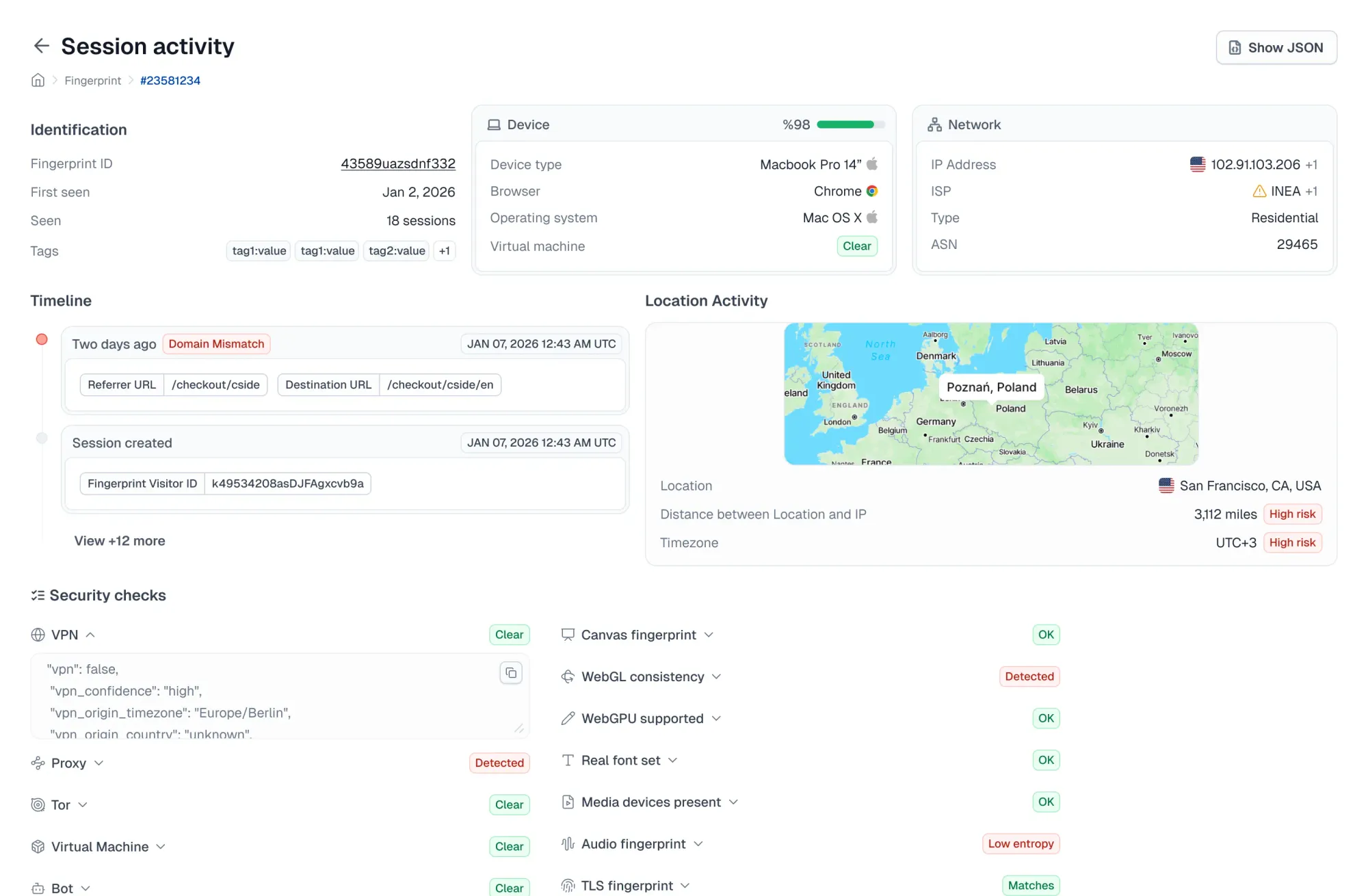
cside combina el fingerprinting de navegador con la monitorización de integridad de JavaScript, ofreciendo a las empresas de viajes tanto detección de ATO como detección de web skimming en una sola plataforma. cside destila una base de más de 250 señales de navegador, dispositivo y red en un ID de dispositivo persistente, de modo que un inicio de sesión desde un dispositivo no reconocido resalta incluso cuando las credenciales son válidas.
- Detección de bots de IA maliciosos: Detecta navegadores headless que imitan el comportamiento real del usuario para eludir las defensas tradicionales contra bots y ejecutar credential stuffing a escala.
- Protege las páginas que los atacantes más atacan: Asegura las páginas de reservas, los portales de cuentas de fidelización y los flujos de pago contra skimming, exfiltración de datos y secuestro de sesiones. cside es una solución líder para la monitorización de scripts según PCI DSS 4.0.1.
- Monitorización de scripts de terceros: Vigila cada script que se ejecuta en tu sitio (código de terceros, herramientas de accesibilidad, widgets de reservas, herramientas de analítica, píxeles publicitarios, etiquetas de afiliados) y alerta cuando alguno de ellos comienza a exfiltrar credenciales o datos de pago.
- Integración orientada al desarrollador: Señales brutas de fingerprint vía API para reglas de fraude personalizadas, además de agrupaciones de señales curadas listas para usar de inmediato.
Para empezar con cside, regístrate o reserva una demo.